
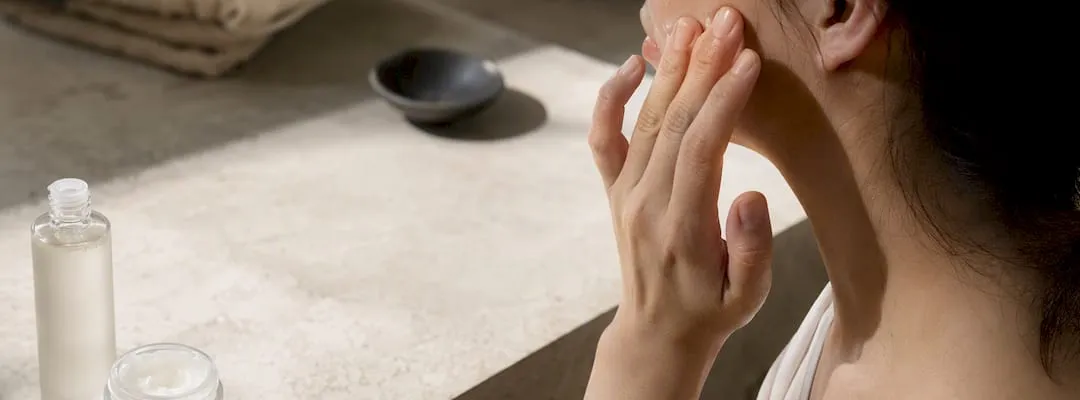
The 10-step routine is a layering system from Korean skincare: cleansing, hydration, targeted treatment, and protection, applied in this order. Only three principles are mandatory: thorough cleansing, sufficient moisture, and daily SPF in the morning. All other steps, such as exfoliation or sheet masks, are optional and depend on skin type and time budget.
In short:
- In the 10-step routine, thorough cleansing, hydration, and daily sun protection are the most important principles, while other steps are optional depending on skin type.
- Double Cleansing consists of oil and water cleansers, with pH-neutral products actively maintaining skin protection and making cleansing effective.
- For sensitive or blemished skin, it is advisable to introduce exfoliants, retinoids, and active acids cautiously and with longer intervals.
- A complete routine is especially useful after acute skin problems or during special care phases; in everyday life, a basic routine with three to five steps is often sufficient.
- The consistent, combined use of tested, original products and individual adaptation to skin and season are crucial for sustainable care results.
Table of Contents
- The 10-Step Routine at a Glance
- How to Apply Each Step Correctly
- How to Adapt the Routine to Skin Type and Time
- Which Mistakes Ruin Your Routine the Fastest?
- What to Look for When Buying Korean Cosmetics
- When is the Full Routine Really Worth It?
- Your Entry into Korean Care with Rammilav
- Sources
The 10-Step Routine at a Glance
Before you get lost in details: This order forms the framework of classic Korean care, as described by Harper’s Bazaar. The logic behind it is simple. Light, watery textures come first, heavy, oily formulas last.
- Oil Cleanser – dissolves makeup, sunscreen, and sebum.
- Water Cleanser – removes sweat and water-soluble residues.
- Exfoliant (optional) – removes dead skin cells.
- Toner – balances the pH and prepares the skin.
- Essence – provides light, deeply penetrating moisture.
- Serum or Ampoule – delivers concentrated active ingredients for specific concerns.
- Sheet Mask (optional) – intensifies moisture supply for 15 to 20 minutes.
- Eye Cream – cares for the thin skin around the eyes.
- Face Cream – seals all previous steps.
- Sunscreen – protects against UV damage in the morning, the most important step of all.
Reversing the order risks little damage but loses effectiveness: A heavy cream before the essence blocks its absorption. The rule of thumb is always: thin before thick, watery before oily.
How to Apply Each Step Correctly
Theory is one thing, daily implementation is another. Here we show what really counts in each step, which ingredients are common, and how often you really need it.
Step 1 – Oil Cleanser (evening). An oil cleanser based on sunflower oil, squalane, or shea butter binds fat-soluble residues like sunscreen and makeup. Massage it dry into the dry face before emulsifying with water. You usually don't need this step in the morning unless you've applied rich creams overnight.
Step 2 – Water Cleanser (morning and evening). After the oil cleanser, a mild, water-based cleanser follows, removing the remaining water-soluble impurities. The pH value is crucial: A cleanser in the range of 4.5 to 5.5 preserves the skin's natural acid mantle much better than a highly alkaline product. This oil and water duo is called Double Cleansing and forms the foundation of the entire routine, as confirmed by the Cleveland Clinic.
Step 3 – Exfoliant (optional, 1 to 3× per week). Chemical exfoliants with AHA (glycolic acid, lactic acid) or BHA (salicylic acid) dissolve dead skin cells without mechanical rubbing. The frequency depends heavily on the product and skin sensitivity, with Harper’s Bazaar suggesting one to three applications weekly as a sensible range. Sensitive skin should start with once and observe the reaction.
Step 4 – Toner. A good toner is no longer just an astringent but a liquid base that restores the skin's pH after cleansing and prepares for the next steps. Formulas with centifolia rose, green plum, or witch hazel are suitable for most skin types. An example of a mild representative is the Beauty Of Joseon Green Plum Toner, which also contains gentle fruit acids.
Step 5 – Essence. The essence is the actual specialty of Korean care, a thin, often fermented formula that penetrates deeper than a classic serum and prepares the skin for the following active ingredients. It is patted in rather than rubbed. It is not fundamentally dispensable, but should be the first to cut if on a tight budget.
Step 6 – Serum or Ampoule. This is where concentrated active ingredients come into play, vitamin C in the morning against pigmentation spots and for antioxidant protection, niacinamide against blemishes, hyaluronic acid for additional moisture. Retinoids belong exclusively in the evening routine as they increase light sensitivity. Jane Yoo MD recommends introducing retinoids in the evening and in small steps, combined with consistent sun protection the next morning.
Step 7 – Sheet Mask (optional, once or twice a week). A sheet mask sits for 15 to 20 minutes and provides a moisture boost beyond the normal routine. It is not needed daily, Vogue explicitly emphasizes that masks are an extra, not a mandatory program.
Step 8 – Eye Cream. The skin around the eyes is thinner and often needs a richer but lighter texture than the rest of the face. Patting instead of rubbing is the rule here, using the ring finger, which applies the least pressure.
Step 9 – Face Cream. The moisturizer seals all previous layers and prevents water from escaping the skin. Dry skin benefits from ceramides and squalane, oily skin from lighter gel creams without occlusive oils.
Step 10 – Sunscreen (only in the morning, every day). This step is not an option but the foundation of any effective routine. An SPF 50 not only protects against sunburn but also prevents premature skin aging and dark spots caused by UV radiation. Korean formulas like the Beauty Of Joseon Ginseng Sun Serum SPF50 absorb cosmetically pleasantly, which according to Jane Yoo MD directly increases the likelihood that people will actually perform the step daily.
Pro Tip: Wait 30 to 60 seconds between essence, serum, and cream for the skin to absorb the texture. This prevents products from shifting each other instead of absorbing.
How to Adapt the Routine to Skin Type and Time
Going through ten steps every day is not a goal in itself. More important is that you regularly care at all, and this is more likely to succeed with a routine that fits your daily life.
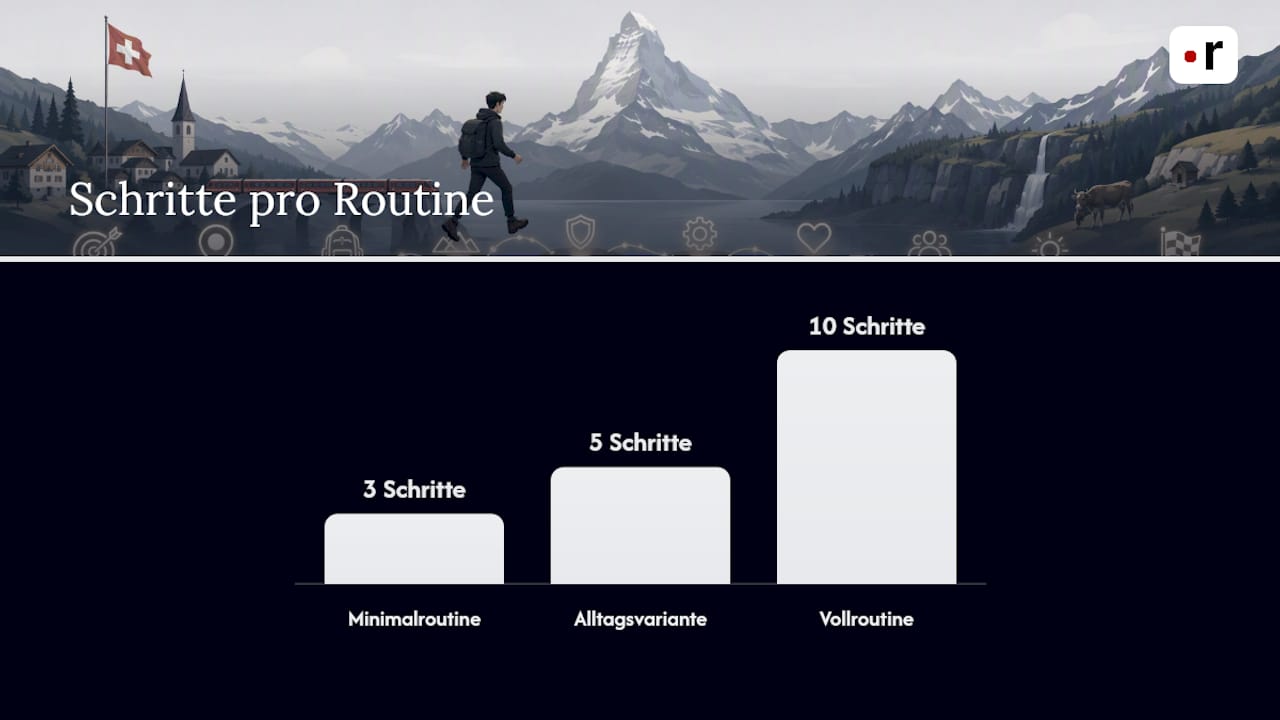
- 3-Step Minimal Routine: Water cleanser, moisturizer, sunscreen (morning) or water cleanser, serum, cream (evening). This base fully covers the three mandatory principles.
- 5-Step Everyday Variant: Cleanser, toner, serum, eye cream, moisturizer plus SPF in the morning. Realistic on a normal weekday.
- Dry Skin: Richer creams with ceramides, do not skip essence, exfoliate at most once a week.
- Oily Skin: Lighter gel textures, double cleansing especially important in the evening, BHA instead of AHA against clogged pores.
- Sensitive Skin: Initially omit exfoliants and retinoids, prioritize soothing ingredients like centella, as explained in the Rammilav guide to Centella Asiatica.
- Combination Skin: Moisturizing, non-occlusive textures during the day, richer products only on dry areas at night.
Every seasonal adjustment follows the same logic, more occlusion in winter, lighter formulas in summer, as described in the guide to skincare routines in spring.
Pro Tip: Always introduce a new product individually and observe the skin for two to four weeks before adding the next. This is the only way to clearly attribute an intolerance to a product instead of it disappearing in the mix of ten steps.
Which Mistakes Ruin Your Routine the Fastest?
The most common problems arise not from too little care, but from too much at once.
- Over-caring instead of caring: Multiple exfoliants, retinoids, and vitamin C simultaneously overwhelm the skin barrier. Signs include redness, tightness, and sudden blemishes in otherwise calm areas.
- Wrong order: Heavy cream before the essence blocks its absorption, sunscreen before moisturizer dilutes the protective film.
- Skipping SPF: Probably the most consequential mistake of all. Without consistent sun protection, the entire rest of the routine loses effectiveness because UV radiation ages the skin faster than any serum can compensate.
- Starting too many actives at once: Introducing retinoid, acid exfoliant, and vitamin C in the same week means you won't know which product caused the reaction later.
A simple patch test protects against most of these problems: Apply the new product exclusively to a small area behind the ear or on the forearm for three days, then check if redness or itching occurs, and only if nothing happens, it moves to the face. Many dermatologists generally advise consistently following a few steps rather than irregularly applying a complete 10-step routine, as consistency achieves more over time than completeness.
What to Look for When Buying Korean Cosmetics
A well-thought-out routine is of little use if the products themselves are of questionable origin. All items should ideally be sourced directly from verified suppliers to ensure originality and consistent quality, which is not always guaranteed with imported K-Beauty.
- Delivery within Switzerland usually in 2 to 3 days.
- Free shipping for orders over 80 CHF.
- Brands like Cosrx, Beauty Of Joseon, and Purito, selected based on ingredient profile rather than packaging design.
- Product categories that precisely match the ten steps: sunscreens, essences, serums, toners, and moisturizers.
- In-depth ingredient guides, such as on Centella Asiatica, in the Beauty Guide.
For additional support from within, you can supplement with marine collagen peptides, which sensibly complement external care but do not replace any of the ten steps from the outside.
When is the Full Routine Really Worth It?

Going through the complete 10-step routine every day is neither necessary nor realistic for most people. It makes sense during phases of intensive care, such as after a sunburn, during retinoid acclimatization, or when the skin is noticeably out of balance due to stress or weather changes. Then each additional step, essence, ampoule, sheet mask, provides a real, measurable additional benefit.
For everyday life, I recommend a different approach: Start with the three-step base, cleanser, moisturizer, sunscreen, and only expand once this base has truly become a habit. Those who start with ten products immediately usually give up after two weeks because the routine simply seems too cumbersome. Consistency with three steps beats perfection with ten that gather dust on the shelf after a month.
— Aleksejs
Your Entry into Korean Care with Rammilav
There are providers in Switzerland that deliver Korean skincare without long waiting times and with originality guarantee. They source products directly from verified suppliers and offer common categories like sunscreens, essences, serums, and sheet masks. Delivery is usually prompt, and free shipping may be available above a certain order value. This reduces uncertainty regarding the authenticity of the products.
The easiest way to start is through the Beauty Guide, where you can find suitable products for each of the ten steps, from gentle cleansing to sun protection. Those who want to dive in directly should take a look at the Rammilav range and choose the three to five products that fit their own skincare routine.
Sources
- Cleveland Clinic – Korean Skincare Routine
- Vogue – Korean Skincare Routine
- Harper’s Bazaar – How to Build a 10-Step Korean Skincare Routine
- Jane Yoo MD – Best Korean Skincare Routine 2026


