
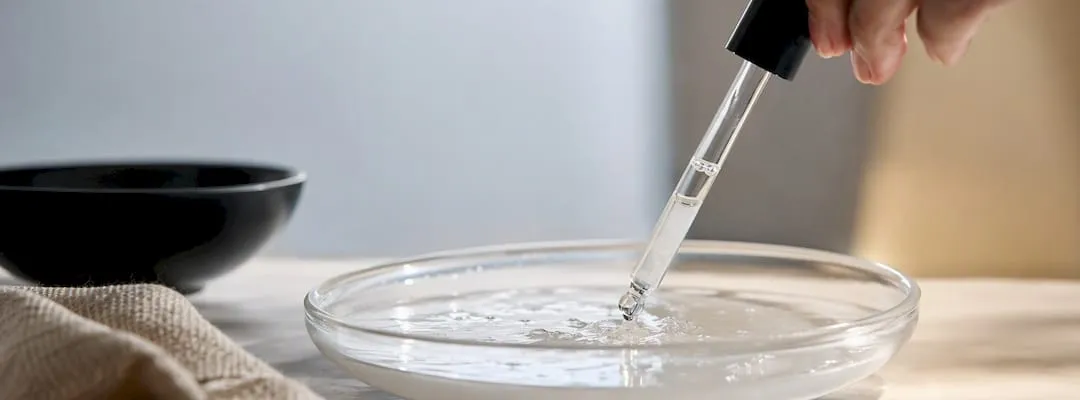
Ferments in cosmetics are mostly postbiotic extracts, obtained through the fermentation of yeasts, bacteria, or plant raw materials. They are said to bind moisture, strengthen the skin barrier, and dampen inflammatory processes. Laboratory studies and some small clinical tests support these benefits, but a broad body of evidence is still lacking. You can recognize them by INCI names like Galactomyces Ferment Filtrate or Bifida Ferment Lysate.
In short:
- Ferments mainly consist of postbiotics, which are created by microorganisms during the fermentation of larger molecules and often appear in cosmetics under the INCI designation.
- Molecule reduction through fermentation improves the skin absorption of ingredients, especially with large plant extracts, and can stimulate the production of skin components like hyaluronic acid.
- Scientific data suggest a moisturizing effect as well as antioxidant and anti-inflammatory properties, but the study situation remains limited.
- Fermented ingredients, usually without live microorganisms, should be recognized in the INCI list under names like "Ferment Filtrate" or "Lysate".
- For safe use, you should choose products with relevant ferment portions from the top of the list, pay attention to accompanying substances, and check the product category and pH value.
Table of Contents
- What Fermentation Means in Cosmetics
- How Fermented Ingredients Work on the Skin
- What Benefits Studies and Practice Show
- Common INCI Names and What They Promise
- How to Recognize a Suitable Product
- How to Properly Incorporate Fermented Ingredients into Your Routine
- Why Rammilav Focuses on Fermented K-Beauty Products
- Ferments Are Promising, But Not a Miracle Cure
- Discover Fermented K-Beauty Products at Rammilav
- Sources
- FAQ
What Fermentation Means in Cosmetics
Fermentation describes a biochemical process in which microorganisms like yeasts, lactic acid bacteria, or fungi break down a raw material and produce new, often smaller molecules. In natural cosmetics with ferments, rice, soy, sugarcane, or coconut water is usually used as a starting material. It is important to distinguish between three terms that are often mixed in advertising:
- Probiotic: live microorganisms, rarely found in creams and serums due to stability reasons
- Postbiotic: the metabolic products of fermentation, without live cultures
- Ferment Lysate: a variant of the postbiotic, where the cells of the microorganisms have been broken down to release their contents
Manufacturers ferment for a simple reason. The process breaks down large molecules into smaller fragments and simultaneously produces new metabolites that the starting material alone would not have. These fragments are supposed to be more easily absorbed by the skin.
How Fermented Ingredients Work on the Skin
The central mechanism is molecule reduction. Fragments under 500 Daltons penetrate the upper skin layers much more easily than large, unaltered molecules, as an older study on molecule size and skin penetration shows. This is what makes ferments interesting for the skin, as many native plant extracts are simply too large to get beyond the stratum corneum.
During fermentation, completely new substances are also created. Metabolomics analyses of fermented rice liquid have identified acetylpolyamines, which stimulated hyaluronic acid production in 3D skin models and penetrated almost to the stratum corneum, as a Japanese study on the efficacy of fermented germ rice shows. Postbiotic metabolites also seem to regulate pro-inflammatory messengers like interleukin 8, which can result in better barrier function, as several reviews on postbiotics summarize. Whether and how strongly this affects transepidermal water loss depends heavily on the respective product.
What Benefits Studies and Practice Show
The data is encouraging, but it is also limited. In a small 28-day study with an essence containing one percent Bifida Ferment Filtrate, there was a significant reduction in transepidermal water loss and an increase in skin moisture. This is a solid signal for the moisturizing effect, but it comes from a single, small study that does not allow for broad generalization.
A postbiotic extract from fermented sugarcane straw inhibited elastase by up to 83.4 percent and tyrosinase by 42.4 percent in vitro and also showed antioxidant and anti-inflammatory properties.
Elastase breaks down the elastic fibers of the skin, tyrosinase controls pigment formation. If both enzymes are inhibited, these are plausible approaches for anti-aging and a more even skin tone, although initially only proven in the test tube. Other reviews explicitly caution because many studies on fermented ingredients work with small numbers of subjects and short durations, as a professional overview of ferment filtrates notes. Ferments appear particularly useful so far for dry, stressed, or redness-prone skin, where moisture retention and a calmer barrier are the focus.
Common INCI Names and What They Promise
On the ingredient list, ferments hide behind Latin-sounding names. Knowing these names means you don't have to rely on marketing promises:
- Galactomyces Ferment Filtrate: known from sake production, supposed to improve complexion and moisture
- Bifida Ferment Lysate: bacterial lysate, associated with barrier strengthening and calming
- Lactobacillus Ferment: lactic acid bacteria fermentate, often found in toners
- Saccharomyces Ferment: yeast fermentate, usually advertised as antioxidant
- Bacillus Ferment: rarer, often used for anti-pigment formulations
The ending also reveals something about the processing. "Filtrate" refers to the filtered liquid after fermentation, "Lysate" stands for broken cell walls, "Extract" for a classic extraction from the fermented material. Caution is advised with the word "probiotic." In most cases, the product no longer contains live cultures, but their metabolic products, i.e., postbiotics.
How to Recognize a Suitable Product
The INCI list is your first clue, but it is not enough on its own. It is also crucial where the ferment portion is on the list and with which accompanying substances it is combined.
- Check if the fermentate is among the first five to eight ingredients, indicating a relevant concentration.
- Look for accompanying active ingredients like hyaluronic acid or ceramides that sensibly complement the moisturizing effect.
- Check if a pH value is specified, many toners with ferments are in the slightly acidic range.
- Compare several products of the same category, such as toner against toner instead of toner against cream.
- Always do a patch test in the crook of your arm before first use.
With retinoids or very sensitive, irritated skin, you should use fermented acid combinations more cautiously and consult a dermatologist if in doubt.
Pro Tip: Note when purchasing whether a product is labeled as a toner, serum, or cream. The concentration of a ferment often differs significantly between these categories, even if the INCI name sounds identical.
How to Properly Incorporate Fermented Ingredients into Your Routine
The order follows the texture, not the active ingredient. A fermented toner or essence comes right after cleansing, a serum afterward, a cream with ferment content completes the routine. Both work in the morning and evening.
- Ferments can usually be combined without problems with hyaluronic acid and ceramides, which support the moisturizing effect.
- With strong acids like AHA or BHA and retinoids, it is worth spacing out the ferment step to avoid irritation.
- Visible effects like a calmer complexion or plumper skin feeling often take four to eight weeks of regular use.
- A guide to the skin barrier helps to better assess the condition of your skin before and during use.
If unsure, start by combining a fermented product with few other active ingredients and expand the routine only when the skin tolerates the new product well.
Why Rammilav Focuses on Fermented K-Beauty Products
Rammilav sources its Korean cosmetics directly from verified suppliers, ensuring original products and consistent quality of fermented ingredients. This combination of verified origin and short delivery time plays a special role in fermented products, as some formulations are sensitive to long storage and transport times.

Ferments Are Promising, But Not a Miracle Cure
Ferments in cosmetics are among the most exciting developments of recent years, but the hype is ahead of the study situation. The in vitro results on elastase and tyrosinase inhibition are real, but they do not yet say how strongly a finished product works on real skin. Pay more attention to the INCI list and the overall formulation than to catchy advertising terms like "probiotic" or "fermented." It remains exciting to see where research on new, sustainably sourced postbiotic sources like sugarcane straw will develop.
— Aleksejs
Discover Fermented K-Beauty Products at Rammilav
Unlike many individual products with unclear origins, Rammilav sources its fermented toners, serums, and creams directly from verified suppliers, guaranteeing you original products instead of a shot in the dark. In the range with cleansing, toner, serum, and other categories, you will find brands like Cosrx, Beauty Of Joseon, and Purito, many of them with ferment contents like Galactomyces or Bifida Ferment. Those new to fermented ingredients should start with a toner rather than jumping straight to a concentrated serum, such as the Round Lab 1025 Dokdo Toner, which gently acclimates the skin to the new texture. Shipping is within Switzerland, and the package usually arrives within a few days. Current shipping conditions can be found on the website.
Sources
- Skincare potential of a sustainable postbiotic extract produced through sugarcane straw fermentation by Saccharomyces cerevisiae
- Review articles on postbiotics and topical applications (PMC)
- Metabolomics and efficacy evaluation of germinated brown rice fermentation liquid (SCCJ study)
FAQ
What Are Ferments in Cosmetics?
Ferments are active ingredients created through the fermentation of raw materials like rice, soy, or sugarcane using yeasts or bacteria. They are mostly postbiotics, meaning metabolic products without live microorganisms, appearing on INCI lists as "Ferment Filtrate" or "Ferment Lysate."
What Exactly Are Fermented Ingredients, and How Do They Differ from Normal Extracts?
Fermented ingredients are created through a microbial conversion process that breaks down large molecules into smaller fragments and generates new metabolic products. Fragments under 500 Daltons penetrate the skin more easily than unaltered, larger extract molecules, according to a classic study on molecule size.
Which Ingredients Should Be Avoided in Cosmetics?
With sensitive or irritated skin, caution is advised with heavily perfumed products and highly concentrated acids in combination with retinoids, as they can exacerbate irritation. Fermented ingredients themselves are generally considered well-tolerated, as they usually contain no live organisms.
What Ingredients Should a Good Face Cream Have?
A balanced cream combines moisturizing substances like hyaluronic acid with barrier-strengthening ceramides and possibly a fermented filtrate for additional care effects. Products like the Lebelage Super Aqua Moisture Cream demonstrate how such combinations can be put together in practice.
How Long Does It Take to See Effects from Fermented Products?
In practice, users usually report a calmer skin appearance and more moisture after four to eight weeks of regular use. A small clinical study on Bifida Ferment Filtrate showed a noticeable reduction in skin water loss after just 28 days.


