
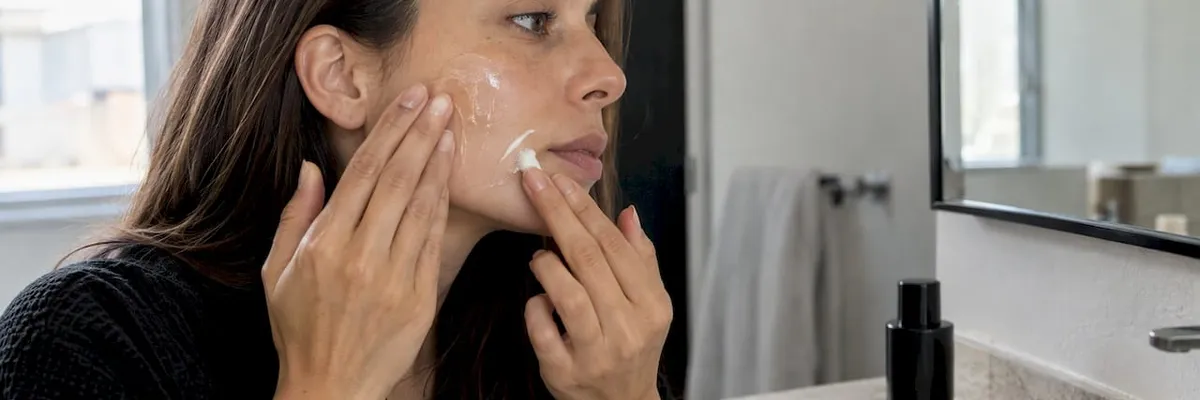
Humectants bind water in the skin. Occlusives create a film over it to prevent this water from evaporating. One group provides moisture, while the other locks it in. Therefore, the question isn't whether occlusives or humectants are better: A well-structured moisturizing routine uses both, and your skin type, the season, and the order in your routine determine the ratio. In this guide, we explain how the two groups work, how to recognize them on the INCI list, and how to combine them effectively in your K-Beauty routine.
In Short
- Humectants like Glycerin, Urea, or Hyaluronic Acid attract water and retain it in the stratum corneum.
- Occlusives like Vaseline, Paraffin, Mineral Oil, or Dimethicone form a protective film and slow down water loss through the skin.
- Humectants alone can draw moisture from deeper skin layers in dry air. That's why an occlusive layer is necessary.
- The rule of thumb for the order is: from watery to rich, so first toner and serum with humectants, then cream with occlusive components.
- For blemished skin or perioral dermatitis, light occlusives are beneficial. Very dry skin benefits from richer textures.
Table of Contents
- The Difference: Binding Water or Slowing Evaporation
- Humectants and Occlusives in Direct Comparison
- Why Humectants Alone Sometimes Aren't Enough
- How to Recognize the Groups on the INCI List
- Which Group Suits Your Skin Type?
- The Right Order in Your Routine
- Summer and Winter: Adjusting the Ratio
- Our Selection for Your Moisturizing Routine
- Our View: Moisture is Teamwork
- Frequently Asked Questions
- Sources
The Difference: Binding Water or Slowing Evaporation
Your skin constantly loses water to the environment. Experts refer to this as transepidermal water loss, or TEWL for short. How much moisture remains in the outermost skin layer, the stratum corneum, depends mainly on two things: how well the skin can bind water and how dense its barrier is. This is exactly where the two groups of active ingredients come in, each in its own way.
Humectants: The Moisture Magnets
Humectants, also known as moisturizing agents, are water-loving substances. They attract and bind water, from the surrounding air or from deeper skin layers. It is well documented that Glycerin increases the water-holding capacity of the stratum corneum. According to a review on moisturizer technology, humectants promote water retention in the stratum corneum. The skin feels plumper and smoother afterward, and fine dryness lines appear less noticeable.
Typical for humectants are light, watery textures: toners, essences, serums, and gel masks. Many Korean skincare products focus on this group because they layer well and hardly weigh down the skin.
Occlusives: The Protective Film
Occlusives work differently. They hardly bring water into the skin themselves but create a thin, water-repellent film on the surface. This film slows evaporation, keeping moisture where it belongs. The mentioned review describes the role of occlusives as minimizing water loss. Classic representatives, according to DermNet, the dermatological reference from New Zealand, include Vaseline (Petroleum Jelly), Paraffin, Mineral Oil, and Dimethicone.
You will find occlusives mainly in creams, balms, ointments, and sleeping masks. The higher their proportion, the richer and more protective the product.
Emollients: The Third Group
In almost every comparison, a third group appears: emollients, which are re-fattening and smoothing substances like plant oils, shea butter, fatty alcohols, or ceramides. They fill the tiny gaps between skin flakes and soften the surface. Many emollients also have a slight occlusive effect, which also contributes to hydration. According to the review, moisturizers that combine emollients, humectants, and occlusives can strengthen the skin barrier and support repair processes. In practice, the boundaries blur: A good cream often contains all three groups.
Humectants and Occlusives in Direct Comparison
| Criterion | Humectants | Occlusives |
|---|---|---|
| Main Task | Attract and bind water | Slow water loss |
| Site of Action | In the stratum corneum | On the skin surface |
| Typical Substances | Glycerin, Urea, Hyaluronic Acid, AHA, Salicylic Acid | Vaseline, Paraffin, Mineral Oil, Dimethicone |
| Typical Textures | Toner, Essence, Serum, Gel, Sheet Mask | Cream, Balm, Ointment, Sleeping Mask |
| Skin Feel | Light, fresh, hardly any residue | Rich, protective, sometimes slightly shiny |
| Strength | Immediately noticeable hydration | Keeps moisture for hours |
| Where to Be Careful | Less effective in dry air without a protective film | Very rich variants can promote blemishes |
| Place in Routine | Early, after cleansing | Late, as the last care layer |
The table shows why an either-or approach leads in the wrong direction. One group delivers, the other preserves.
Why Humectants Alone Sometimes Aren't Enough
You might know this: You apply a moisturizing serum, and an hour later, your skin still feels tight. There is a plausible reason for this. Humectants draw water to where it is available. If the air is humid, they pull it from the environment. If it is dry, such as in heated rooms in the Swiss winter or in air-conditioned offices in the summer, only the skin itself remains as a source.
The European guideline on atopic dermatitis (EuroGuiDerm) describes this effect: In a dry environment, humectants without accompanying occlusives can draw moisture from deeper skin layers and paradoxically even increase water loss. For this reason, the combination of both groups is considered crucial for a well-functioning skin barrier.
Conversely, the same applies: An occlusive alone on very dry skin seals, but there is little to seal. Only when moisture is present beforehand does the protective film unfold its full effect. This is the idea behind the principle you might know as layering from K-Beauty.
How to Recognize the Groups on the INCI List
The ingredients are listed on the packaging in order of quantity, the largest amount first. With this small overview, you can quickly find out whether a product is more binding, more protective, or can do both.
Common Humectants:
- Glycerin
- Urea
- Sodium Hyaluronate and Hyaluronic Acid
- Panthenol
- Propanediol and Butylene Glycol
- Lactic Acid and other Alpha Hydroxy Acids
- Amino acids like Arginine or Glycine
- Honey and Propolis extracts, popular in Korean formulations
Common Occlusives:
- Petrolatum (Vaseline)
- Paraffinum Liquidum (Mineral Oil)
- Dimethicone and other Silicones
- Cera Alba (Beeswax) and plant waxes
- Lanolin
Common Emollients with Slight Occlusive Effect:
- Butyrospermum Parkii Butter (Shea Butter)
- Squalane
- Ceramide
- Plant oils like Jojoba, Avocado, or Sunflower Oil
- Fatty alcohols like Cetearyl Alcohol
Don't be put off by the word Alcohol in fatty alcohols: Cetearyl Alcohol doesn't dry out but makes creams smooth.
Which Group Suits Your Skin Type?
Every skin needs both groups, but not in the same dose. The key is how much oil your skin produces itself and how resilient its barrier is.
Dry Skin
Dry skin lacks oil, the natural protective layer. According to DermNet, very dry skin can benefit from a fat-rich, occlusive care. Here, you can use rich creams and apply an extra layer in the evening. How to tailor an entire routine to this is explained in our guide to caring for dry skin.
Dehydrated Skin
Dehydrated and dry are not the same. Even oily skin can lack water: It shines and feels tight at the same time. In this case, humectants are the focus, combined with a light gel cream as a finish. You can read more about this in our article on dehydrated skin and K-Beauty.
Oily and Blemish-Prone Skin
If you are prone to pimples, moisture is still important, as dried-out skin often reacts with even more sebum production. Focus on humectants in watery textures and choose light occlusives like Dimethicone or a gel-fluid for the finish. You should avoid heavy ointments on the face: DermNet points out that occlusive emollients can cause or worsen acne. Salicylic acid is doubly useful here, as it is a humectant and also clears pores.
Sensitive Skin and Perioral Dermatitis
Sensitive skin benefits from few, well-tolerated ingredients and a stable barrier. Glycerin, Panthenol, and Ceramides are usually gentle companions. With perioral dermatitis, the small red bumps around the mouth and nose, restraint with highly occlusive products is advised, as they can worsen the skin appearance according to DermNet. How to reduce care during this phase is described in our guide to perioral dermatitis. If the rash persists for weeks or spreads, have it checked by a dermatologist.
Eczema and Very Dry, Flaky Skin
Dry skin in atopic dermatitis or psoriasis often lacks natural moisturizing factors (NMF). Here, Urea formulations are used to restore skin moisture. Urea acts as a humectant at low concentrations, additionally exfoliating at about 10%, and can sting on inflamed or cracked skin. Therefore, test a new Urea product on a small area first. The EuroGuiDerm guideline recommends the daily, generous application of emollients as a basic therapy for atopic dermatitis. However, if you have diagnosed eczema, the care plan belongs in the hands of your dermatologist, especially if you are also applying medications.
The Right Order in Your Routine
The most important rule is simple: from thin to thick, from watery to oily. This way, the humectants can work first, and the occlusives lock in the moisture afterward.
- Cleansing: In the evening, first an oil or balm, then a mild, water-based cleanser. How this works is shown in our article on Double Cleansing.
- Toner on still slightly damp skin: It provides a first layer of humectants. Where the difference to essence lies is explained in our comparison Toner vs. Essence.
- Serum or Ampoule: Here is the most concentrated load of humectants or active ingredients. If you use several, our guide to layering serums will help you.
- Cream: It brings emollients and occlusive components and seals the previous layers.
- Morning sunscreen: It always comes as the last step.
- In the evening, optionally a sleeping mask or a touch of balm on particularly dry areas.
A tip from dermatology is the “Soak and Seal” technique: According to EuroGuiDerm, you ideally apply care directly after bathing or showering on still damp skin. The water is already there, and the cream holds it in place. The same applies to the face: Don't let too much time pass between cleansing and toner.
How Much is Enough?
The body is often creamed too sparingly. The guideline mentions the fingertip unit as a guide: a strand from a tube with a 5 mm opening, from the fingertip to the first finger crease, corresponds to about 0.5 g and is enough for an area of two palm sizes. For eczema, around 250 g of emollients per week is the rule of thumb for adults. For the face, a pea to hazelnut-sized amount of cream is usually sufficient.
Summer and Winter: Adjusting the Ratio
Switzerland has distinct seasons, and your skin feels it. In winter, cold, dry outside air and heating air meet, while in summer, heat, sweat, and sunscreen are the bigger issues. The EuroGuiDerm guideline recommends adjusting the texture: lighter, water-rich formulations in summer and during acute skin conditions, products with a higher fat content in winter and for chronically dry skin.
For your routine, this means specifically:
- In summer: more humectants, light gel creams, a moisturizing sheet mask after a day in the sun.
- In winter: the same humectants, but a richer cream over them, possibly an additional occlusive layer in the evening.
- In both seasons: daily sun protection. Why it is also necessary in the cold season is explained in our article on sunscreen in winter.
Our Selection for Your Moisturizing Routine
In our shop, you will find both sides of the equation. For the water-binding layer, sheet masks like the Isntree Hyaluronic Acid Sheet Mask or the Lindsay Water Balance Gel Mask are suitable. As a final care layer, we offer various moisturizing creams, such as the Lebelage Super Aqua Moisture Cream, the Enough Collagen Moisture Essential Cream, or the I’m Sorry for My Skin Age Capture Moisturizing Cream. All products are sourced directly from verified suppliers, usually delivered within 2 to 3 days throughout Switzerland, and shipping is free for orders over 80 CHF. Browse through our catalog of toner, serum, and moisturizing care and put together your combination.
Our View: Moisture is Teamwork
We often get asked whether to buy a good serum or a good cream. Our honest answer: You need both because each has a different task. The serum with humectants ensures that your skin absorbs and binds water. The cream with occlusive components ensures that this water stays until the evening.
This is exactly why we like the Korean skincare philosophy so much. Instead of a single heavy product that is supposed to do everything, it builds moisture in several thin layers. This way, you can adjust the ratio of humectants and occlusives daily: one more layer in January, a lighter cream in July, a sheet mask after a long day in the mountains.
In our selection, we make sure that you find suitable products for every step, from cleansing to toner and serums to the final cream and sunscreen. And because we source our products directly from verified suppliers, you can be sure that what's in the tube is what the INCI list says. If you're unsure what your skin needs right now, start with a simple combination: a moisturizing toner, a cream over it, and observe how your skin feels over two weeks.
Aleksejs
Frequently Asked Questions
Is Hyaluronic Acid a Humectant or an Occlusive?
Hyaluronic Acid is a humectant. It binds water in the upper skin layer but does not form a dense protective film. Therefore, you should always finish a hyaluronic serum with a cream, especially in dry heating air.
Do Occlusives Clog Pores?
Not every occlusive is the same. Heavy ointments and very oily textures can promote acne or perioral dermatitis if you are prone to blemishes. Light occlusives like Dimethicone in gel creams are usually well tolerated by blemished skin.
Can I Use Vaseline as the Last Step on My Face?
For very dry skin or on cracked areas like lips and nostrils, a thin layer of Vaseline as a finish can be useful. Apply it only to already cared-for skin to lock in moisture. If you are prone to blemishes, limit it to individual dry areas.
What's Better for Dehydrated Skin, Humectants or Occlusives?
For dehydrated skin, humectants come first because the skin lacks water. Without a final occlusive layer, this water quickly evaporates again. The best solution is the combination: toner or serum, followed by a suitable cream.
Sources
DermNet: Emollients and moisturizers Lodén M.: Moisturizer technology versus clinical performance (PubMed) EuroGuiDerm Guideline on Atopic Eczema Journal of Drugs in Dermatology: Urea, a clinically oriented overview


