
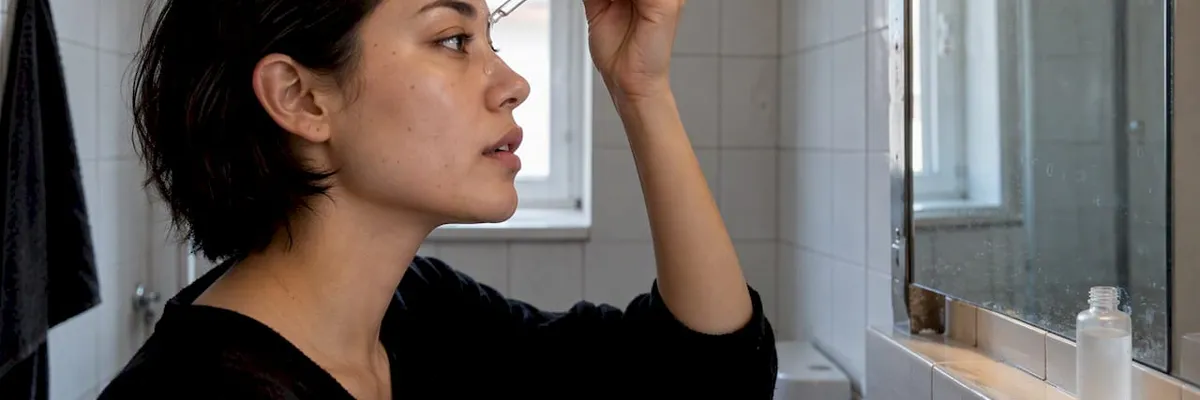
Zinc PCA is one of the silent active ingredients in Korean toners, serums, and creams for oily, blemished, and sensitive skin. It combines zinc, which balances sebum production and soothes blemishes, with PCA, a natural moisturizing factor. This mattifies the skin without drying it out. In this guide, we explain what Zinc PCA is, what studies actually show, who it is suitable for, and how you can effectively combine it with other K-Beauty active ingredients.
TL;DR
- Zinc PCA is the zinc salt of pyrrolidone carboxylic acid: Zinc balances sebum, PCA binds moisture.
- The active ingredient is particularly suitable for oily, blemished, and combination skin, but is usually well tolerated by sensitive skin as well.
- In studies, Zinc PCA always worked in combination with other active ingredients and helped reduce inflammation and moisturize the skin.
- It can be well combined with niacinamide, hyaluronic acid, centella, and mild acids, and fits into both morning and evening routines.
- For severe acne, Zinc PCA does not replace treatment by a dermatologist but can complement it effectively.
Table of Contents
- What is Zinc PCA?
- How does Zinc PCA work on the skin?
- What the studies show
- Why Zinc PCA fits so well with K-Beauty
- For which skin is Zinc PCA suitable?
- Properly combining Zinc PCA
- How to incorporate Zinc PCA into your routine
- Is Zinc PCA safe?
- Our view on Zinc PCA
- Your K-Beauty routine at Rammilav
- Frequently Asked Questions about Zinc PCA
- Sources
What is Zinc PCA?
Behind the INCI designation is a simple compound. According to the ingredient database COSMILE Europe, Zinc PCA refers to a zinc salt of pyrrolidone carboxylic acid, also known as pyroglutamic acid. PCA is not an exotic foreign substance: The acid is one of the natural moisturizing factors (NMF) of the skin, substances that help the stratum corneum bind water.
Zinc itself is a trace element that the body needs for many processes. The Burgerstein Foundation describes that zinc is involved in over 300 metabolic processes, including those important for skin formation and wound healing. In cosmetics, however, it is not about the body's zinc supply, but about the local effect on the skin surface.
The trick lies in the combination. The PCA serves as a carrier that makes the zinc skin-friendly and also brings a moisture-binding effect. Therefore, Zinc PCA is often not at the top of the ingredient list as the main actor but works as a supporting active ingredient in the background.
How does Zinc PCA work on the skin?
When you ask about the effect of Zinc PCA, three effects can be distinguished that together create the typical profile: less shine, calmer blemishes, no feelings of tightness.
Balance sebum instead of degreasing
Zinc influences sebum production. As a result, the skin appears more matte throughout the day, and the pores appear finer because they are less filled with excess sebum. The important difference from classic degreasers: Zinc PCA does not aggressively remove fat from the skin but helps bring production into balance. Strongly degreased skin often reacts with even more sebum, and this cycle is avoided.
Calm blemishes
Zinc has antimicrobial and anti-inflammatory effects. This is relevant for blemished skin because bacteria like Cutibacterium acnes (formerly Propionibacterium acnes) are involved in pimples. Not without reason, the INCIDecoder database lists Zinc PCA in a well-known Korean acne product, the COSRX Calming Liquid Intensive, as an anti-acne active ingredient, alongside tea tree oil and betaine salicylate.
Preserve moisture
The PCA component binds water in the stratum corneum. This is especially important for oily skin, which often has too little moisture despite shine. Many people with blemishes know the feeling: The T-zone shines, the cheeks feel tight. Zinc PCA addresses both sides of this combination skin.
What the studies show
Zinc PCA is rarely studied alone. In research, it is usually part of a combination with other active ingredients, which also reflects reality in your bathroom, as K-Beauty products never contain just one active ingredient.
A recent study in the Journal of Cosmetic Dermatology examined an anti-acne care regimen with salicylic acid, prebiotics, and Zinc PCA over 30 days. In oily, acne-prone skin, inflammatory lesions decreased by 23%, skin moisture increased by 6.2%, and pores were less visible. This nicely shows the dual profile: less inflammation, more instead of less moisture.
As early as 2018, a study examined a formulation with vitamin B3, a vitamin B6 derivative, and Zinc PCA in mild inflammatory acne. The authors see such dermocosmetic products as complementary care: They can improve the skin's appearance in mild acne but should accompany medical therapy in severe forms, not replace it.
What does this mean for you? The data supports Zinc PCA as a reliable team player in a well-thought-out routine. Those expecting overnight miracles will be disappointed. Those who consistently care for four to six weeks have realistic chances of achieving a calmer, more balanced skin appearance.
Why Zinc PCA fits so well with K-Beauty
Korean skincare follows a principle we greatly appreciate: The skin barrier is not sacrificed to solve a problem. Instead of a strong active ingredient in a high dose, many Korean formulations rely on several mild active ingredients that complement each other and on plenty of moisture in light layers.
Zinc PCA fits perfectly into this thinking. It regulates sebum without irritating and brings a moisturizing factor with PCA. Therefore, you often find it in Korean products alongside centella asiatica, tea tree oil, niacinamide, panthenol, or mild acids like betaine salicylate. The formula is not designed for maximum strength but for daily compatibility.
If you are just starting with Korean skincare, our overview of the differences between Korean and European cosmetics will help you better understand this philosophy.
For which skin is Zinc PCA suitable?
Zinc PCA is not a niche active ingredient, but it plays its strengths particularly well with certain skin types. The following overview helps you classify it.
| Skin type or concern | What Zinc PCA can do | What you should pay attention to |
|---|---|---|
| Oily skin | Mattifies, balances sebum, pores appear finer | Choose light textures like toner, gel, or serum |
| Combination skin | Calms the T-zone without drying out the cheeks | Do not skip moisturizer |
| Blemished skin in teenagers | Supports against inflamed pimples and blackheads | Patience: Results after several weeks |
| Blemished skin in adults | Gentle alternative to drying acne products | Can be well combined with anti-aging care |
| Sensitive skin | Usually well tolerated because mildly dosed | Test new products on a small area first |
| Dry skin | Little benefit for sebum, PCA provides some moisture | Richer care is the focus |
For very dry skin, Zinc PCA is not the first active ingredient we think of. However, if you are prone to blemishes and react sensitively at the same time, it is often a pleasant choice.
Properly combining Zinc PCA
A major advantage of Zinc PCA: It is compatible with almost everything. However, there are combinations that have proven particularly effective.
| Combination | Why it works |
|---|---|
| Zinc PCA and Niacinamide | Both balance sebum and strengthen the barrier, a classic for blemished skin |
| Zinc PCA and Hyaluronic Acid | Balance meets moisture, ideal for oily but dehydrated skin |
| Zinc PCA and Salicylic Acid or Betaine Salicylate | The acid clears the pores, zinc calms, as in the study mentioned above |
| Zinc PCA and Centella Asiatica | Double calming for red, irritated blemishes |
| Zinc PCA and Retinoids | Possible, but introduce slowly as retinoids make the skin more sensitive |
Niacinamide is the most common partner. An example of how such an active ingredient looks in a peptide formulation is this peptide serum with 10% niacinamide, which serves as an example of the combination of sebum regulation and barrier care. If you want to coordinate several products, a look at a five-piece Korean skincare set with hyaluronic acid is worthwhile: It shows well how cleansing, toner, serum, and cream complement each other in a K-Beauty routine.
How many serums you can layer and in what order is explained in detail in our guide to layering serums. The rule of thumb: from thin to thick, and no more than two to three active serums at once.
How to incorporate Zinc PCA into your routine
Zinc PCA is mostly found in toners, essences, and serums, less often in creams or cleansing products. A simple routine for blemished skin could look like this:
- Cleansing: In the evening, remove sunscreen and makeup first with an oil or balm, followed by a mild foam or gel cleanser. How this works is explained in our article on Double Cleansing.
- Toner: A balancing toner prepares the skin. If it already contains Zinc PCA, you can pat it in with a cotton pad or your hands. We have a separate guide to toner and essence to explain the difference.
- Serum: This is where Zinc PCA is most often found. Two to three drops are enough for the face and neck.
- Moisturizer: Even oily skin needs a light cream or gel to keep the barrier stable.
- Sunscreen in the morning: Especially if you are also using acids or retinoids, a broad-spectrum sunscreen is essential every morning.
Introduce new products one at a time, about a week apart. This way, you can see which product benefits your skin and which might irritate it. If burning, severe redness, or itching occurs, stop using the product. If a reaction persists or your pimples worsen significantly, visiting a dermatologist or pharmacy is the right step.
A step-by-step routine specifically against pimples can be found in our Korean acne routine.
Is Zinc PCA safe?
For most people, yes. An expert panel for cosmetic ingredients reviewed 27 zinc salts in cosmetics, including Zinc PCA, in 2024 and found the substances safe in usual applications and concentrations.
In Switzerland, strict rules apply to cosmetics, largely aligned with EU law. The Federal Office for Food Safety and Veterinary Affairs maintains a list of substances with limited use in cosmetics, including water-soluble zinc salts with a maximum concentration. In general, as the German Federal Institute for Risk Assessment explains: All ingredients in cosmetic products must be tested for safety, and the manufacturer is responsible for this.
Practically, this means: More zinc is not automatically better. A well-formulated care product with a tested dosage brings more benefits than a product boasting high percentages. If you have a very low zinc status or take zinc as a supplement, it does not matter for a facial care product as long as you discuss dosages with your doctor or pharmacist.
Another safety aspect concerns less the active ingredient than the product itself. Especially with popular Korean brands, counterfeits circulate whose ingredients have not been controlled. How to recognize originals is shown in our guide Recognizing Fakes in Korean Cosmetics.
Our view on Zinc PCA
We often see the same pattern with our customers in Switzerland: Those struggling with blemishes first reach for what sounds strongest. High percentages, aggressive peels, products that make the skin squeaky clean. After a few weeks, the skin is red, tight, and still forming new pimples.
With Zinc PCA, less is often more. We are convinced by the active ingredient precisely because it does not rely on degreasing but on balance. The zinc soothes and balances sebum, while the PCA retains moisture in the skin. Together with a good moisture base, it creates care that addresses blemishes without weakening the barrier.
Our advice: Choose a product with Zinc PCA that suits your skin type, introduce it alone, and give it four to six weeks. Pay attention to gentle cleansing and do not forget the moisturizer. And buy where the origin of the products is traceable. We source our products directly from verified suppliers because we know that an active ingredient is only as good as the formulation it is in.
— Aleksejs
Your K-Beauty routine at Rammilav
In our shop, you will find Korean skincare from brands like Cosrx, Beauty Of Joseon, and Purito, sorted by cleansing, toner, serum, moisturizer, masks, and sunscreen. We source all products directly from verified suppliers so you receive originals. Delivery within Switzerland usually takes 2 to 3 days, and shipping is free for orders over 80 CHF. Browse our range of Korean cosmetics and create your routine for balanced skin.
Frequently Asked Questions about Zinc PCA
How quickly does Zinc PCA work?
Some notice a more matte complexion after just a few days. For noticeably calmer skin with fewer inflamed pimples, you should expect four to six weeks. The study mentioned measured the effect after 30 days.
Can I use Zinc PCA with Niacinamide?
Yes, the two are considered an ideal pair. Both regulate sebum and support the skin barrier, and many serums already contain them together. If you use them in separate products, apply the thinner one first.
Is Zinc PCA suitable for sensitive skin?
Generally yes, because the active ingredient is mild and also provides moisture with PCA. The entire formulation is crucial: Fragrances or high acid content can irritate sensitive skin more than the zinc itself. Test a new product first on a small area, such as the jawline.
Does Zinc PCA help against acne?
For mild to moderate blemishes, Zinc PCA can help reduce inflammation and sebum as part of a routine. For painful, deep inflammations or scarring, cosmetics are not enough. Then a dermatologist is the right contact.
Use in the morning or evening?
Both are possible, as Zinc PCA does not make the skin sensitive to light. In the morning, it helps against shine throughout the day, and in the evening, it fits well after cleansing. If you combine it with acids or retinoids, sunscreen is mandatory in the morning.
Sources
- COSMILE Europe: Zinc PCA
- Burgerstein Foundation: Zinc for Skin Problems
- INCIDecoder: COSRX Calming Liquid Intensive
- Journal of Cosmetic Dermatology: Anti-Acne Regimen with Salicylic Acid, Prebiotics, and Zinc PCA
- Dermocosmetic Formulation with Vitamin B3, B6 Derivative, and Zinc PCA (2018)
- Safety Assessment of Zinc Salts as Used in Cosmetics (2024)
- BLV: List of Substances with Limited Use in Cosmetics
- BfR: Cosmetic Article, all ingredients must be tested


