
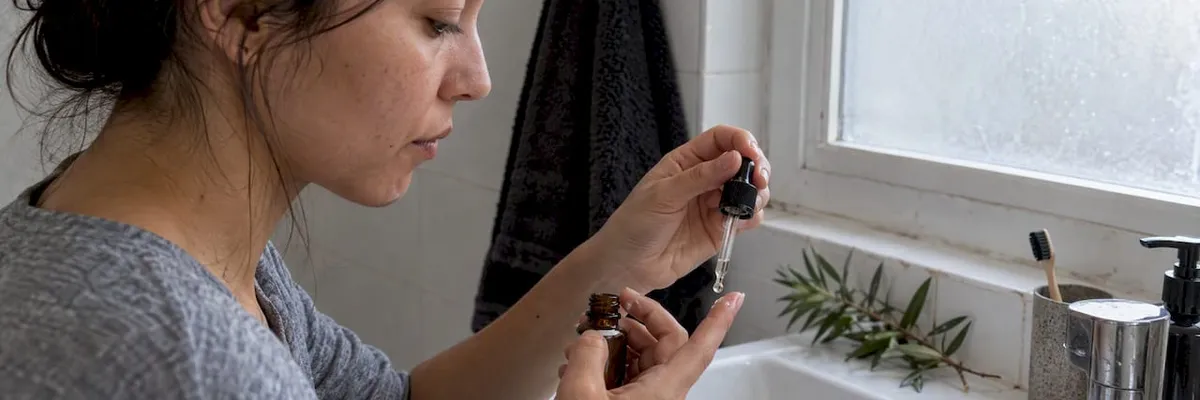
Tea tree can noticeably reduce inflammatory pimples in K-Beauty products, especially in moderate concentrations between 1 and 5 percent. The formulation determines the tolerability: Mild gels, toners, and spot treatments are more suitable for blemished skin than undiluted oil. Those looking for suitable, tested products will find a curated selection of K-Beauty with tea tree at Rammilav.
In short:
- A study with 124 participants showed improvements with both agents; tea tree oil caused less irritation, but reviews do not recommend it as a replacement for standard therapies.
- Start with products around 1 percent and at most one to two applications weekly; concentrations up to 5 percent are reserved for spot treatments.
- Never apply tea tree oil undiluted; test new products for 48 hours on a small skin area and discontinue if burning or redness occurs.
- If inflammations remain painful or scars form, you should consult a dermatologist, as tea tree does not replace medical clarification.
- Store tea tree products cool, protected from light, and well-sealed, as oxidized oil increases the risk of irritation and skin sensitization.
Table of Contents
- What is Tea Tree and How is it Used in K-Beauty?
- What Do Studies Show About Tea Tree Oil for Acne?
- How to Dose Tea Tree Correctly and Combine it Safely?
- Which K-Beauty Products with Tea Tree Suit Blemished Skin?
- How to Incorporate Tea Tree into a K-Beauty Routine for Blemished Skin?
- How to Test and Store Tea Tree Products Safely?
- What Tea Tree Can Really Do Against Acne and What It Can't
- Tea Tree Products at Rammilav: Tested K-Beauty Quality
- FAQ
- Sources
What is Tea Tree and How is it Used in K-Beauty?
Tea tree oil comes from the leaves of Melaleuca alternifolia and owes its effect mainly to the ingredient Terpinen-4-ol. This has antimicrobial and anti-inflammatory properties, making it highly sought after in skincare for blemished skin. The international standard ISO 4730 sets a minimum content of this substance, preventing adulteration and serving as a good quality indicator when choosing products.
In Korean cosmetics, tea tree rarely appears pure. Instead, it is incorporated into mild carriers that buffer the potential for irritation while also caring for the skin.
- Cleansing balms with a low tea tree content for gentle cleansing
- Toners with soothing additives like Centella Asiatica or Panthenol
- Spot gels for targeted application on individual pimples
- Light serums and moisturizing gels for comprehensive care
- Masks with low-dosed tea tree oil for weekly treatments
How can you recognize a good formulation? By light-protected packaging, as tea tree oil oxidizes quite quickly in air and light. Antioxidants in the formulation are another good sign, as is a clearly declared concentration on the label.
What Do Studies Show About Tea Tree Oil for Acne?
The clinical evidence for tea tree oil in acne is limited but not without substance. A randomized study with 124 participants compared tea tree oil with benzoyl peroxide over several months. It showed that both improved acne, with tea tree oil causing less frequent skin irritation, making it a milder option for sensitive skin. This makes tea tree oil a comparatively mild option for sensitive, acne-prone skin.
Recent systematic reviews confirm this trend but caution against overinterpretation. The evidence is promising but not yet methodologically mature enough to recommend tea tree oil as an equivalent replacement for standard therapies.
Known side effects include:
- Local redness and slight burning, especially at higher concentrations
- Sensitization with repeated use of oxidized oil
- Contact allergies, which can occur even at low dosages in rare cases
Compared to benzoyl peroxide or topical antibiotics, the potential for irritation is overall more moderate but does not disappear entirely.
How to Dose Tea Tree Correctly and Combine it Safely?
For home use, less is often more. The 5 percent used in studies marks more of an upper limit, not the starting point.
- Mild products with around 1 percent are suitable for daily introduction and for sensitive skin.
- Concentrations up to about 5 percent from clinical studies are reserved for spot treatments or targeted applications.
- Undiluted oil should not be applied directly to the skin according to the Federal Institute for Risk Assessment, as the risk of irritation and sensitization increases significantly.
Those combining tea tree products with AHA, BHA, or retinoids should be particularly attentive. The irritation potential of these active ingredients adds up, and the skin can react more quickly overwhelmed than with individual use.
The most sensible approach is a slow introduction: one to two applications per week, then increase depending on tolerability.
Pro Tip: Always test on a small, inconspicuous skin area for 48 hours before applying the product to the face.
Which K-Beauty Products with Tea Tree Suit Blemished Skin?
Not every formulation with tea tree is equally suitable for acne-prone skin. It is crucial that the accompanying substances support the skin rather than additionally irritate it.
- Mild, soap-free cleansing gels with a low tea tree content
- Toners with soothing additives that respect the skin's pH value
- Light, non-comedogenic moisturizing gels instead of heavy creams
- Spot gels for targeted treatment of individual blemishes
- Masks with low-dosed tea tree oil for weekly use
The Green Plum Refreshing Toner by Beauty Of Joseon demonstrates how K-Beauty implements this approach: soothing plant extracts meet a light, fast-absorbing texture that does not additionally burden blemished skin.
| Criterion | What to Look For |
|---|---|
| pH Value | Close to the natural skin value |
| Texture | Light, non-comedogenic, quickly absorbed |
| Packaging | Light-protected, as airtight as possible |
| Declaration | Concentration and warnings visible on the label |
How to Incorporate Tea Tree into a K-Beauty Routine for Blemished Skin?
A routine thrives on the right order and the right dose at the right time of day. For more details, you can also find a comprehensive Korean acne routine with additional product suggestions.
- Morning: mild, soap-free cleansing, followed by a soothing toner and a light moisturizing gel. A spot treatment with tea tree is applied only to active pimples.
- Evening with makeup: first an oil-based cleansing, then a water-based one, known as Double Cleansing, followed by the toner.
- Two to three times a week: a targeted tea tree product on affected areas, followed by a barrier-strengthening night care that restores moisture.
If the skin remains inflamed, painful, or scars form despite a consistent routine, visiting a dermatologist is the right next step, especially if considering chemical peels and numbing to have the skin professionally treated. Tea tree can support but does not replace medical clarification for pronounced acne.
How to Test and Store Tea Tree Products Safely?
A patch test is essential before each new application. A small amount is applied to the inside of the forearm and observed for 48 hours. Redness, itching, or burning are clear signals not to use the product on the face.
Storage also directly affects tolerability. Tea tree oil oxidizes in air and light, and oxidized residues increase the risk of skin irritation much more than fresh oil.
- Store products cool and protected from light, preferably in the original packaging
- Close bottles promptly after use to reduce air contact
- Prefer formulations with antioxidants, as they slow down oxidation
The Federal Institute for Risk Assessment explicitly points out these connections in its statement on undiluted tea tree oil and advises limited concentrations in cosmetic products.
Pro Tip: A product that has passed its expiration date or has been open for more than six months should not be used on irritated skin.
What Tea Tree Can Really Do Against Acne and What It Can't
Tea tree is often perceived in public as a mild miracle cure that is completely free of risks. This is not true. The evidence shows a real, measurable effect against inflammatory pimples, but also a side effect profile that must be taken seriously as soon as the concentration increases or the oil is oxidized.
More interesting than the pure effectiveness is, in our view, the comparison with other K-Beauty active ingredients against blemishes. Zinc regulates sebum and works more long-term, Centella Asiatica soothes and supports the barrier, while tea tree directly targets inflammation. None of these active ingredients replace the other, and understanding this builds a routine that addresses multiple points of attack simultaneously instead of hoping for a single ingredient. It is precisely this combination, not a single star ingredient, that makes the difference for stubborn blemished skin in our view.
— Aleksejs
Tea Tree Products at Rammilav: Tested K-Beauty Quality
At Rammilav, we source our products directly from verified suppliers, ensuring originality and consistent quality, especially with a sensitive active ingredient like tea tree oil. Our product pages transparently show declared ingredients and concentrations, so you know exactly what you're applying before you buy.
In our product overview, you will find cleansers, toners, serums, and spot treatments with tea tree, tailored to blemished and acne-prone skin. Orders over 80 CHF are shipped free of charge, and delivery usually arrives within a few days. Visit the catalog directly and find the product that suits your skin.
This article contains general information and does not replace consultation with a qualified doctor. Contact a qualified medical professional regarding your personal situation before acting based on this content.
FAQ
What Korean Cosmetic Brands Are There?
Well-known Korean brands include Cosrx, Beauty Of Joseon, and Purito, each with its own focus, such as on moisturizing, soothing, or blemishes. Many of these brands combine traditional ingredients with modern formulation techniques.
Why Do Korean Women Have Such Beautiful Skin?
A key reason lies in the consistent skincare routine with multiple, coordinated steps instead of a few intensive products. Mild cleansing, sun protection, and regular moisturizing play a larger role than individual active ingredients.
What Do Koreans Use for Their Skin?
Typical are multi-step routines with double cleansing, toners, serums, and light moisturizing gels, supplemented by targeted products against blemishes. Sun protection is considered a fixed part of every routine, regardless of skin type.
Which Korean Cosmetic Products Are Recommended?
For blemished skin, mild cleansing balms, soothing toners, and spot treatments with low-dosed tea tree are particularly suitable. More important than the brand is that texture and concentration match your own skin type.
How Does Tea Tree Oil Work Against Pimples?
Tea tree oil works through the ingredient Terpinen-4-ol, which is antimicrobial and anti-inflammatory, reducing inflammation in acne. The effect usually shows after several weeks of regular use, not overnight.
Sources
- Treatment of acne with tea tree oil: a review of efficacy, tolerability and potential modes of action - PubMed
- Efficacy and safety of Melaleuca alternifolia (tea tree) oil for human health—A systematic review of randomized controlled trials
- Use of undiluted tea tree oil as a cosmetic product — BfR


