
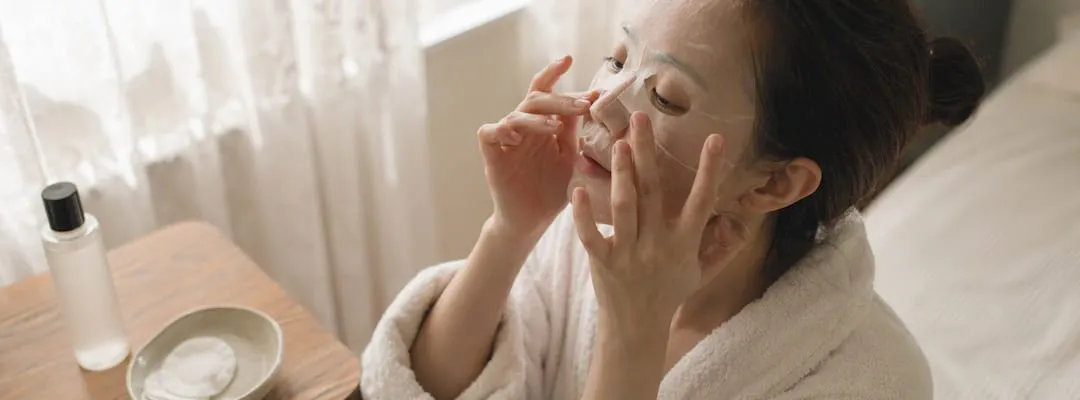
For most people, one to three sheet masks per week are optimal. Hydrating variants without acids or retinol can also be used daily in short phases, while masks with active ingredients should be limited to once a week. The application time is usually recommended to achieve optimal results. If the mask is left on longer, the effect can reverse, causing the skin to lose moisture rather than absorb it.
In short:
- Daily use of hydrating masks is possible as long as the application time does not exceed 15 to 20 minutes to avoid irritation.
- Active masks with AHA, BHA, or retinol should be used no more than once a week to avoid weakening the skin barrier.
- For sensitive skin, one application per week is sufficient, while oily skin types should limit active masks to twice a week.
- The application time is the most important factor to avoid irritation, as wearing it longer dries out the skin and reverses the effect.
- Top-quality masks should clearly state ingredients, recommended application time, and suitable skin type on the packaging.
Table of Contents
- Sheet Mask How Often: Recommendations by Mask Type
- How to Adjust Frequency to Your Skin Type
- How to Safely Use Sheet Masks
- Which Mistakes to Avoid with Application Frequency
- What to Look for When Choosing Sheet Masks
- Why Rigid Rules for Sheet Masks Don't Work
- Your Next Step to the Right Sheet Mask
- Sources
Sheet Mask How Often: Recommendations by Mask Type
Not every sheet mask deserves the same place in your skincare routine. The formulation determines how often your skin can tolerate it, and this difference is often overlooked in many guides.
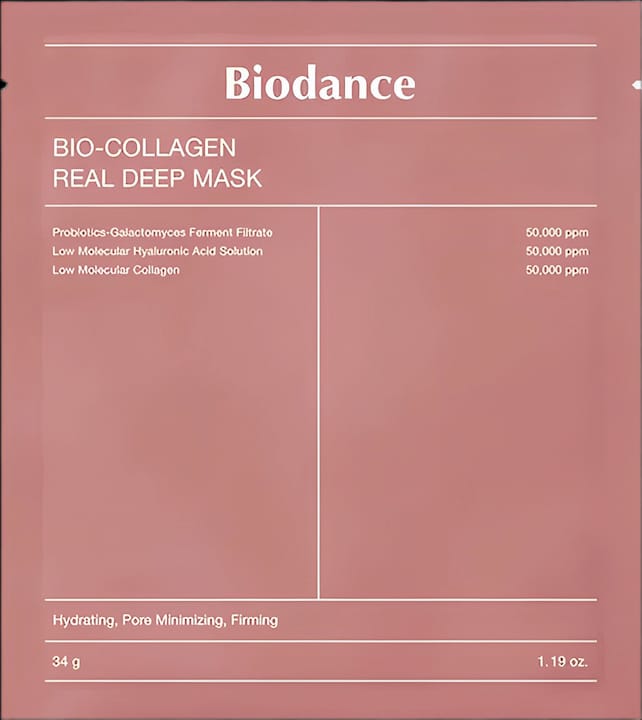
Hydration masks without fruit acids, retinol, or high concentrations of vitamin C belong to the most tolerable category. If they mainly contain hyaluronic acid, ceramides, or panthenol, dermatologists consider them a sensible addition to the daily routine, as long as the skin reacts positively. Daily use is acceptable with these mild formulas, but in practice, a frequency of two to three times a week is usually sufficient to maintain moisture balance.
Active masks with AHA, BHA, or retinol work differently. They interact with the top layer of skin and remove dead cells or stimulate cell renewal. For this reason, experts recommend a maximum of one application per week – the effect accumulates, and daily use would weaken the skin barrier over time.
Soothing masks with aloe vera, centella asiatica, or green tea are suitable as a short intensive treatment after sun exposure or after an overly intense peel. Here, the frequency can increase for three to five days, after which you return to the normal routine.
- Hydrating without acids: up to daily possible, usually 2 to 3 times a week sensible
- Active ingredients (AHA/BHA/Retinol): 1 time per week
- Soothing/Regeneration: short-term treatment as needed, then reduce
Pro Tip: A bulk pack with ten or more masks is practical for stock, but not a signal that daily use is sensible. The quantity on the shelf says nothing about the tolerability on your skin.
How to Adjust Frequency to Your Skin Type
The general rule is a starting point, not a fixed prescription. Your skin type determines where within the range you should land.
- Dry or dehydrated skin: Two to three applications per week with hydrating formulas are usually well tolerated. Occasionally, such as after a flight or a heating period, a mask can be used more often, as long as no irritation occurs.
- Sensitive skin: Here, restraint is key. One application per week is sufficient, and a patch test on the forearm before the first use of a new product is a must, not an option.
- Oily or blemish-prone skin: Hydrating masks can be used occasionally without clogging pores. Active ingredients against blemishes should be limited to one to two times a week, as overuse can dry out the skin and paradoxically stimulate sebum production.
- Combination skin: Instead of the entire face, often only the T-zone or the dry cheek area benefits from a mask. Targeted application only in the affected zones, combined with varying frequency depending on the season, works better for many than a rigid plan.
The AAD emphasizes that masks can never replace individual skin reactions, and manufacturer instructions always take precedence over general rules.
How to Safely Use Sheet Masks
The right frequency is of little use if the application itself is wrong. First, cleanse the face thoroughly so the mask can release its active ingredients undisturbed. A toner beforehand is optional but helps prepare the skin for the following moisture supply.
Then apply the mask for 15 to 20 minutes. Longer does not bring additional benefits, rather the opposite.
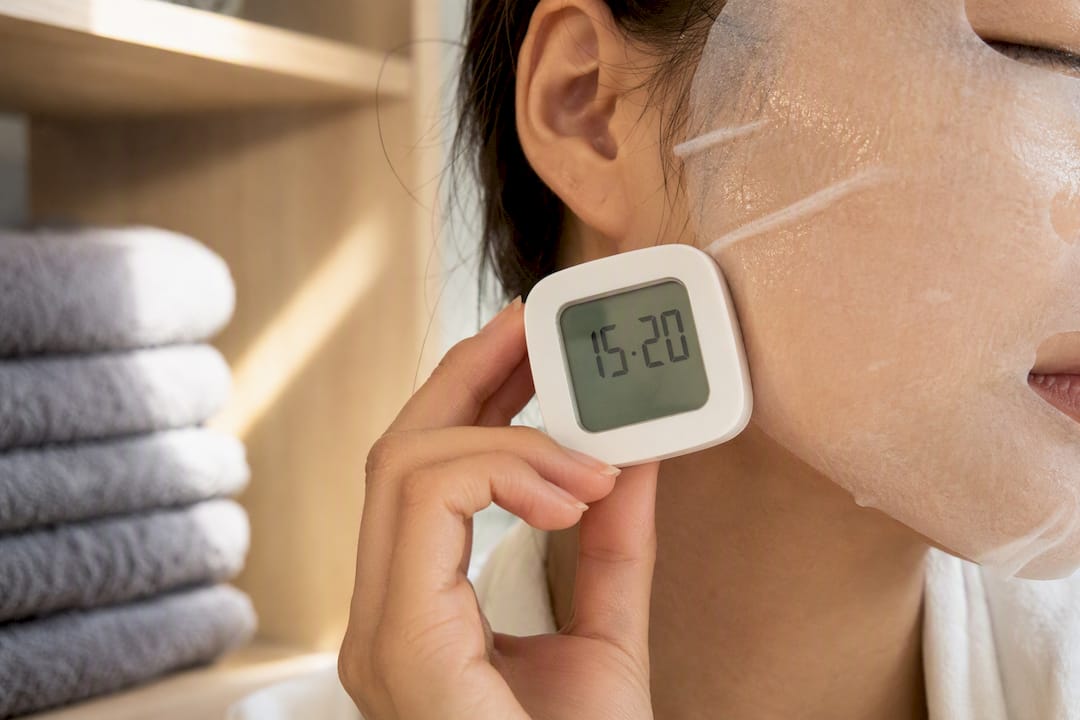
A study with 175 participants showed an increased risk of irritation with wear times over 20 to 25 minutes – the sheet begins to dry out during this phase and draws moisture from the skin instead of giving it, as a study on sheet mask application times confirms. This reversal effect is why letting it dry out is one of the most common application mistakes.
After removing the mask, essence usually remains on the skin. Massage it in rather than washing it off.
- Pat in remaining essence, do not rinse off
- Seal in moisture with a cream, such as a moisturizer
- Apply sunscreen during the day, as some masks temporarily make the skin more sensitive
Washing off after the mask is usually unnecessary, only in cases of noticeable intolerance or very oily residues should you rinse briefly with water.
Which Mistakes to Avoid with Application Frequency
The three most common mistakes have one thing in common: they arise from well-intentioned over-motivation, not negligence.
- Letting the mask dry out, assuming more time brings more effect
- Using masks with AHA, BHA, or retinol multiple times a week
- Combining multiple active products at once, such as an acid mask after a retinol serum
Redness, a burning sensation, suddenly more blemishes, or a feeling of tightness despite the mask are warning signs that the frequency is too high. Professional articles advise in this case to take an immediate break of three to seven days, followed by a slow return to once a week with a mild, hydrating formula.
Pro Tip: Always read the packaging instructions for recommended frequency before using a new product for the first time and do a patch test on the inside of your forearm. It takes two minutes and can save you a week of irritated skin.
What to Look for When Choosing Sheet Masks
The effect of a mask directly depends on the quality and authenticity of the formula. Rammilav sources its products directly from verified suppliers, which is not a given with Korean cosmetics, as the market remains susceptible to counterfeits.
Before incorporating a new mask into your routine, it is worth looking at three things:
- The complete ingredient list to identify active ingredients like acids or retinol
- The manufacturer's recommendation for the application time on the packaging
- The manufacturer's recommendation for the suitable skin type
Brands like Cosrx, Beauty Of Joseon, or Purito usually clearly label their formulas by effect, making it easier to match them to your own skin situation. Those specifically looking for a mild formula suitable for more frequent use can find suitable options through the shop's search function or on the guide page without having to navigate through a confusing range. Fast delivery times within Switzerland, usually two to three days, also mean that a reorder does not interrupt the routine.
Why Rigid Rules for Sheet Masks Don't Work
The widespread notion that there is a single correct number for everyone does not hold up in practice. I consider the fixed rule "three masks per week for everyone" to be the biggest misconception on this topic. A person with robust, oily skin and a person with thin, sensitive skin need different answers, even if both use the same mask.
What is often missing in common advice is the focus on application time as the actual risk factor. Many people reduce their frequency out of caution but still leave the mask on too long. That's the wrong adjustment. The limit of 20 to 25 minutes deserves more attention than the question of whether it was three or four times on Monday or Wednesday.
My advice: Start with the application time as a fixed rule, and only then adjust the frequency to your skin reaction. Those who reverse this order are optimizing at the wrong end.
— Aleksejs
Your Next Step to the Right Sheet Mask
Rammilav offers you direct access to original products from Korean brands without having to deal with the risk of counterfeits from anonymous online retailers. For readers looking for a mild mask for more frequent use after this guide, the Green Tea Essence Sheet Mask with a hydrating formula without aggressive acids is suitable. Those planning an intensive treatment after sun exposure will find a soothing option with the Aloe Vera Essence Sheet Mask in a ten-pack. All products come directly from verified suppliers, and delivery within Switzerland usually takes two to three days, free shipping for orders over 80 francs. Check out the shop and find the mask that suits your skin type and planned frequency.
Sources
- PubMed: Study on Sheet Mask Application Times (2022)
- American Academy of Dermatology: Do facial masks work, and should I add one to my skin care routine?
- Zocdoc: Dermatologists Debate Sheet Masks


