

Retinal works faster and is considered more potent than Retinol at the same concentration because it requires only one conversion step to active retinoic acid in the skin. For beginners with sensitive skin, Retinol often remains the wiser first choice because it starts more gently and has been tested for decades. The rule of thumb: Those with retinoid experience who want to see results quickly should opt for Retinal in a low dosage within the recommended range.
- Retinal: faster, more potent, usually lower dosed
- Retinol: milder, more widely tested, ideal for beginners
- Both convert to retinoic acid, the truly effective molecule
Key Insights
Retinal acts faster and more potently than Retinol due to the shorter conversion path, but good stabilization determines actual effectiveness more than the pure percentage.
| Topic | Details |
|---|---|
| Chemical Difference | Retinal requires only one conversion step to retinoic acid, Retinol two. |
| Onset of Action | Retinal often shows first effects after 4 to 8 weeks, Retinol rather after 12 weeks. |
| Concentration | Retinal often works from 0.05%, Retinol usually from 0.25 to 1%. |
| Introduction | Start with 2 to 3 applications per week and gradually increase over several weeks. |
| Source | Rammilav offers stabilized, original retinoid products with fast delivery in Switzerland. |
Table of Contents
- Retinal or Retinol: What is the Chemical Difference?
- How Much Faster Does Retinal Really Work?
- What Concentration is Sensible for Retinal and Retinol?
- Who is Retinal Suitable for, and Who is Retinol Suitable for?
- How to Properly Introduce Retinol or Retinal into Your Routine
- What Side Effects are Normal with Retinoids?
- How to Switch from Retinol to Retinal
- How Rammilav Selects Retinoid Products for the Shop
- What Aleksejs Says About the Retinal Debate
- Where to Find Tested Retinal and Retinol Products
- Sources
Retinal or Retinol: What is the Chemical Difference?
Both substances belong to the Vitamin A family but differ in their chemical form. Retinol is the Vitamin A alcohol, the mildest and most widely used form in skincare. Retinal, also known as retinaldehyde, is chemically one step closer to retinoic acid, the molecule that actually binds to skin cells and initiates renewal.
The path to this explains almost everything that distinguishes Retinal and Retinol in everyday life. Retinol must undergo two conversion steps in the skin: first, it becomes Retinal, then retinoic acid. Retinal, on the other hand, needs only one step to convert into its active form.
- Retinol → Retinal → Retinoic Acid (two conversion steps)
- Retinal → Retinoic Acid (one conversion step)
This one saved step is why Retinal generally acts faster and more potently than Retinol at the same percentage. The skin has to do less conversion work until the active ingredient reaches where it is supposed to have an effect. At the same time, this does not automatically mean that Retinal is the better choice for every skin type, as the higher conversion speed often also increases the potential for irritation.
How Much Faster Does Retinal Really Work?
Split-face studies and reviews tend to show stronger improvements with Retinal compared to Retinol, although the differences are not statistically clear in every measured skin parameter. The statement circulating in some guides that Retinal is "ten times more effective" cannot be clearly derived from the current study situation on retinoids. Such blanket multiplications are more marketing exaggeration than proven results.
What can be well demonstrated, however, is the timing of when the first visible effects occur. With consistent use, Retinal users often report improved skin texture, finer pores, and more even pigmentation after four to eight weeks, as an analysis of Retinal and Retinol describes. With Retinol, it usually takes longer, often around twelve weeks, for comparable changes to become visible.
- Retinal: first effects often after 4 to 8 weeks
- Retinol: first effects often after about 12 weeks
- Both active ingredients require several months for the full result
The actual insight from the study situation on the stability and effect of retinoids is: Formulation and study design influence the result more than a single percentage number might suggest.
What Concentration is Sensible for Retinal and Retinol?
Retinal is usually dosed lower than Retinol because it works in small amounts due to the shorter conversion path. According to a journalistic evaluation of Retinal and Retinol, even 0.05% Retinal shows noticeable effects, while for Retinol, a comparable effect is often only indicated from 0.25% or more.
However, the percentage alone says little about actual effectiveness. Retinal is chemically reactive and oxidizes easily if not properly stabilized. Good formulations therefore rely on encapsulation, lipophilic carrier systems, airless dispensers, and accompanying antioxidants to protect the active ingredient from air and light. A comparison of the stability issue with retinoids shows that doubly encapsulated Retinal remains significantly more stable than unprocessed Retinal, and it is precisely this processing that often determines the effect more than the pure percentage.
- Retinal: usually 0.05 to 0.2%
- Retinol: usually 0.1 to 1%
- Stabilization and packaging are at least as important as the concentration
Pro Tip: When buying, don't just look at the percentage on the packaging, but also whether the active ingredient is encapsulated and whether the packaging is opaque and airtight, such as an airless pump. A well-formulated product with a moderate concentration often beats a poorly stabilized product with a high percentage.
Who is Retinal Suitable for, and Who is Retinol Suitable for?
The choice depends less on age than on tolerance, experience, and goals. Those who have never used a retinoid are safer with low-dose Retinol because the skin gets used to the active ingredient more slowly. Those who already have retinoid experience and want faster visible results can go straight to a low-dose Retinal formula.
- Sensitive skin: Retinol in low concentration, increase slowly
- Oily, blemish-prone skin: Retinal is often well tolerated and works quickly against clogged pores
- Mature skin focusing on wrinkles and elasticity: Retinal for faster visible effect, provided the skin is already accustomed to retinoids
- Combination skin without particular sensitivity: both options work, the formulation decides
Professional articles and dermatology interviews recommend Retinol for retinoid beginners, while experienced users seeking faster effects tend to opt for Retinal, always accompanied by slow introduction and consistent sun protection. During pregnancy and breastfeeding, both active ingredients should be avoided as Vitamin A derivatives are contraindicated here.
How to Properly Introduce Retinol or Retinal into Your Routine
The body needs time to get used to retinoids, no matter which form you choose. Increasing too quickly is the most common reason for redness, tightness, and flaking.
- Week 1 to 2: Apply the product two to three times a week in the evening on completely dry skin, never directly after washing.
- Week 3 to 4: Increase to every other evening if the skin shows no persistent irritation.
- From Week 5: With good tolerance, daily evening application is possible; with Retinal, a lower frequency often suffices.
- Always after: Apply moisturizer to support the barrier and use consistent sun protection during the day, as the skin becomes more sensitive to light under retinoids.
It's also important to follow the order in the routine: cleansing, wait briefly until the skin is really dry, then the retinoid, followed by moisturizer. Do not combine Retinal or Retinol with strong chemical peels like AHA or BHA on the same evening, as this unnecessarily increases the risk of irritation.
Pro Tip: Those with very sensitive skin can use the "sandwich method": first a thin layer of moisturizer, then the retinoid, then moisturizer again. This slightly buffers the effect without completely neutralizing it.
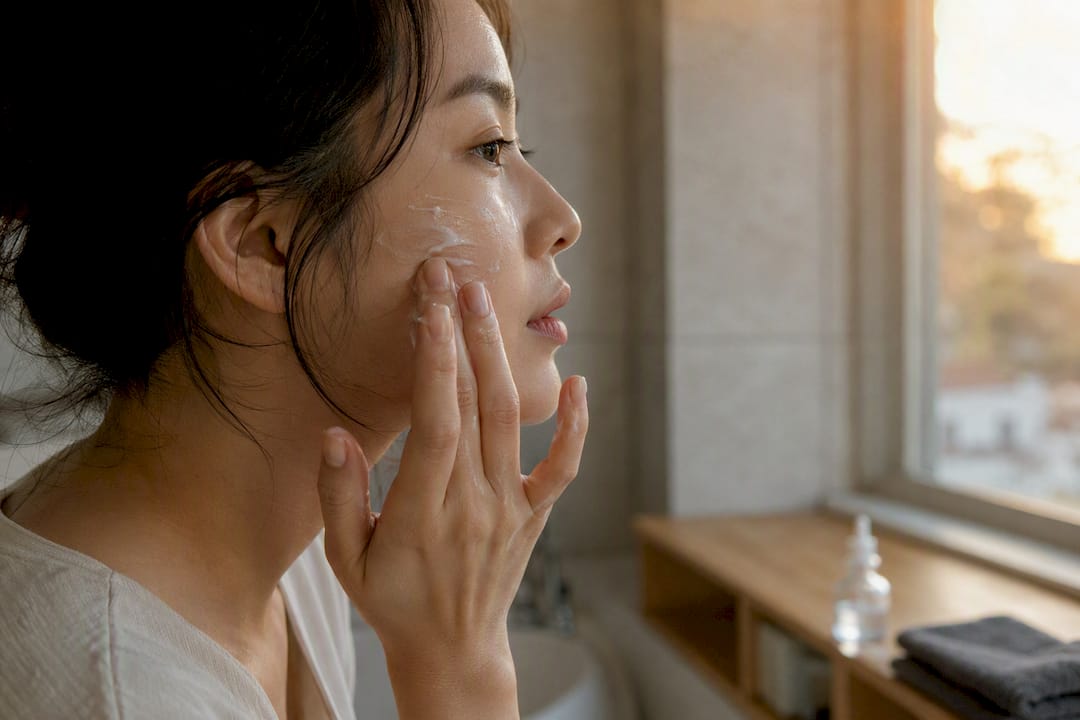
What Side Effects are Normal with Retinoids?
In the first weeks, redness, slight burning, and fine flaking are not uncommon, neither with Retinol nor with Retinal. These reactions subside for most people within two to four weeks if the application is increased slowly.
It is more difficult to assess the difference between "purging" and real over-irritation. Purging refers to a temporary worsening of blemishes because the active ingredient accelerates cell renewal and brings already existing blackheads to the surface faster. This usually resolves itself after four to six weeks. Persistent redness, burning, or rash over several weeks, on the other hand, suggests over-irritation or intolerance, in which case only pausing and switching to a lower concentration helps.
- Purging: short-term, mainly affects blemish-prone areas, resolves on its own
- Over-irritation: persistent, often widespread, requires a break in application
Pregnant and breastfeeding women should completely avoid Retinal and Retinol. For existing skin conditions such as rosacea or eczema, a consultation with a dermatological professional is worthwhile beforehand.
How to Switch from Retinol to Retinal
A switch is usually worthwhile only when the skin already tolerates Retinol well, i.e., at least eight to twelve weeks without persistent irritation. Before switching, it is worth looking at the rest of the routine: Is the moisture supply stable, is the skin barrier intact?
- Start with a low Retinal concentration, about 0.05%, instead of jumping straight to higher values.
- Initially apply it only two to three times a week, even if you have already tolerated Retinol daily.
- Observe the skin over four to eight weeks before further increasing the frequency.
Expectations should remain realistic: First visible improvements often appear after four to eight weeks, but the full result in skin texture and wrinkle depth develops over several months.
How Rammilav Selects Retinoid Products for the Shop
Rammilav sources its Korean cosmetics directly from verified suppliers, ensuring original goods and consistent quality. For active ingredients like Retinal and Retinol, the shop checks not only the concentration on the packaging but also how the active ingredient is formulated and stabilized.
When shopping for yourself, the same look is worthwhile: Check the INCI list for encapsulation hints, look for opaque packaging, and if possible, an airless dispenser that minimizes air contact. These are concrete quality signs, regardless of the brand name.
- Original goods directly from verified suppliers
- Formulation and stabilization as selection criteria, not just the percentage
- Fast delivery within Switzerland, usually in two to three days
- Free shipping for orders over 80 CHF
What Aleksejs Says About the Retinal Debate
The skincare industry has made Retinal a miracle product that supposedly does everything faster and better. That's too simplistic. The one saved conversion step is real and makes Retinal indeed more potent, but the tenfold effectiveness that some marketing texts claim does not stand up to the study situation.
What often gets lost in the discussion: Formulation beats concentration. A poorly stabilized Retinal serum with a high percentage can bring less in practice than a well-encapsulated Retinol product with a lower dosage. Those who only pay attention to the number on the packaging often make the wrong decision.
My assessment: The question "Retinal or Retinol" is more important than "which percentage." Those who are new to it lose nothing by first gaining experience with Retinol. Those who want to save time should pay attention to stabilization with Retinal, not just the highest available dose.
Where to Find Tested Retinal and Retinol Products
Those who know from this overview which retinoid suits their skin face the next question: where to find a product that actually meets the formulation criteria. Rammilav offers a curated selection of Korean skincare with products from brands like Cosrx, Beauty Of Joseon, and Purito, sourced directly from verified suppliers. Instead of wading through endless marketplace offers with unclear origins, you will find original goods with traceable formulation here.
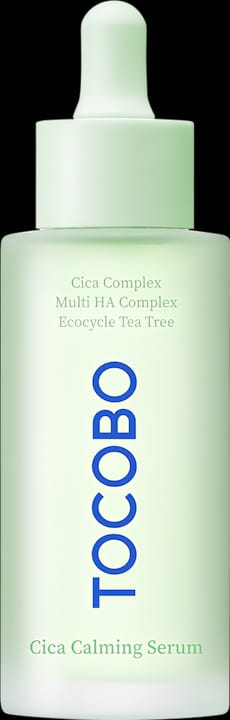
Especially during the acclimatization phase to retinoids, it is worth looking at accompanying care: a soothing Cica serum for irritated days or a replenishing moisturizer for barrier building. Order today from the Rammilav catalog and benefit from free shipping from 80 CHF and delivery within Switzerland usually within two to three days.
Sources
For deeper research, the overview studies on retinoids on NCBI are suitable due to their scientific study scope, as well as the risk assessment of Vitamin A by GDCh as a regulatory source for safety limits. In the case of persistent skin reactions or pre-existing conditions, dermatological advice is always more sensible than further experimentation.
This article contains general information and does not replace advice from a qualified doctor. Consult a qualified medical professional about your personal situation before acting based on this content.
- NCBI PMC (Review/Studies): Retinoids and Effectiveness
- Stern
- Retinol vs. Retinal: Effect, Study Situation & Stability of Retinoids — Selfcare Society


