
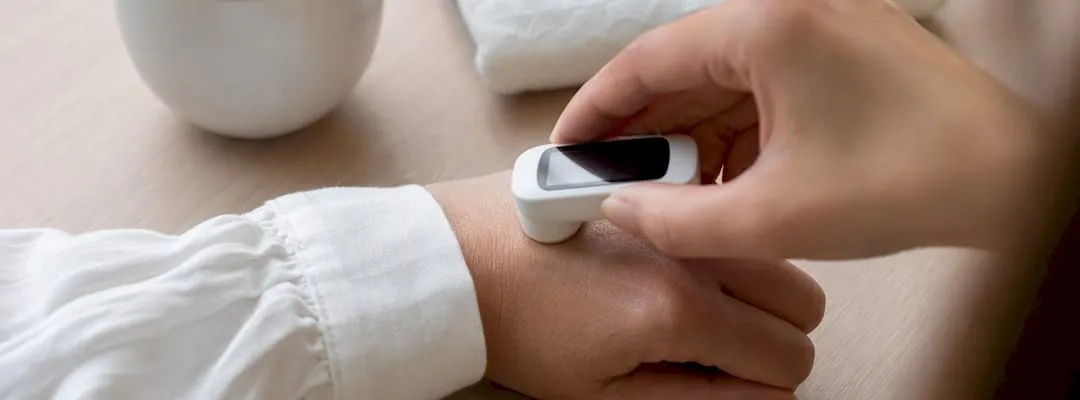
For a healthy skin surface, a slightly acidic pH level between about 4.5 and 5.5 is optimal. Some measurements show a broader range from 4.0 to 6.5, depending on the body part and method. The key is the difference between two terms that are often confused: pH-neutral means chemically the value 7, like pure water. pH-skin-neutral, on the other hand, refers to a range that matches the natural acidity of your skin.
This difference is not just a detail for chemists. A cleansing product that advertises as “pH-neutral” can dry out your skin barrier over weeks because it pushes the skin into a too alkaline range. Why this is important is shown in two effects: First, the acidic surface protects against germs that multiply more easily in an alkaline environment. Second, many skin enzymes need this acidic range to build lipids and shed dead skin cells.
In short, what matters when choosing your skincare products:
- Cleansers and toners should be in the range of about 4.5 to 5.5
- “pH-skin-neutral” is not the same as “pH-neutral” (value 7)
- A permanently elevated skin pH promotes, according to studies from the University of Hamburg, the growth of problematic germs like Staphylococcus aureus
Key Insights
The ideal skin pH is between 4.5 and 5.5, and cleansing products influence this value more than any other skincare measure.
| Topic | Details |
|---|---|
| Know the target range | “pH-skin-neutral care” means about 4.1 to 5.8, not the chemically neutral value 7. |
| Optimize cleansers first | Mild syndets at pH 5.5 stabilize the barrier more than any expensive cream afterward. |
| Consider buffering capacity | The nominal pH value of a cream alone says little; what matters is its behavior on the skin. |
| Use acids sparingly | Peels and serums with fruit acids lower the pH specifically, but only in moderate frequency. |
| Choose products with verified origin | Rammilav offers mild cleansers, toners, and creams from Korean brands with traceable formulations. |
Table of Contents
- What is the skin pH and how is it measured?
- Why does the pH control skin barrier, enzymes, and microbiome?
- What changes your skin's pH in everyday life?
- What pH should skincare products have?
- How to choose pH-skin-friendly products in three steps
- Which pH-friendly product categories does Rammilav offer?
- Why pH information alone is not enough
- Gentle Korean care for your pH-conscious routine
- Frequently asked questions about skin pH in skincare
- Sources
What is the skin pH and how is it measured?
The pH value indicates how acidic or alkaline a solution is, on a scale from 0 to 14. Seven is neutral, everything below is acidic, everything above is alkaline. However, your skin surface is not a simple water bath, but a complex mixture of sweat, sebum, lactic acid, and amino acids, which experts refer to as the “acid mantle.” This mantle is formed by the breakdown of sebum components and by metabolic products of the natural skin flora.
The skin surface pH is usually measured in practice with a single-glass electrode, a small sensor placed directly on the skin. According to the Chemistry Department of the University of Hamburg, this method is considered a reliable indicator of how well a cosmetic product is tolerated. A multicenter study found values on the forearm in the range of about 4.1 to 5.8 in most people examined, with a median close to 4.8.
However, the values vary significantly depending on the body region:
| Body Region | Typical pH Range | Special Feature |
|---|---|---|
| Forehead | approx. 4.8 | Relatively constant, good for comparative measurements |
| Forearm | 4.1 to 5.8 (Median 4.8) | Most frequently studied reference region |
| Buttocks and armpits | Higher, often above 5.5 | Moister skin folds favor more alkaline values |
| Newborn skin | Initially higher, decreases in the first days | Stabilizes within weeks according to a study on skin physiology |

The timing of the measurement also plays a role. Immediately after washing, the pH value is usually higher because even mild cleansers temporarily shift the acid mantle. Only after one to two hours does the skin regenerate to its original value, provided the barrier is intact.
Why does the pH control skin barrier, enzymes, and microbiome?
This is where it gets specific for your skincare routine. Certain enzymes in the top layer of the skin only work properly at a specific pH. β-Glucocerebrosidase and sphingomyelinase, two enzymes responsible for building protective lipids, unfold their full activity in the slightly acidic range. Proteases, which ensure the shedding of old skin cells, function better at a slightly higher pH. If the value shifts permanently upwards, this balance gets out of sync: lipid production decreases while shedding increases, weakening the barrier overall.
A permanently elevated skin pH promotes the growth of pathogenic germs and simultaneously disrupts the enzymatic processes responsible for desquamation and lipid synthesis.
This insight from the University of Hamburg explains why the acidic environment of the skin is not just a chemical detail but a real protective function. A low pH value acts bacteriostatically, inhibiting the growth of many unwanted germs while favoring beneficial bacteria of the skin flora. If the pH value rises, this balance shifts, and the risk of infection increases.
Doctors observe this connection in several skin diseases. In atopic dermatitis, better known as eczema, the skin pH is often above average. An elevated pH value is also discussed as a contributing factor in acne and certain fungal infections, although not as the sole cause. This makes it clear: the pH value is not just a cosmetic detail but a building block of skin health that you can actively influence with your product choices.
What changes your skin's pH in everyday life?
Not every influence has the same strength. Some factors shift the pH value only minimally, while others deeply affect the barrier function.
- Cleansing products have the strongest effect. Alkaline soaps with a pH of 9 to 10 significantly raise the skin surface pH and increase transepidermal water loss according to a review on cleansers and barrier effects. Syndets formulated at about pH 5.5, on the other hand, show a stabilizing effect on the barrier.
- Water hardness and washing temperature have a moderate effect. Very hot water and frequent washing further enhance the pH increase because they wash out protective lipids.
- Cosmetic acids and peels specifically and temporarily lower the pH, which supports skin renewal when dosed correctly, but can cause irritation if used too frequently.
- Body part, age, and skin condition have a weaker but lasting effect. Mature skin tends to slightly higher pH values, as do certain skin diseases and some medications.
Knowing this order helps you understand where an adjustment to your routine will have the greatest effect: with the cleansing product, not the expensive anti-aging cream.
What pH should skincare products have?
Cleansers and toners are the product category where the pH value matters most because they directly interact with the skin surface. Professional recommendations, including those from the GDCh on pH information for cosmetic products, set the target range for “pH-skin-neutral” products at about 4.1 to 5.8. With creams, the matter is more complicated: the nominal pH value on the packaging alone says little. What matters is the buffering capacity of a formulation, i.e., how stable it keeps its pH when it comes into contact with the skin and mixes with sweat and sebum.
In water-in-oil emulsions, the pH information is according to expert comments on the significance of the pH value of dermocosmetics hardly meaningful because the aqueous phase is enclosed in oil and hardly interacts with the skin surface. For you as a consumer, this means: with a cream, the barrier effect overall counts more than the bare pH number on the label.
These ingredients particularly support a healthy skin environment:
- Lactic acid and lactates, which are chemically close to the natural acid mantle
- Ceramide-promoting lipids that directly strengthen the barrier
- Mild surfactants based on syndet instead of classic soap base
Acidic serums with glycolic or salicylic acid make sense if you specifically want to stimulate skin renewal, for example, with keratinized or impure skin. However, they should not be used in high doses daily, as this can weaken the barrier instead of strengthening it.
Pro Tip: Never apply acidic serums or peels directly after an alkaline cleansing. Wait a few minutes so that the skin can recover a bit between steps.
How to choose pH-skin-friendly products in three steps
Before buying a new product, it is worth taking a quick inventory of your skin condition. Mature skin, oily skin, and sensitive skin react differently to the same pH value, so the blanket recommendation “just take something acidic” is too imprecise.
- Determine skin condition. Sensitive skin with a disturbed barrier often benefits from values at the lower end of the target range, i.e., close to 4.5. Oily skin usually tolerates slightly higher values up to 5.5 without the sebum production getting out of balance.
- Read the product label. Look for a specific pH indication, the type of surfactant (syndet instead of classic soap), and any acids or buffering substances. If the pH indication is completely missing, this is not a warning signal in itself, but a hint to look more closely at the ingredients.
- Introduce new products slowly. Test a new acidic serum first on a small area, such as the inside of the forearm, and only increase the frequency of use after a few days without a reaction.
A dermatologist is indicated if redness, burning, or a feeling of tightness persists for more than a few days, or if you want to combine several active ingredients at the same time and are unsure whether they neutralize or enhance each other.
Pro Tip: Never combine two strongly acidic products on the same evening. A toner with lactic acid and a peel with salicylic acid almost always overwhelm the barrier.
Which pH-friendly product categories does Rammilav offer?
Rammilav is a Swiss online shop for Korean cosmetics that sources products from brands like Cosrx, Beauty Of Joseon, and Purito directly from verified suppliers. This origin control is not a side aspect for pH-sensitive products, as original goods guarantee that the declared formulation actually matches the delivered one.
The range includes several categories that fit a pH-conscious routine:
- Mild cleansing balms like the Purito From Green Avocado Cleansing Balm, which dissolves sebum and makeup without burdening the skin with alkalinity
- Toners for sensitive skin like the Haruharu Wonder Black Rice Hyaluronic Toner, which supports after cleansing
- Moisturizing creams like the Lebelage Super Aqua Moisture Cream with a focus on barrier care
Delivery within Switzerland usually takes 2 to 3 days, free of charge for orders over 80 CHF. Those who want to read more before buying can find further articles on routine building and product combinations in the Beauty Guide from Rammilav.
Why pH information alone is not enough
The biggest misconception about skin pH is the assumption that a single number on the packaging would explain everything. That's not quite true. The buffering capacity of a formulation, i.e., how strongly it maintains its pH in contact with sweat and sebum, influences the actual effect at least as much as the nominal value itself. Two creams with identical pH 5.5 can behave completely differently on the skin, depending on how they are formulated.
The second underestimation concerns cleansing. Many invest in expensive serums, while the cleanser, used twice daily, has the greatest impact on the skin pH and is usually the cheapest to replace. If you want to change just one thing in your routine, start here, not with anti-aging care.
And the third thing that is often overlooked: regional and individual differences mean that a product that works perfectly for a friend can work quite differently for you on another body part or with a different skin condition. Universal solutions are the exception, not the rule, in this topic.
Gentle Korean care for your pH-conscious routine
Those who take cleansing as a lever for skin pH seriously will find products at Rammilav that are specifically designed for this, instead of buying expensive serums and saving on the cheapest but most effective step. Unlike many drugstore products with unclear pH declarations, all items in the shop come directly from verified suppliers of the brands Cosrx, Beauty Of Joseon, and Purito, making composition and quality traceable. For sensitive or barrier-disturbed skin, it is worth taking a look at the Beauty Of Joseon Revive Serum with Ginseng and Snail Mucin, which can support regeneration after aggressive cleansing. Delivery within Switzerland usually takes 2 to 3 days, free of charge for orders over 80 CHF. Browse the Rammilav shop and reassemble your routine with mild, origin-verified products.
Frequently asked questions about skin pH in skincare
What is the difference between pH-neutral and pH-skin-neutral? PH-neutral chemically refers to the value 7, like pure water. PH-skin-neutral, on the other hand, means a range of about 4.1 to 5.8, which corresponds to the natural acidity of the skin surface. A product that is “neutral” instead of “skin-neutral” can therefore dry out the skin rather than protect it.
What pH should a good facial cleansing product have? Most recommendations set the target range for cleansers and toners at about 4.5 to 5.5. Syndets in this range show a stabilizing effect on the skin barrier according to studies, compared to classic alkaline soaps with pH 9 to 10.
Why is the pH value particularly important for sensitive skin? Sensitive and barrier-disturbed skin reacts more strongly to pH fluctuations because its protective function is already weakened. A too high pH value disrupts the enzymes responsible for lipid building and cell renewal and additionally promotes the growth of unwanted germs.
Can I measure my skin's pH myself? Professional measurements are made with a single-glass electrode, as used in dermatological studies. For everyday use, there are simple pH test strips that provide a rough guideline but do not deliver results as precise as professional pH-metry.
How often should I incorporate acidic products into my routine? This depends on the active ingredient and your skin tolerance. As a rule of thumb: introduce new acid products slowly, start with two to three applications per week, and never combine with a second strongly acidic product on the same evening.
Sources
- Determination of skin surface pH: Chemistry Department: University of Hamburg
- Thieme Connect — Study/Review on Cleansers and Barrier Effects
- Refubium — Study on Skin Physiology and pH


