
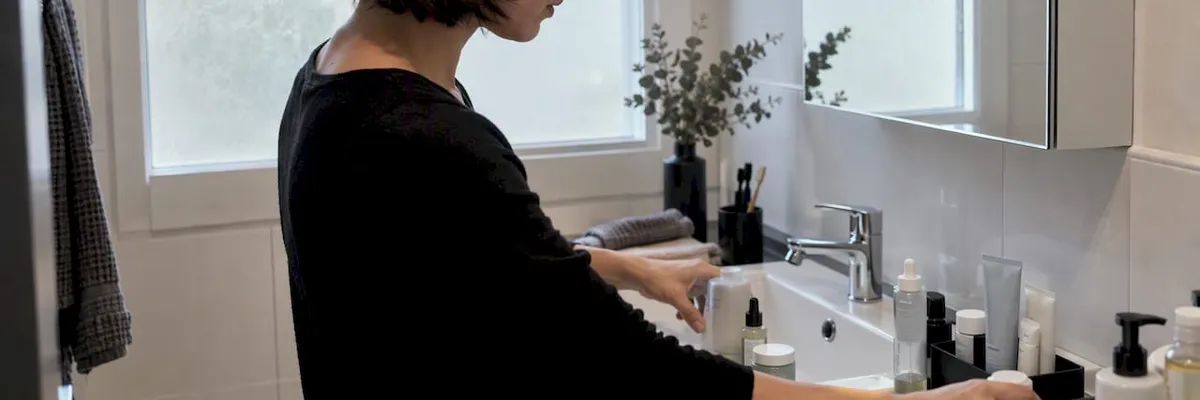
For perioral dermatitis, simplifying your skincare routine, known as the zero therapy, is primarily helpful. K-Beauty products can support this process if they are carefully selected to be gentle: mild cleansing, alcohol-free toner, soothing moisturizers, and physical sunscreen form the basis. Rammilav offers exactly these categories and is a suitable source for the transition.
In short:
- A consistent reduction of the skincare routine to mild cleansing and moisturizing products is crucial for perioral dermatitis.
- Products without fragrances, alcohol, or potentially irritating ingredients, as well as short, clear INCI lists, are best suited during zero therapy.
- Discontinuing corticosteroids should be medically supervised to avoid a rebound effect that can worsen the skin.
- If needed, cooling black tea compresses can temporarily relieve tightness and irritation but do not replace medical treatment.
- For the transition phase, gentle K-Beauty products like alcohol-free toners, Cica serums, and physical sunscreen in watery textures are suitable.
Table of Contents
- Quick Check: Is it Perioral Dermatitis?
- Zero Therapy in Practice: Step by Step to Calming the Skin
- K-Beauty Categories Suitable for Perioral Dermatitis
- Make-up for Perioral Dermatitis: Covering Without Additional Irritation
- Medical Treatment, Duration, and Risk of Recurrence
- Common Mistakes in Treating with K-Beauty
- How to Adapt Your K-Beauty Routine for Sensitive Skin
- Patience, Structure, and Small, Safe Steps
- Rammilav: Gentle K-Beauty Categories for the Transition Phase
- Sources
- FAQ
Quick Check: Is it Perioral Dermatitis?
Perioral dermatitis typically appears as small, often itchy or burning nodules and pustules around the mouth, sometimes also around the nose and eyes. A narrow strip of skin directly at the lip usually remains unaffected, which is a clinical hallmark. The most common triggers are topical corticosteroids, but thick creams, fluoride toothpaste, or occlusive masks can also overwhelm the skin.
You should be aware of the following signs:
- Small red papules or pustules, clustered around the mouth
- A narrow, unaffected strip directly at the lip line
- Burning or tightness instead of intense itching
- Deterioration after using cortisone or new skincare products
If the changes spread rapidly, fever occurs, or nothing improves after a few weeks of reducing skincare, it should be handled by a dermatologist.
Zero Therapy in Practice: Step by Step to Calming the Skin
The guideline from Derma Ostschweiz describes perioral dermatitis as a result of repeated skin irritation, and this is where the treatment begins: less is more. Topical glucocorticoids are considered contraindicated, even if they promise short-term relief.
Here's how to implement zero therapy:
- Reduce your routine to the essentials: only cleansing and a light moisturizer.
- Wash your face morning and evening only with lukewarm water or a mild syndet without surfactants that foam strongly.
- Avoid serums, peels, and active ingredients for at least two to four weeks.
- Apply a thin layer of a fragrance-free, hydrophilic moisturizer as soon as the skin feels tight.
- Protect the skin during the day with physical sunscreen, as UV light can exacerbate irritation.
If you have previously used cortisone preparations, tapering off is crucial. Abrupt discontinuation can trigger a temporary rebound flare, according to StatPearls, where the skin temporarily worsens before recovering. Therefore, medical supervision is recommended when tapering off, especially if the preparation has been used for weeks.
Some people turn to simple home remedies like cool black tea compresses during this phase, which can have a slightly astringent effect due to the tannins they contain. They do not replace treatment but temporarily relieve the feeling of tightness.
Pro Tip: Keep a small skin journal with photos every few days to recognize progress that you often overlook in the mirror.
K-Beauty Categories Suitable for Perioral Dermatitis
Not every Korean skincare product is suitable during zero therapy, but certain categories are naturally designed to be gentle. Cleansing balms and cleansing oils dissolve sebum and sunscreen without rubbing the skin dry. Alcohol-free toners balance the pH without further drying out. Cica and Centella serums contain plant extracts traditionally used for soothing the skin, while hyaluronic acid binds moisture without clogging pores.
These ingredients are generally soothing:
- Centella Asiatica (Cica) in low, well-tolerated concentrations
- Panthenol and Allantoin to support the skin barrier
- Hyaluronic acid in light, watery textures
- Zinc oxide or titanium dioxide as physical UV filters
You should avoid common irritants: fragrances, essential oils, high alcohol concentrations, menthol, and aggressive acid peels. A Swiss dermatology practice points out that perioral dermatitis often arises from too many, too complex products, so simplicity itself acts therapeutically.
Important: For reddened, irritated skin in the acute stage, products with the shortest possible INCI list and no perfume are the safer choice, even though “Korean cosmetics” are often associated with multi-step routines.
Test each new product first on a small area on the jawline or behind the ear for two to three days before applying it broadly. This way, you avoid a single irritant setting back the entire routine.
Make-up for Perioral Dermatitis: Covering Without Additional Irritation
Concealing redness without further stressing the skin works best with a few, carefully selected products. A soothing primer base with Centella or Panthenol creates a protective layer before a tinted moisturizer or light concealer follows. Heavy, full-coverage foundations often increase occlusion and thus irritation.
Application technique matters:
- Pat the product on with clean fingers or a soft sponge, do not rub
- Apply several thin layers instead of one thick layer
- Let each layer absorb briefly before applying the next
- Remove make-up in the evening with the same mild cleanser as in the morning
Avoid products with strong fragrances, menthol, or a high silicone content that can clog pores. Long-lasting, waterproof formulas are usually too aggressive to remove during the acute phase.
Pro Tip: Choose a tinted cream instead of a classic foundation; it lightly covers and cares at the same time.
Medical Treatment, Duration, and Risk of Recurrence
If zero therapy alone is not sufficient, topical agents are used. According to PharmaWiki, Metronidazole, Erythromycin, and Pimecrolimus are common topical options, while oral tetracyclines are used for more severe cases.
For orientation:
- Topical Metronidazole or Erythromycin preparations have anti-inflammatory effects on the affected skin areas
- Pimecrolimus is an alternative for sensitive skin
- Oral tetracyclines are prescribed for refractory courses over several weeks, typically eight to twelve weeks with subsequent dose reduction, according to the guideline from Derma Ostschweiz
- Supervision by professionals is important when tapering off previous cortisone preparations, as otherwise a rebound flare may occur
Case series have also described LED light therapy as a supportive, anti-inflammatory measure, but as a supplement, not a replacement for basic therapy. Noticeable improvement requires patience: between the first changes and visible healing, there are often several weeks, and relapses are not uncommon with renewed irritation from cosmetics or cortisone.
Common Mistakes in Treating with K-Beauty
The biggest mistake is confusing zero therapy with a new, “gentler” ten-step routine. K-Beauty is often associated with multi-layered applications, but in the acute phase, each additional layer is a risk, even if each individual product is advertised as mild.
A second common misconception: natural cosmetics are automatically perceived as gentle. Essential oils, citrus extracts, or strongly perfumed “natural” serums are among the most common triggers of new flare-ups. A Zurich dermatology practice explicitly advises against complex mixtures with essential oils during the healing phase.
Also, reaching for active acids like AHA or BHA as soon as the skin slightly improves often delays healing. Many break off zero therapy too early, as soon as the visible redness disappears, and immediately return to the old routine, which promotes the next flare-up. And: those who continue to apply cortisone ointment from the home pharmacy despite irritation, because it helps in the short term, only prolong the cycle.
How to Adapt Your K-Beauty Routine for Sensitive Skin
With perioral dermatitis, it’s not the number of products that counts, but their composition. Initially reduce your routine to three steps: cleansing, moisturizing, sunscreen. Only when the skin remains stable for several weeks do you cautiously introduce one new product at a time, never several simultaneously.
Pay attention to the following points when selecting:
- Short ingredient lists with recognizable, simple components
- Labeled as fragrance-free or suitable for sensitive skin
- Watery or gel-like textures instead of heavy oils or butters
- No combination of multiple active ingredients at the same time
Introduce new products individually, with at least a week between them, so you know which product is responsible in case of a reaction. This step-by-step approach is generally sensible for sensitive skin, not just during an acute flare-up.
Patience, Structure, and Small, Safe Steps
I have worked for years with people who want to understand and manage their skincare themselves, and with perioral dermatitis, I repeatedly see the same mistake: wanting too much too quickly. Small, documented changes, and the courage to temporarily scale back a routine almost completely, usually bring more than any new miracle product.
— Aleksejs
Rammilav: Gentle K-Beauty Categories for the Transition Phase
The online shop offers a selection of Korean cosmetics suitable for exactly such situations. In the catalog, you will find cleansing balms, alcohol-free toners, Cica serums, and physical sunscreen sticks that fit the categories discussed here, such as the Round Lab 1025 Dokdo Toner or the Tocobo Cotton Soft Sun Stick SPF50+. Delivery is within Switzerland, and there is free shipping above a certain order value.
This article contains general information and does not replace consultation with a qualified doctor. Consult a qualified medical professional about your personal situation before acting based on this content.
Sources
- Perioral Dermatitis (Guideline, Derma Ostschweiz)
- Perioral Dermatitis — StatPearls (NCBI Bookshelf)
- Rosenfluh
- Perioral Dermatitis — PharmaWiki
FAQ
Is there a secret tip for perioral dermatitis?
There is no single secret tip, but consistent skincare reduction, or zero therapy, is considered the first and most effective measure. Additionally, cool black tea compresses can temporarily relieve the feeling of tightness but do not replace treatment.
How long does it take for perioral dermatitis to go away?
Noticeable improvement usually requires several weeks of consistent zero therapy, with more severe cases involving oral tetracycline therapy typically taking eight to twelve weeks with subsequent dose reduction. Relapses are possible with renewed irritation from cosmetics or cortisone.
Why does my perioral dermatitis keep coming back despite zero therapy?
The most common reason is a hidden irritant, such as fluoride toothpaste, a lip balm with fragrance, or a too-early return to the old skincare routine. Abrupt discontinuation of previous cortisone preparations can also trigger a rebound flare, according to StatPearls, which appears like a relapse.
Is zinc ointment good for perioral dermatitis?
Zinc oxide is primarily valued as a physical UV filter and can have a soothing effect in light doses, but thicker zinc ointments are often too occlusive for the acute phase. When in doubt about your skin condition, consulting a dermatologist is more advisable than self-experimentation with thick zinc products.


