
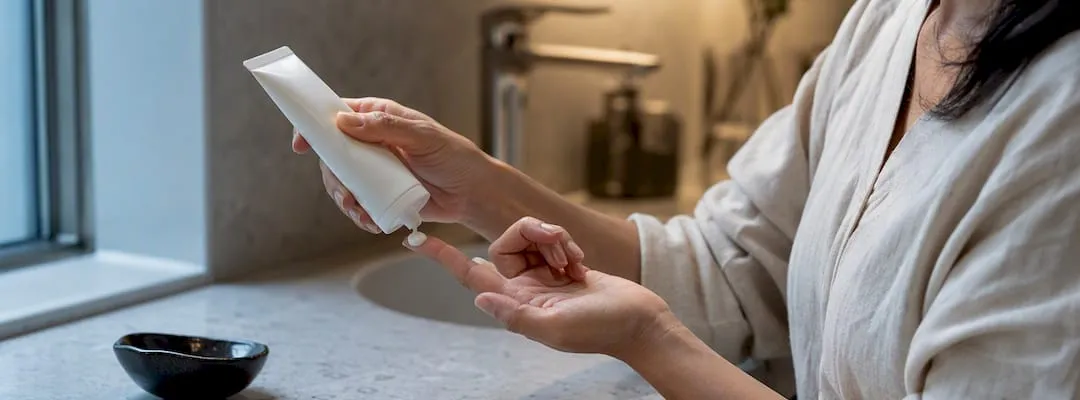
Yes, fragrance-free K-Beauty products do exist, and they are often the smarter choice for sensitive skin. Fragrances are among the most common triggers for allergic contact reactions, especially with rosacea, eczema, or an already irritated skin barrier. Important to note: "Fragrance-free" is not the same as "unscented." If you truly want to care without irritation, check the INCI list and do a patch test before the first full application.
In short:
- Fragrance-free K-Beauty products are a good choice for sensitive skin, as fragrances often trigger allergies and irritations.
- The label "fragrance-free" guarantees the absence of any fragrances, while "unscented" can often contain masking agents.
- Be especially cautious with toners and sunscreens, as fragrances are often used here to mask unpleasant odors.
- Active ingredients like Centella, Ceramides, and Niacinamide effectively soothe the skin but should be built into a stable skin barrier.
- To be safe, buy from verified Swiss suppliers to avoid counterfeits and mislabeling.
Table of Contents
- Finding Fragrance-Free K-Beauty: What Product Types Are Available?
- How to Identify Genuine "Fragrance-Free" in the INCI List?
- Which Ingredients Truly Soothe Sensitive Skin?
- Gentle K-Beauty Routine for Sensitive Skin
- Possible Allergic Reactions with Fragrance-Free K-Beauty Products
- Fragrance-Free or Lightly Scented: Which Is More Worthwhile?
- What Do People with Sensitive Skin Report?
- Why a Swiss Source for Fragrance-Free K-Beauty Matters
- Discover Fragrance-Free K-Beauty at Rammilav
- Sources
- FAQ
Finding Fragrance-Free K-Beauty: What Product Types Are Available?
Fragrance-free variants now exist in almost every K-Beauty category, though not equally frequently. In creams and serums, the selection is now large because brands have recognized that irritated skin is its own target group. It's different with toners and sunscreens: Here, fragrances often hide because they are meant to cover unpleasant odors from UV filters or alcohol.
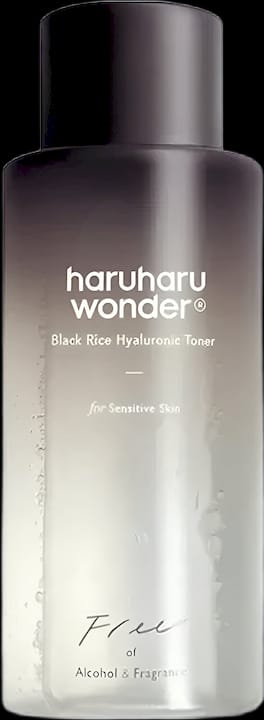
A good example is the fragrance-free version of a well-known Korean toner, which according to a product test by DermApproved retains the same active ingredient base as the scented original but without the added fragrances. The formula does not lose any effectiveness.
So where is a closer look worthwhile?
- Cleansers: usually uncomplicated, as many oil-based cleansing balms already have mild scent profiles.
- Toners: high fragrance risk, often used to mask alcohol.
- Serums: fragrance-free options with Centella or Niacinamide are now standard.
- Moisturizers: wide selection, especially with brands focused on barrier care.
- Sunscreens: often scented, but there are low-irritation exceptions like the Beauty Of Joseon Relief Sun Aqua-Fresh Rice + B5 Sunscreen.
There are curated selections of such fragrance-free options that come directly from verified supply chains.
How to Identify Genuine "Fragrance-Free" in the INCI List?
The term "fragrance" or "parfum" on an ingredient list is a collective term. It can hide dozens of individual fragrance compounds without naming a single one. This makes it so unpredictable for sensitive skin: You never know exactly which substance is causing the reaction.
"Unscented" does not automatically mean fragrance-free. Often, masking agents are included to neutralize the smell of other ingredients, but they themselves are fragrances. "Fragrance-free" means that no fragrances have been added, neither synthetic nor natural essential oils. Expert sources on this difference therefore consistently recommend "fragrance-free" instead of "unscented" for allergy-prone individuals.
Here's how to check an INCI list in practice:
- Look for the terms "Parfum," "Fragrance," or "Aroma."
- Pay attention to the position: If the term is among the first ten entries, the concentration is usually higher and the risk greater.
- Check for known essential oils like citrus, lavender, or tea tree extracts, which often additionally irritate.
- See if the brand explicitly states "fragrance-free," not just "unscented."
Pro Tip: Apply a new product to a small area on the forearm or behind the ear for three to five days before using it on the face. If no redness or itching occurs during this time, the risk of a reaction on the face is significantly lower.
Which Ingredients Truly Soothe Sensitive Skin?
Before aggressive ingredients like high-dose retinoids are used, the skin barrier should be stable. This order is also recommended by professional articles on Korean barrier repair approaches: first build up, then challenge.
The following ingredients have been established in K-Beauty formulas for irritated skin:
- Centella Asiatica: soothes and is often used for acute redness, more about this in our article on Centella Asiatica Effects.
- Ceramides: rebuild the lipid layer of the skin and protect against moisture loss.
- Beta-Glucan: has a calming effect and supports regeneration after irritations.
- Niacinamide: strengthens the barrier function and reduces redness in low concentration.
- Panthenol: a classic wound healer, often found in creams and masks.
- Hyaluronic Acid: binds moisture without further irritating the skin.
According to CeraVe, fragrance-free care with exactly these ingredients significantly reduces the risk of skin intolerances while simultaneously strengthening the barrier function. These ingredients are mostly found in serums, ampoules, and night creams, less often in cleansing products where the contact time is short anyway.
Gentle K-Beauty Routine for Sensitive Skin
A low-irritation routine doesn't have to be complicated. It mainly requires patience and the right order.
Morning:
- Mild cleansing, ideally without sulfates and without fragrances.
- A soothing serum with Centella or Beta-Glucan.
- A fragrance-free moisturizer to support the barrier.
- Sunscreen with mineral or well-tolerated chemical filters, such as the previously mentioned Beauty Of Joseon Relief Sun.
Evening:
- First cleanse with an oil balm to dissolve sunscreen and makeup.
- Second cleanse with a mild, water-based cleanser.
- A hydrating serum.
- A barrier-strengthening cream or occasionally a soothing mask.
New products should be introduced into the routine one at a time, never several at once. This is the only way to trace back later which product is responsible for a reaction. Using multiple lightly scented products at the same time risks a buildup of fragrances, even if each individual product seems harmless. More on targeted barrier care can be found in the guide Repairing the Skin Barrier.
Pro Tip: Introduce new active ingredients about a week apart, not all at once. This way, you can immediately see which product works well and which does not.
Possible Allergic Reactions with Fragrance-Free K-Beauty Products
Even fragrance-free products can cause reactions, let's be honest. Essential oils, preservatives, or certain plant extracts are also considered natural irritants and sometimes appear under inconspicuous INCI names. Avoiding classic fragrances significantly reduces the risk, but does not guarantee one hundred percent compatibility.
Typical signs of intolerance are redness, burning, itching, or small pustules, which usually occur within a few days of use. With a weakened skin barrier, the skin often reacts more sensitively to active ingredients that would be tolerated without problems with an intact barrier, such as acids or highly concentrated vitamin C. Therefore, the rule is: If you are currently struggling with redness or dryness, stabilize the barrier first before adding stronger active ingredients.
If a reaction persists after discontinuing the product or worsens, it is advisable to see a dermatologist. A patch test remains the most reliable precaution, even with products labeled "fragrance-free," especially with a known fragrance allergy or a history of contact allergies.

Fragrance-Free or Lightly Scented: Which Is More Worthwhile?
Lightly scented K-Beauty products often score with a pleasant application experience. A delicate scent of cherry blossom or green tea makes the evening routine a small ritual for many. This is precisely the main advantage of scented formulas: the sensory experience that pure active ingredient formulas often do not offer.
The downside is obvious: With sensitive skin, the risk of a reaction increases with each added fragrance, regardless of how natural or high-quality the fragrance source is. Fragrance-free products, on the other hand, usually have a more neutral smell and texture, which some users find less "luxurious," even though the actual active ingredient base can be identical.
For daily practice, this means: Those without skin problems can certainly enjoy lightly scented products. However, those prone to redness, eczema, or irritations are safer with fragrance-free variants, without having to forego effective K-Beauty formulas. The concentration of active ingredients and formulation quality do not depend on the scent, but on the recipe itself.
What Do People with Sensitive Skin Report?
Those who browse online forums and comment sections on Korean skincare repeatedly encounter a similar pattern: Users with rosacea or neurodermatitis describe how much their skin calmed down once they switched from scented to fragrance-free creams and serums. It is often mentioned that products with Centella or Ceramides, in particular, led to less redness and a more even complexion within a few weeks.
A recurring theme is also the surprise at how many supposedly "gentle" products actually contained fragrances, without it being immediately apparent. Only a conscious look at the INCI list led to a real improvement for many, not just switching to a specific brand alone.
These experiences do not replace a dermatological diagnosis. However, they show a consistent pattern: Those who consistently remove fragrances from their routine and instead focus on barrier-strengthening ingredients report significantly fewer flare-ups or irritations. This aligns with the dermatological recommendation to generally avoid fragrances with predisposed skin.
Why a Swiss Source for Fragrance-Free K-Beauty Matters
Those looking for fragrance-free K-Beauty products need one thing above all: reliability in origin. Rammilav sources its products directly from verified suppliers, eliminating the risk of counterfeits that are especially prevalent online with popular Korean brands. For people with fragrance allergies, this is not a detail but a prerequisite, as a misdeclared INCI list can trigger a reaction that could be avoided.
— Aleksejs
Discover Fragrance-Free K-Beauty at Rammilav
There are places for those who don't want to painstakingly search for fragrance-free K-Beauty among dubious marketplace offers. Many products come directly from verified suppliers, ensuring originality. Delivery within Switzerland is often fast, and shipping is free above certain order values.
In the Rammilav Shop, you'll find a curated selection of low-irritation creams, serums, and sunscreens from brands like Cosrx, Beauty Of Joseon, and Purito. If you first want to strengthen the barrier, you'll find suitable product recommendations in the guide to repairing the skin barrier. Check out the current range and find the fragrance-free care that suits your skin, not just your taste.
Sources
Those who want to delve deeper into the topic will find well-founded information on fragrances as allergy triggers in aha! The Health Magazine. The distinction between "unscented" and "fragrance-free" is clearly explained by Dear, Klairs, while CeraVe summarizes the practical benefits of fragrance-free care. In the Rammilav Beauty Guide, you'll find more articles on gentle routines and ingredient knowledge.
- Why Fragrance-Free Matters for Sensitive Skin | Dear, Klairs
- Fragrance-Free Skincare: These Are the Benefits | CeraVe
FAQ
Is Korean Cosmetics Really That Good?
Korean cosmetics impress mainly with thoughtful formulas and multi-step routines that focus on barrier care. However, the quality strongly depends on the individual brand and origin, which is why verified sources like Rammilav are important.
Which Korean Skincare Brand Is the Best?
There is no single best brand, but different strengths for each skin type: Cosrx excels in low-irritation basic formulas, Beauty Of Joseon in traditional Hanbang ingredients, and Purito in sensitive, minimalist formulations.
Which Korean Facial Cleanser Is the Best?
For sensitive skin, mild, fragrance-free oil balms for the first cleanse, followed by a gentle water-based cleanser without sulfates, are suitable. More important than the brand is a fragrance-free formula with low irritation potential.
Why Is K-Beauty So Popular?
K-Beauty is popular because the routines focus on long-term skin health rather than short-term effects, and many formulas are specifically designed for hydration and barrier strengthening. This philosophy fits well with fragrance-free care for sensitive skin.
Is "Unscented" the Same as "Fragrance-Free"?
No, "unscented" can contain masking agents that cover the smell of other ingredients. "Fragrance-free" means that no fragrances have been added.


