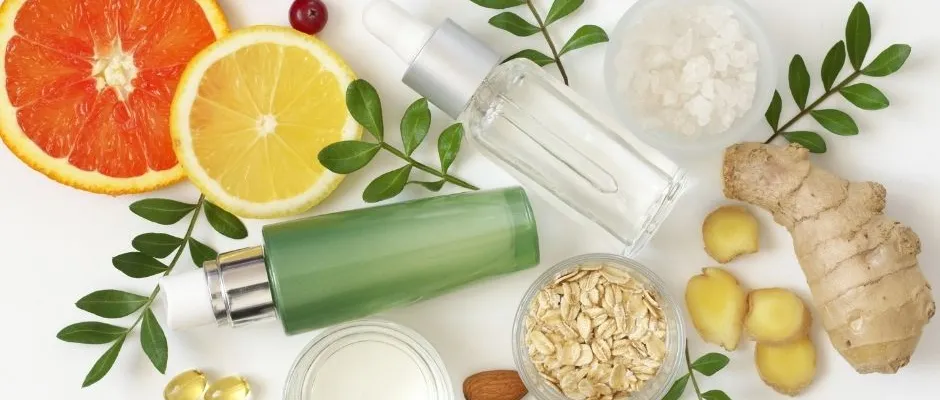
Green packaging, a leaf in the logo, the word 'natural' in cursive: None of this tells you what's inside the tube. Terms like 'natural', 'clean', or 'green' are not legally protected. Any manufacturer can use them.
What you can rely on instead: certifications, the INCI list, and a healthy dose of skepticism.
Certifications backed by inspections
Certified natural cosmetics are independently tested. The most important names:
- COSMOS is the European standard with two levels: COSMOS Natural confirms natural cosmetics, COSMOS Organic additionally confirms a high proportion of ingredients from controlled organic farming.
- Ecocert is one of the certification bodies that test according to the COSMOS standard, and you often encounter it alongside the COSMOS logo.
- Natrue is an international standard with a similar approach, mainly found with European brands.
The origin and processing of the ingredients, as well as entire groups of substances that are not allowed, are checked. A certification does not guarantee a perfect eco-balance. But it guarantees that someone has taken a closer look.
Words that cost nothing
'Dermatologically tested' only means that a test was conducted, not how it turned out. 'Free from parabens' often appears on products in a category where parabens are uncommon anyway. And with 'up to 98% natural ingredients', water, the main component of almost every cream, is usually included.
Such formulations are not prohibited. That's precisely why they are so popular.
A look at the INCI list
The ingredients are listed in descending order by quantity. What appears first defines the product. If the advertised organic extract is listed after the perfume, it's just decoration. Those who regularly read the first five positions quickly develop a sense of which brands deliver what the front promises.
Sustainability doesn't stop at the content
Refill packs save more material than any recycling promise. Solid soaps and solid shampoos do without tubes entirely. And glass is not automatically better than plastic: It's heavier and costs more energy to transport. What matters is how long a product lasts and whether you use it up.
The most sustainable purchase
It sounds unspectacular: buy less, buy more selectively, use it up. A half-used organic cream in the trash is less sustainable than a conventional one that's used up. Certifications help with selection. The quantity is up to you.


