
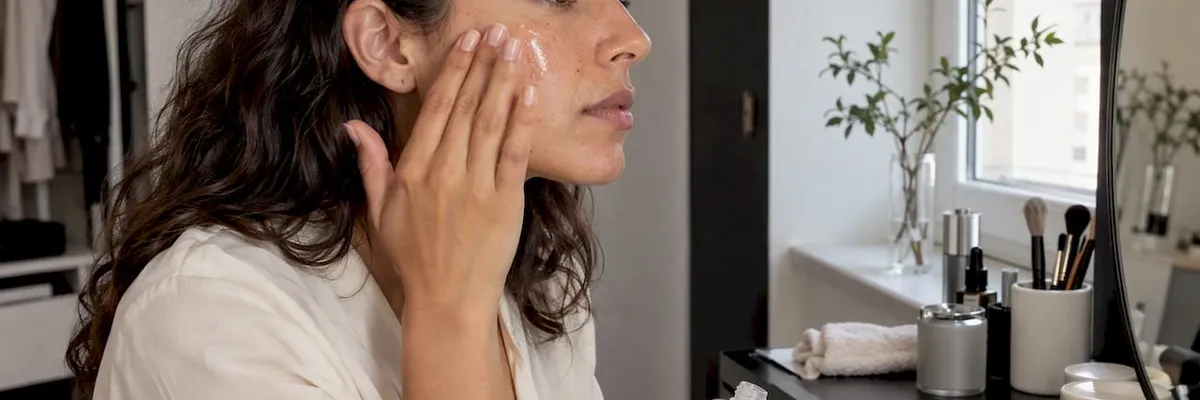
Mandelic acid is the gentlest among the known fruit acids. That's why it's increasingly found in Korean skincare in toners, peeling pads, and serums. It dissolves dead skin cells, refines the skin texture, and helps with impurities and pigmentation spots without stressing the skin as much as glycolic acid. In this guide, we explain what lies behind the active ingredient and who it is suitable for. We also show you how to incorporate a mandelic acid peel step by step into your K-Beauty routine without overwhelming your skin barrier.
In Short
- Mandelic acid is an alpha hydroxy acid (AHA) with large molecules. It penetrates the skin more slowly and therefore usually irritates less than other AHAs.
- It dissolves the bonds between dead skin cells, acts antibacterial and anti-inflammatory. Therefore, it is suitable for acne, pigmentation spots, and a dull complexion.
- Apply it in the evening on cleansed, dry skin, start with few applications per week, and finish with a moisturizer.
- Do not combine it with retinol, other acids, or mechanical peels on the same evening, and consistently apply sunscreen during the day.
- Highly concentrated peels should be handled by dermatologists, while mild leave-on products are intended for home use.
Table of Contents
- What Mandelic Acid Is and Why It Is So Gentle
- What Mandelic Acid Does on the Skin
- For Which Skin Mandelic Acid Is Suitable
- Mandelic Acid Compared to Other Acids
- How to Use a Mandelic Acid Peel
- Mandelic Acid in the Korean Routine
- How Often You Should Use Mandelic Acid
- What Not to Combine with Mandelic Acid
- Warning Signs: When You Should Pause
- Our View on Mandelic Acid
- Your Routine Around Mandelic Acid
- Frequently Asked Questions About Mandelic Acid
- Sources
What Mandelic Acid Is and Why It Is So Gentle
Mandelic acid, like glycolic and lactic acid, belongs to the family of alpha hydroxy acids, or AHAs. Originally, it was derived from bitter almonds. In a clinical study from 2023, it is described as an AHA from bitter almonds, whose molecular structure is significantly larger than that of other AHAs like glycolic acid. This difference makes it special.
You can think of it this way: Small molecules quickly slip deep into the top layer of skin and immediately unfold their full effect. This is effective but can burn and redden. The larger mandelic acid molecules, on the other hand, penetrate slowly and evenly. Treatwell Switzerland also explains the mild effect by the fact that the acid reaches the top layer of skin more slowly and therefore tends to irritate less.
In K-Beauty, this fits well with the basic approach: Korean skincare prefers regular, gentle steps over aggressive single treatments. Therefore, mandelic acid is not an active ingredient for a quick overnight effect. It shows its strength when you use it patiently over weeks.
What Mandelic Acid Does on the Skin
The main task of any fruit acid is chemical exfoliation. According to the study in the Journal of Cosmetic Dermatology, mandelic acid dissolves the bonds between dead skin cells on the skin's surface. It also acts antibacterial and anti-inflammatory in acne. This results in several visible effects:
- Smoother Skin Texture: When keratinized cells dissolve more evenly, the skin appears more even and feels softer. Subsequent care like essences and serums distribute better.
- Fewer Impurities: Because dead cells do not collect as easily in the pores, they clog less often. The antibacterial effect additionally supports inflamed pimples.
- More Even Skin Tone: Mandelic acid is also used in dermatology against hyperpigmentation, such as dark spots left after pimples.
- Fresher Complexion in Mature Skin: The acid is also used for signs of skin aging because a regularly renewed surface reflects more light and appears less dull.
A comparison from India is particularly insightful: In a 2019 study, 45% mandelic acid peels were compared with 30% salicylic acid peels in acne. The side effects were lower with mandelic acid. These concentrations come from medical practice and have nothing to do with products for home use. However, they show why mandelic acid is considered a tolerable option.
It is important to have realistic expectations: A leave-on product with mandelic acid refines the skin texture gradually. Deep acne scars or pronounced pigmentation disorders belong in the hands of a dermatologist.
For Which Skin Mandelic Acid Is Suitable
Because it penetrates slowly, mandelic acid is used according to the 2023 study for sensitive skin as well as acne, hyperpigmentation, and rosacea. In everyday life, this means:
- Impure and Oily Skin: For teenagers and adults with pimples and enlarged pores, mandelic acid is a good introduction to the world of acids. How to combine it with other steps is shown in our Korean routine against acne.
- Sensitive Skin: If glycolic acid burns for you, mandelic acid is often the better-tolerated alternative. Also, pay attention to the other ingredients. More on this can be found in our article on fragrance-free K-Beauty.
- Darker Skin Tones Prone to Pigmentation Spots: A gentle acid reduces the risk of irritation causing new spots.
- Mature Skin: Here, mandelic acid can refresh the complexion without drying out the often drier skin. Suitable additions are described in the guide to care for mature skin.
When You Should Be Careful
Gentle does not mean harmless. If your skin is currently red, cracked, sunburned, or freshly shaved, skip the acid until it calms down. With rosacea, neurodermatitis, or perioral dermatitis, you should discuss the use of acids with your dermatologist first. For skin problems around the mouth and nose, reduced routines often help; how these can look is described in the article on perioral dermatitis. If you are using prescribed acne medications, clarify any additional acid in the practice beforehand.
For high-percentage peels, there is a clear boundary. The Baden-Württemberg Examination Office states that professional fruit acid peels with high acid content should only be performed by dermatologists or medical cosmeticians. Improper use of products with up to 80 percent acid can cause severe burns. So do not buy professional concentrates for home use.
Mandelic Acid Compared to Other Acids
In Korean products, you will encounter not only mandelic acid but also glycolic acid, lactic acid, salicylic acid (BHA), and PHAs. This overview helps you classify them:
| Acid | Group | Molecule Size and Penetration | Strengths | Particularly Suitable For |
|---|---|---|---|---|
| Glycolic Acid | AHA | small, penetrates quickly | strong exfoliation, visible glow | robust, rather normal skin |
| Lactic Acid | AHA | medium | exfoliates and supports moisture | dry, dull skin |
| Mandelic Acid | AHA | large, penetrates slowly | gentle exfoliation, antibacterial | sensitive, impure skin, pigmentation spots |
| Salicylic Acid | BHA | fat-soluble, works in the pores | dissolves sebum in clogged pores | oily skin with blackheads |
| PHA (e.g., Gluconolactone) | PHA | very large, works superficially | very mild | very sensitive skin |
The table shows why mandelic acid is so popular in K-Beauty: It lies between the strong classic AHAs and the very mild PHAs. Those who struggle with impurities but react dry to salicylic acid often find a good compromise in it.
How to Use a Mandelic Acid Peel
For home use, leave-on products are intended, such as toners, pads, or serums that you do not wash off. Treatwell Switzerland recommends applying mandelic acid in the evening to the dry, thoroughly cleansed face and then using a moisturizing cream. Here's how to proceed:
- Clean Thoroughly: Remove sunscreen and makeup in the evening, for example with a cleansing balm, and then cleanse with a mild gel or foam. How Korean double cleansing works is explained in our guide to double cleansing.
- Let Skin Dry: Pat your face dry and wait a few minutes. On damp skin, an acid can penetrate faster and tingle more.
- Apply Mandelic Acid: Pour a toner onto a cotton pad or into your palms, swipe a pad directly over the skin, or distribute a serum with a few drops. Avoid the eye area, lips, and nostrils.
- Let It Absorb Briefly: Give the product a few minutes before the next step follows. A slight tingling is normal.
- Calm and Moisturize: Follow with an essence or soothing serum and a moisturizer. This completes the routine and strengthens the skin barrier.
- Protect in the Morning: The next day, apply a sunscreen with a high SPF, even on cloudy days.
If you use mandelic acid as a toner, it replaces your usual toner that evening. The difference between toner and essence is explained in our article Toner or Essence.
Mandelic Acid in the Korean Routine
The multi-step K-Beauty routine offers you several places for mandelic acid. Which format you choose depends on your skin and habits:
- Toner with Mandelic Acid: The mildest form, as the active ingredient is evenly distributed in a watery texture. Ideal for beginners.
- Peeling Pads: Convenient and precisely dosed, as each pad contains the same amount of liquid. They are suitable for people with little time.
- Serums and Ampoules: More concentrated and targeted, for example with pigmentation spots. To know how to layer multiple serums correctly, it's worth checking out our article on layering serums.
- Wash-off Peels and Masks: They stay on the skin only briefly and are an option if leave-on products are too intense for you.
A typical evening routine on an acid night looks like this: cleansing balm, mild cleanser, mandelic acid toner or pad, soothing essence, moisturizer. On the other evenings, leave out the acid and focus on hydration and regeneration, for example with a sheet mask. Especially if your skin tends to feel tight, the tips in our guide to dehydrated skin can help you.
How Often You Should Use Mandelic Acid
The most common question about mandelic acid peels concerns frequency. There is no fixed number for everyone because each skin reacts differently. We recommend starting slowly and orienting yourself to your skin's reaction. A possible plan for the first few weeks:
| Period | Applications per Week | What to Watch For |
|---|---|---|
| Week 1 and 2 | once or twice in the evening | How does the skin feel the next morning? |
| Week 3 and 4 | two to three times in the evening, if everything remains calm | Does the skin feel tight or flaky? |
| from Week 5 | as often as your skin comfortably tolerates | Does the barrier remain stable, does the complexion appear fresher? |
Sensitive skin often stays at two to three applications per week permanently, and that's perfectly fine. Oily, robust skin sometimes tolerates more. More is not automatically better: An overwhelmed barrier makes impurities and redness worse. In winter, when heating air and cold dry out the skin, it may be sensible to reduce the frequency again.
Many notice the first changes in skin texture after a few weeks. Pigmentation spots usually take much longer because the skin must renew itself multiple times.
What Not to Combine with Mandelic Acid
Many irritations do not arise from the mandelic acid alone but from too many active ingredients at once. On the same evening as the mandelic acid, you should therefore avoid:
- Retinol and Other Retinoids: Both renew the skin. Together, they dry out significantly. Use them on different evenings.
- Other AHAs, BHAs, and PHAs: Two acid products in the same routine double the load, not the benefit.
- Mechanical Peels: Grainy scrubs or peeling brushes additionally rub the freshly exfoliated skin.
- High-Dose Vitamin C: Pure vitamin C is acidic itself. Many people tolerate it better in the morning, the mandelic acid in the evening.
On the other hand, soothing and moisturizing active ingredients like panthenol, centella asiatica, hyaluronic acid, ceramides, or niacinamide in moderate amounts are well combinable. Peptides also fit well into the routine on acid-free evenings; how they work is explained in our article on the effect of peptide serums.
Sunscreen is Mandatory
Fruit acids remove the top layer of skin and make the skin more sensitive to UV radiation. Those who use mandelic acid against pigmentation spots and simultaneously go unprotected in the sun work against themselves. Therefore, apply a broad-spectrum sunscreen with a high SPF every morning, even in autumn and winter and especially in the mountains, where snow additionally reflects the light. A light, moisturizing option from our range is the Enough Collagen Sun Cream SPF50+, which wears well under makeup.
Warning Signs: When You Should Pause
A brief, slight tingling upon application is normal with acids and subsides after a few minutes. Other signals show you that your skin needs a break:
- Redness that is still visible the next morning
- Burning when you apply your usual cream afterward
- Tightness, flaking, or shiny-thin appearing skin areas
- New, small pimples in places where you usually don't have any
In these cases, stop using mandelic acid for a few days and care only mildly: gentle cleansing, soothing moisture, sunscreen. Then start again with a lower frequency. If the skin swells, blisters form, or a strong burning sensation persists, rinse the product with lukewarm water and contact your family doctor or dermatologist.
In Switzerland, clear rules apply to cosmetics: Cosmetic products must be safe for health according to the Federal Office for Food Safety and Veterinary Affairs and meet the requirements of the Food and Utility Articles Ordinance, which refers to the EU Cosmetics Regulation. It is all the more important to buy original products with correct declaration and no counterfeits of unknown origin.
Our View on Mandelic Acid
We experience daily that many people either avoid acids because they fear irritation or want too much too quickly. For us, mandelic acid is the active ingredient that can avoid exactly these two extremes. It is mild enough for beginners and effective enough to visibly improve impurities, pigmentation spots, and a tired complexion.
Our most important advice is: Consider mandelic acid as a building block, not as a whole routine. The best results we see are when an acid is accompanied by good cleansing, plenty of moisture, and a sunscreen that you really enjoy wearing every day. This is the core of Korean skincare, and that's exactly how we select our range.
We source all products directly from verified suppliers because, especially with active ingredients like acids, the original formula counts. Only then do concentration and declaration match, and you know what you are putting on your skin. Start slowly, listen to your skin, and give it a few weeks. Then it can shine from within again.
— Aleksejs
Your Routine Around Mandelic Acid
An acid is only as good as the care that accompanies it. In our shop for Korean cosmetics, you will find everything you need for this: cleansing balms and mild cleansers, toners, serums, moisturizers, masks, and sunscreens from brands like Cosrx, Beauty of Joseon, and Purito. For the evenings after the acid, the Lebelage Super Aqua Moisturizing Cream is suitable. We deliver throughout Switzerland usually within 2 to 3 days, and shipping is free for orders over 80 CHF.
Frequently Asked Questions About Mandelic Acid
What Does Mandelic Acid Do on the Skin?
Mandelic acid dissolves dead skin cells on the surface and thus refines the skin texture. It also acts antibacterial and anti-inflammatory, which helps with impurities. With regular use, it can lighten pigmentation spots and make the complexion appear fresher.
How Often Should You Use Mandelic Acid?
We recommend starting with one to two evenings per week. If the skin remains calm, slowly increase after two weeks. Sensitive skin often does best with two to three applications per week permanently.
Can I Use Mandelic Acid Every Day?
Some robust, oily skin tolerates mild mandelic acid daily, but many skin types do not. The reaction of your skin is decisive: If redness remains until the next day or the cream burns afterward, the frequency is too high. Daily use is not a goal, but only an option for skin that tolerates it without problems.
Is Mandelic Acid Suitable for Teenagers with Pimples?
Yes, due to its mild effect, mandelic acid is a good introduction for young, impure skin. Important are gentle cleansing, moisturizing care, and sunscreen. In cases of severe or inflammatory acne, treatment belongs in a dermatological practice.
Can I Combine Mandelic Acid with Retinol?
Not on the same evening, because both active ingredients renew the skin and together can easily dry out or irritate. Many routines alternate: acid one evening, retinol another, with pure moisturizing care in between. If you use prescribed retinoids, discuss any acid beforehand with your dermatologist.
Sources
- Efficacy and safety of a new peeling formulated with a pool of PHAs and AHAs (PMC, 2023)
- Comparative study of efficacy and safety of 45% mandelic acid versus 30% salicylic acid peels (PubMed, 2019)
- Untersuchungsämter Baden-Württemberg: Fruchtsäurepeelings
- BLV: Kosmetika
- Treatwell Schweiz: Das Mandelsäure-Peeling für sensible Haut


