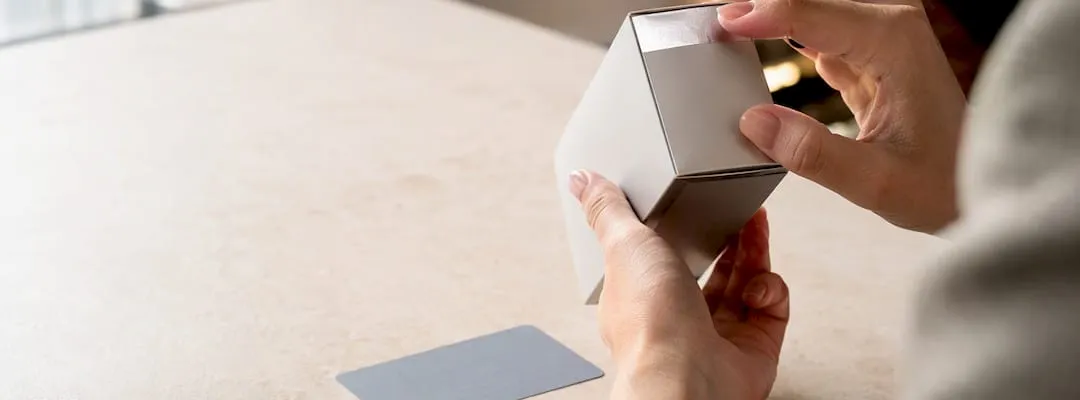
The three strongest warning signs are a price significantly below the usual market level, sloppy packaging with blurry print, and a seller without traceable origin information. The most important rule applies regardless of the individual case: Only buy from authorized dealers or official brand shops. If you already own a suspicious product, you should not apply it to your skin until the matter is clarified.
In short:
- Counterfeits often show blurry print, incomplete information in multiple languages, and missing security features, indicating inferior production.
- A combination of low price, anonymous seller accounts, and poor packaging details significantly increases the risk of a counterfeit.
- Purchasing from authorized dealers or official brand shops is the most important protective measure against fake products.
- Technical checks such as scanning batch codes, QR codes, and expiration dates should always be done in conjunction with packaging assessment.
- Careful selection of dealers and checking packaging quality are generally more reliable than individual technical checks to detect counterfeits.
Table of Contents
- Why Counterfeits are Dangerous and What Tests Show
- Visual Inspection: Packaging, Print, Labels, Holograms – What to Check?
- Technical Check: Verify Barcode, Batch Code, QR Code, and Expiration Dates
- Immediate Measures in Case of Suspected Counterfeit: Safety, Evidence Preservation, and Reporting
- Practical Checklist to Tick Off Before Buying or Unpacking
- Rammilav Proofs: How We Ensure Authenticity and Quality
- Recognizing Fake Product Textures, Scents, and Consistencies
- Common Tricks and Methods of Counterfeiters in Korean Cosmetics
- Importance and Verification of Serial Numbers and QR Codes in Addition to Barcodes
- Use and Evaluation of Specific Apps or Websites for Authenticity Verification
- What Really Matters in Counterfeit Detection
- Sources
Why Counterfeits are Dangerous and What Tests Show
Counterfeit cosmetics are not a trivial offense nor merely an aesthetic issue. Swiss consumer protection tests have shown how serious the situation is: In a sample by Kassensturz, 0 out of 15 tested cheap imports from China passed the conformity test. None of the products met the legal requirements.
This is no coincidence. Counterfeiters cut costs precisely where safety is guaranteed: preservation, dosage of active ingredients, sterility of filling. The consequences range from contact allergies and skin irritations to bacterial infections, which can even leave scars on open skin areas. There is also an economic dimension: Reports from Korea show a massive increase in counterfeit K-Beauty imports, often from organized production structures. Those who buy such products unknowingly support these structures.
Visual Inspection: Packaging, Print, Labels, Holograms – What to Check?
Before you scan a barcode or open an app, the packaging itself already reveals a lot. Genuine Korean cosmetics are produced with high print quality. Counterfeits, on the other hand, almost always show small but telling weaknesses.
Look closely at these points:
- Print Sharpness: Original packaging has sharp edges and even color areas, counterfeits often appear slightly washed out or grainy.
- Font and Logo: Small deviations in font width, color tone, or logo shape are a clear warning signal.
- Languages and Text Information: Serious import goods usually carry complete information in multiple languages, including an ingredient list according to IKW labeling requirements. If this is completely missing or seems incomplete, caution is advised.
- Spelling Errors: A typo in the brand name or ingredients is practically never found in original products.
- Holograms and Seals: Many K-Beauty brands rely on security seals at the closure. A hologram that can be easily removed or appears dull instead of shimmering is suspicious.
- Closure and Dispensing Mechanism: Pumps should trigger evenly, lids should close precisely. Sticking or wobbly mechanisms indicate inferior production.
Pro Tip: If possible, place the suspicious product next to a photo of the original packaging from the brand's website. Differences in color tone or font size are much quicker to spot in direct comparison than when viewed individually.
This visual inspection takes barely a minute but already uncovers a large part of counterfeit cosmetic products according to experts, even before a code is scanned.
Technical Check: Verify Barcode, Batch Code, QR Code, and Expiration Dates
After the visual inspection, the technical check follows. It is not a replacement for the first glance but a supplement to it.
- Note the batch code. It is usually located at the bottom of the packaging or on a small print on the tube and identifies the production batch.
- Scan the barcode or QR code. Use a reputable scanner app or the camera function of your smartphone.
- Check on the official brand website. Many manufacturers offer their own verification pages where you can enter the batch code or serial number.
- Compare the expiration date with the condition of the product. A creamy texture that already shows lumps despite a fresh date does not match.
Important: A valid-looking code is not definitive proof. Counterfeiters routinely copy barcodes, and country code prefixes alone say little about authenticity. Only the combination of batch code, packaging quality, and the seller's origin provides a reliable picture. Never rely on a single check, but always on the overall picture from multiple checkpoints.
Immediate Measures in Case of Suspected Counterfeit: Safety, Evidence Preservation, and Reporting
If the suspicion arises only after unpacking or even after application, calmness and a clear procedure are now crucial.
- Stop application immediately, even if no reaction is visible yet.
- Thoroughly wash the affected skin area with clear water.
- Secure evidence: Photos of packaging, batch code, purchase receipt, and all communication with the seller.
- Report the incident to the dealer, manufacturer, or the responsible cantonal consumer protection office.
- If redness, itching, or rash occurs, consult a dermatologist promptly.
Pro Tip: Photograph the batch number before disposing of or returning the product. Without this evidence, it is hardly possible to prove later which product was affected.
If you already notice a skin reaction, find additional tips for rebuilding the skin barrier in the advice section, but always seek medical advice first if symptoms persist.
Practical Checklist to Tick Off Before Buying or Unpacking
For a quick check on the go or right when unpacking, a short, concrete list helps more than any long explanation.
- Is the price realistic compared to the usual market price?
- Does the seller have a complete imprint with a commercial register number?
- Is the batch code present, legible, and verifiable on the brand's website?
- Do font, logo, and colors appear sharp and precise, without blurring?
- Are ingredients fully and in understandable language indicated?
- Is there a seal or hologram, and can't it be easily removed?
- Is the seller recognizable as an authorized dealer of the brand?
The most dangerous is not a single warning signal, but the combination of several at once, such as a very low price combined with an anonymous seller and a blurred logo.
| Combination of Anomalies | Risk Assessment |
|---|---|
| Low price alone, otherwise everything inconspicuous | Low, attention is sufficient |
| Low price plus missing imprint | Increased, check more closely |
| Low price, blurry print, and anonymous seller | High, refrain from purchase |
Rammilav Proofs: How We Ensure Authenticity and Quality
Rammilav sources its products directly from verified suppliers, not through anonymous intermediaries or bulk orders of unclear origin. This direct procurement chain is exactly the point where many counterfeits begin to have problems, as the Kassensturz test results show.
What makes the difference for you as a consumer:
- Direct procurement from verified suppliers instead of anonymous bulk imports.
- Fast delivery within Switzerland.
- Free shipping from a certain order value.
- Advice content on ingredients and skincare in the Beauty Guide from Rammilav.
This transparency about the origin of goods takes a large part of the checking work off your hands, which is entirely up to you on anonymous marketplaces. Those looking for a reliable source for original products from Korean cosmetic brands will find a practical alternative to unclear third-party providers in a carefully selected online shop.
Recognizing Fake Product Textures, Scents, and Consistencies
The sense of smell is one of the most underestimated tools in counterfeit detection. Original Korean serums and creams usually have a subtle, consistent scent that matches the advertised formula. A harsh chemical smell or a completely neutral, artificially smelling scent in a product that should actually smell like Centella or rice extract is a clear warning signal.
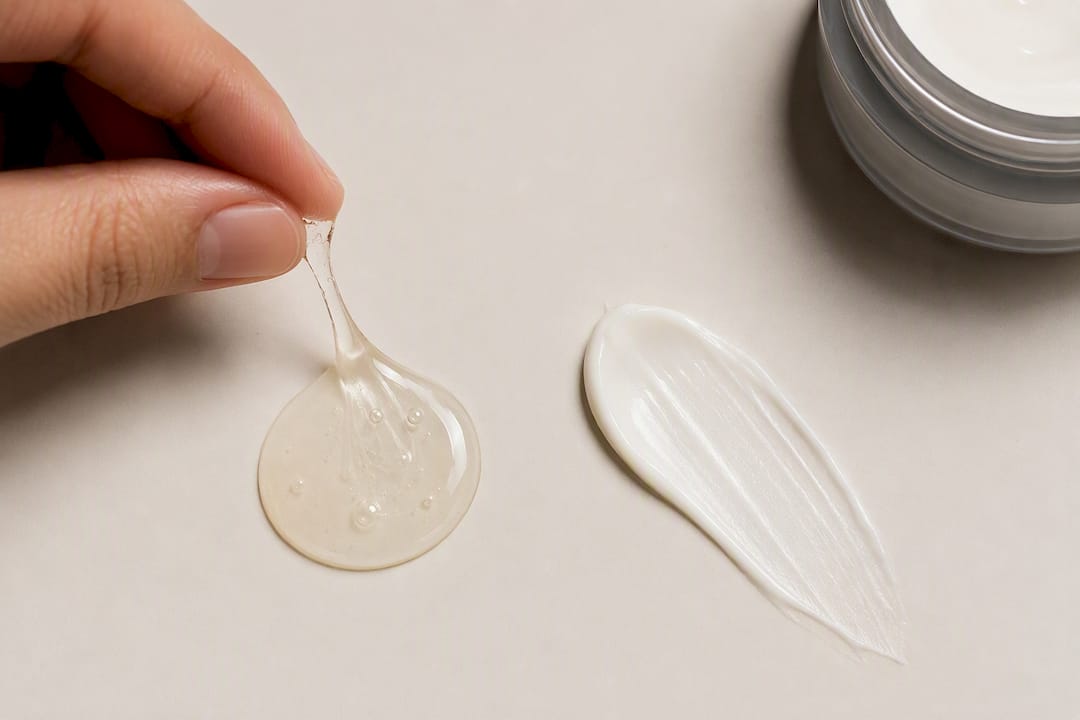
The texture also reveals a lot. A snail mucin serum should feel slightly sticky and stretchy, not watery or grainy. A moisturizer should absorb evenly without leaving a greasy film or white residues. Clumps, unusual discolorations, or a separation of consistency in the tube are almost always signs of a false formula or expired raw materials, as experts at haut.de confirm.
Another hint: Original formulations feel the same with every purchase. If you already know a product and the new batch suddenly feels different, thicker, thinner, or grainier, you should be skeptical. This consistency deviation is usually noticed faster by regular customers than the look at the packaging because they have the direct comparison to the last order in mind. Trust this feeling. It is rarely wrong.
Common Tricks and Methods of Counterfeiters in Korean Cosmetics
Counterfeiters have become significantly more professional in recent years. Instead of crude replicas, many now rely on deceptively real packaging that even trained eyes only reveal upon close inspection, as reports from South Korea show.
A common method is so-called refilling: Original packaging is collected and refilled with an inferior substitute. This explains why some supposedly original products have a strange texture or a wrong smell despite correct packaging. Another trick is copying entire packaging designs including barcodes, while the content comes from completely different, often unknown production.
Batch codes are also duplicated nowadays. Counterfeiters take the code of a real, already sold product and print it on multiple counterfeit units. Therefore, a valid-looking code alone never suffices as proof. Some counterfeiting workshops also mix real and fake products in the same delivery so that random checks remain inconspicuous. When buying online, you never see this mix until the package arrives.
A final, often overlooked trick: Counterfeiters deliberately use marketplaces with changing seller profiles so that negative reviews disappear after a short time and new, unblemished accounts can continue to offer the goods.
Importance and Verification of Serial Numbers and QR Codes in Addition to Barcodes
Barcode, serial number, and QR code serve different purposes, even though they are often lumped together. The barcode usually only identifies the product as such, regardless of the individual unit. The serial number, on the other hand, is ideally unique for each individual packaging or batch and can be entered directly on the manufacturer's website for many brands.
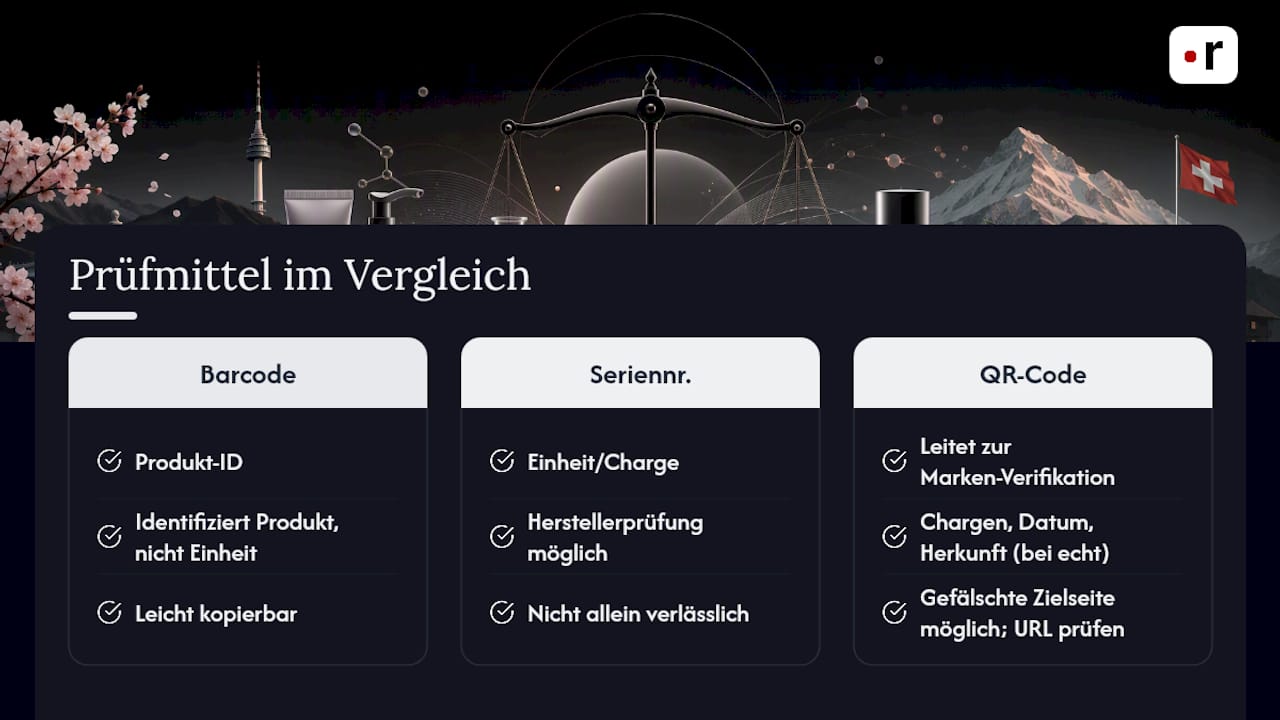
QR codes go a step further: They often lead directly to a brand's verification page, displaying batch information, production date, or even country of origin. Brands increasingly rely on such QR verifications because classic barcodes are too easily copied.
Nevertheless, this check is not infallible either. A QR code can lead to a fake target page that looks deceptively real but is not operated by the actual brand. Always check the URL to which the code leads and compare it with the official domain of the manufacturer. A code that points to a generic shortening URL or an unknown third-party site is an independent warning signal, regardless of what the target page claims. Serial numbers and QR codes are valuable additional checks, but they never replace the combination with packaging quality and seller origin.
Use and Evaluation of Specific Apps or Websites for Authenticity Verification
For technical checks, two types of tools are practically sufficient: a reliable scanner app for barcode and QR code and the official verification page of the respective brand. Many Korean cosmetic manufacturers operate their own subpages where you can manually enter the batch code or serial number, often directly linked from the QR code on the packaging.
Generic third-party apps that promise to check “any cosmetics” for authenticity should be treated with caution. They usually only access publicly available barcode databases and can thus only confirm that a barcode exists, but not that the specific unit in your hand is genuine. This distinction is crucial because this is exactly where the limit of purely technical checks lies, as already described in the section on barcode verification.
The most reliable remains the direct verification page of the brand itself, combined with a healthy look at the seller's origin. If an app or website does not establish a clear connection to the official brand website or has anonymous operators, its result is not very meaningful. Use such tools as an additional building block, never as the sole basis for decision-making. The combination of the official manufacturer site, visual inspection, and trustworthy source remains the most reliable way to recognize fake Korean cosmetics without relying on a single tool.
What Really Matters in Counterfeit Detection
Most guides on this topic overestimate the significance of barcode and QR checks. They sound technically convincing but are often only half the truth, as copied codes repeatedly appear in counterfeiting tests. What really matters is the combination of seller origin, packaging quality, and price, exactly in this order of priority.
The SRF test results on cheap imports are not a side detail but the actual proof of why the purchase source is more important than any single check on the product itself. Those who buy from an authorized dealer have already excluded most risks before unpacking. The checklist in this article is therefore deliberately structured so that the origin question stands at the beginning, not as an afterthought at the end.
My advice: Invest most of your checking time in choosing the dealer, not in the packaging after purchase. This saves trouble, money, and in the worst case, a dermatologist appointment.
— Aleksejs
This article contains general information and does not replace consultation with a qualified doctor. Contact a qualified medical professional regarding your personal situation before acting based on this content.
Sources
Where you buy often decides more about authenticity than any single detail check. You can recognize reputable dealers by clear, verifiable features.
- Haut
- China cosmetics from online shops are true pollutant bombs - SRF
- Counterfeit K-beauty floods the market, most shoppers can’t tell the difference - The Korea Herald
Correctiv additionally recommends carefully checking a shop's payment options and contact possibilities before purchasing. Anonymous marketplaces with dozens of changing third-party sellers, extremely low prices, and no proof of origin are exactly the channels from which the failed products in tests like the SRF Kassensturz came. Those who buy there, buy blindly.


