

A damaged skin barrier can be stabilized with three immediate measures: gentle cleansing, a lipid-rich cream with ceramides, and daily sun protection. Active ingredients like AHAs, retinoids, and strong vitamin C are put on hold for at least a week. Initial relief is often noticeable after 7–14 days, while stable regeneration takes 2–6 weeks depending on the initial condition.
What you can do today:
- Cleanse your face only once a day, in the evening, with a pH-gentle, sulfate-free cleanser or lukewarm water in the morning.
- Afterwards, apply a single cream containing ceramides. No serum, no peeling, no retinol.
- Use a mineral or chemical SPF 30+ in the morning, even on cloudy days.
- Temporarily remove all products with alcohol denat., strong fragrances, or fruit acids from your routine.
- If you experience severe burning, oozing, or cracking: see a doctor, do not self-treat with cortisone gel without a prescription.
Pro Tip: Set aside all current skincare products for three days and start anew with just one product. This “reset week” is consistently described in consumer literature as the fastest method to break through over-irritation.
Important Insights
A damaged skin barrier regenerates fastest when the routine is reduced to three core elements: gentle cleansing, lipid-rich care with ceramides, and daily sun protection.
| Topic | Details |
|---|---|
| Immediate Measures | Simplify routine: gentle cleanser, ceramide-rich cream, SPF 30+, pause active ingredients. |
| Key Ingredients | Ceramides, cholesterol, fatty acids, hyaluronic acid, and niacinamide are proven to support barrier regeneration. |
| Timeframe | First improvement often after 7–14 days; stable regeneration takes 2–6 weeks, longer for severe damage. |
| When to See a Doctor | For cracks, oozing, swelling, or no improvement after two weeks, seek professional evaluation. |
| Rammilav | Korean barrier care with ceramides, panthenol, and SPF, delivered quickly to Switzerland from verified sources. |
Table of Contents
- What is the skin barrier, and why is it so important?
- How do you recognize a damaged skin barrier?
- How to repair the skin barrier step by step
- Which ingredients really help, and what should you avoid?
- How long does the repair really take?
- Skin protection at work: What professionals with high skin exposure should know
- When should you see a dermatologist?
- Which product types help with barrier repair?
- Our perspective on sensitive skin and K-Beauty
- Rammilav: Korean barrier care, directly to Switzerland
- Sources
What is the skin barrier, and why is it so important?
The stratum corneum, the outermost layer of the skin, functions like a tightly constructed brick wall. The skin cells form the bricks, and a lipid matrix of ceramides, cholesterol, and free fatty acids forms the mortar in between. Scientific literature confirms that these barrier lipids are central to the structure and function of the stratum corneum, and their targeted supplementation supports regeneration.
The main task of this layer is twofold: it retains moisture in the skin and keeps irritants, allergens, and microbes out. When the lipid matrix is disturbed, transepidermal water loss (TEWL) measurably increases. This explains the feeling of tightness, the burning sensation after washing, and the sudden sensitivity to products that were previously well-tolerated. In short: without an intact barrier, the skin loses water faster than it can retain it.
How do you recognize a damaged skin barrier?
Some signs are obvious, others creep in slowly. Typical symptoms:
- Persistent dryness and flaking, even after moisturizing
- Tightness that worsens after cleansing
- Burning or stinging with products that were previously well-tolerated
- Redness without an obvious cause
- Small cracks, especially at the corners of the mouth or fingertips
Common causes include over-cleansing (twice daily with strong surfactants), overly aggressive peels or retinoids, frequent hand washing and disinfecting, as well as climatic factors like indoor heating in winter or cold. Stress and lack of sleep further slow down the regeneration of skin lipids because cortisol inhibits barrier synthesis.
Those who work professionally with water, cleaning agents, or disinfectants are at particularly high risk. More on this in the section on hands and occupational skin protection.
How to repair the skin barrier step by step
A clear sequence helps to avoid further burdening the skin while simultaneously building it up.
Cleansing: less is more
Once a day is enough, in the evening. In the morning, lukewarm water is sufficient. Choose a cleanser with a pH close to 5.5 that is free of sulfates like Sodium Lauryl Sulfate. Foamy gels and soap bars with high pH values strip the skin more than many assume. Micellar water is often gentler for highly irritated skin but should be thoroughly rinsed off or dabbed with a damp cloth.
Treatment: pause for active ingredients
These ingredients are valuable, but with a compromised barrier, they penetrate deeper than intended and exacerbate irritation.
Care: lipids first
This is the core of barrier repair. Opt for formulations that contain ceramides, cholesterol, and fatty acids in combination, as these three lipid classes together mimic the natural composition of the stratum corneum. Practical recommendations cite ceramide-rich care, hyaluronic acid, and daily sun protection as core measures for strengthening the barrier. Apply lighter textures (serums, essences) before richer creams. Moisturizing in the morning and evening is advisable for dry, irritated skin.
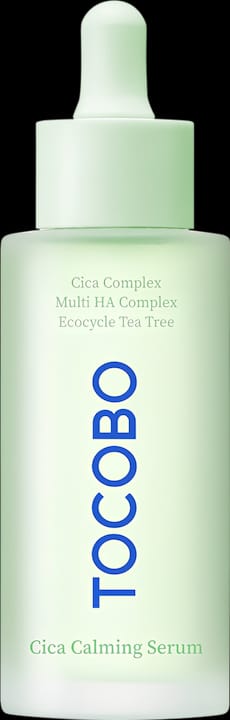
Protection: SPF and occlusion
Sun protection is not an optional step. UV radiation directly damages lipids in the stratum corneum and slows regeneration. An SPF 30+ daily, even in winter, is a fixed part of the routine. In the evening, a slightly occlusive night cream or a thin film of petroleum jelly over the moisturizer can significantly reduce water loss overnight.
Example morning routine: Lukewarm water, ceramide-rich cream, SPF.
Which ingredients really help, and what should you avoid?
Helpful Ingredients
- Ceramides (e.g., Ceramide NP, AP, EOP): directly rebuild the lipid matrix
- Cholesterol and fatty acids (e.g., linoleic acid): complement the three lipid classes of the stratum corneum
- Hyaluronic acid: binds moisture in various molecular sizes, from the surface to deeper layers
- Niacinamide (up to 5%): promotes the body's own ceramide production, soothes redness
- Panthenol (Provitamin B5): accelerates tissue regeneration, relieves burning
No-Gos for Damaged Skin
- Alcohol denat. (ethanol as a main ingredient): strips and dries out
- Strong fragrances and essential oils: common contact allergens, further irritate already irritated skin
- AHAs and BHAs in normal dosage: too aggressive for a compromised barrier
- Retinoids (retinol, tretinoin): temporarily increase TEWL and light sensitivity
- Aggressive soaps with high pH: destroy the hydrolipid film
When introducing new products, the rule is: one product per week, not several at once. This way, a reaction can be clearly attributed.
How long does the repair really take?
Initial relief is often noticeable after 7–14 days if triggers are consistently avoided. Stable regeneration typically takes 2–6 weeks. For severe damage, such as chronic hand eczema or atopic dermatitis, several months may pass.
| Severity | First Improvement | Stabilization | Influencing Factors |
|---|---|---|---|
| Mild (dryness, slight burning) | 3–7 days | 2–3 weeks | Remove triggers, lipid care |
| Moderate (redness, flaking, increased sensitivity) | 7–14 days | 2–6 weeks | Age, stress level, sleep |
| Severe (cracks, oozing areas, eczema) | 2–6 weeks | Several months | Comorbidity, occupational stress, medical supervision |

Age plays a role: from the age of 40, the skin produces fewer ceramides and fatty acids, which slows regeneration. Chronic stress increases cortisol levels and inhibits lipid synthesis. Considering both sets realistic expectations.
Skin protection at work: What professionals with high skin exposure should know
Those who work daily for several hours with water, cleaning agents, or disinfectants have a structurally increased risk. Epidemiological data from guideline reports indicate point prevalences for hand eczema can be particularly high in heavily exposed occupational groups. This is not a fringe issue.
The updated S2k guideline on occupational skin products recommends an integrative concept based on three pillars:
- Skin protection before work: Protective creams form a barrier against moisture and irritants but do not replace technical protective measures.
- Skin cleansing during work: as mild as possible, only as often as necessary.
- Skin care after work: rich, fragrance-free cream, especially in the spaces between fingers and nail folds.
Gloves following the STOP principle (Substitution, Technology, Organization, Personal Protective Equipment) are the first choice, skin protection products complement them. Practical recommendations for medical practices emphasize: apply skin protection cream before starting work, choose fragrance-free products, and keep direct contact with liquid-tight materials (latex gloves without cotton lining) as short as possible.
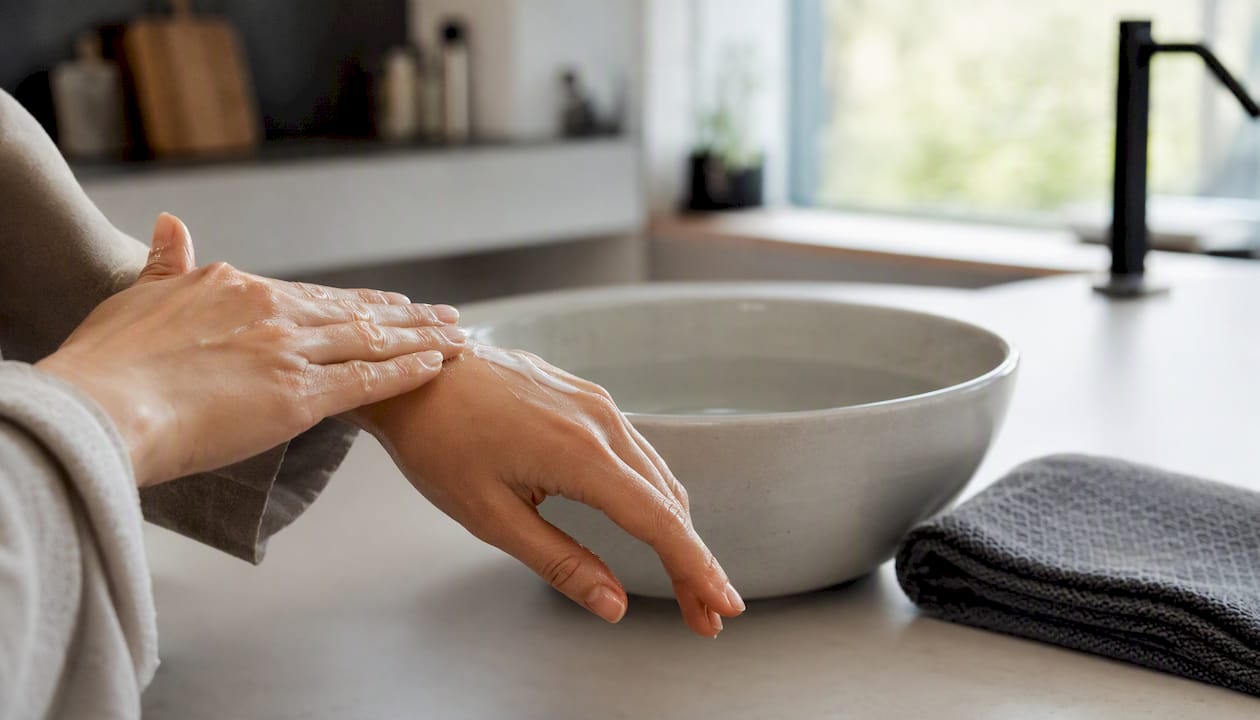
Pro Tip: After a long shift, a short hand bath in lukewarm water (2–3 minutes), followed by a rich cream applied immediately to the still slightly damp skin, helps. Don't forget the spaces between fingers and nail folds.
When should you see a dermatologist?
A disturbed skin barrier can often be stabilized on your own. But there are clear warning signs where medical evaluation should not be postponed:
- Deep cracks (fissures) that bleed or become inflamed
- Oozing, crusted, or purulent areas
- Swelling that spreads
- Symptoms that do not improve or worsen despite consistent care routine after two weeks
- Suspected contact eczema (reaction to a specific product or material)
Possible differential diagnoses that only a doctor can safely rule out: allergic or irritant contact eczema, bacterial superinfection, herpetic eczema (eczema herpeticum), or an exacerbation of atopic dermatitis. Helpful at the appointment: a list of all products used, information on occupational exposure, and a brief description of the course (when it started, what has changed).
Which product types help with barrier repair?
Not every cream is the same. Those specifically looking for products should pay attention to specific criteria:
- Gentle cleansers: pH close to 5.5, sulfate-free, fragrance-free. Texture: gel, milk, or oil.
- Ceramide-rich night creams: ideally contain all three lipid classes (ceramides, cholesterol, fatty acids) in the INCI list.
- Moisturizing serums with hyaluronic acid: low molecular and high molecular hyaluronic acid together for surface and deeper layers.
- Soothing creams with panthenol or niacinamide: for daytime when the skin still reacts sensitively.
- Daily SPF: mineral (zinc oxide, titanium dioxide) or chemical, at least SPF 30, fragrance-free.
Selection criteria: short INCI list, fragrance-free, dermatologically tested if possible, no alcohols as main ingredients. Korean skincare often meets these criteria more consistently than many Western formulations, as barrier care has been a central development goal there for years. A soothing skin cream or a regenerating formulation from the K-Beauty sector can be a sensible choice here. For daily sun protection, it's worth looking at a moisturizing SPF 50+ that also cares.
Our perspective on sensitive skin and K-Beauty
Anyone who deals with Korean skincare quickly realizes: barrier care is not a trend there, but a basic principle. Formulations are developed for compatibility, not for maximum active ingredient concentration. This makes a real difference for people whose skin is currently in a sensitive state.
What always occupies me in the discussion about skin barrier repair: many reach for more and more products when the skin reacts, instead of less. The reflex is understandable but counterproductive. In this phase, the skin doesn't need ten active ingredients, but three: a lipid, a moisture reservoir, a protective factor. Everything else is noise.
And one more thing: patience is not a passive state. Those who consistently maintain a simplified routine and simultaneously avoid triggers are actively doing something for regeneration. This is often harder than buying a new product, but much more effective.
Rammilav: Korean barrier care, directly to Switzerland
Those looking to strengthen their skin barrier will find a carefully curated selection of Korean skincare products at Rammilav, precisely tailored to these needs: ceramide-rich creams, soothing serums, fragrance-free formulations, and daily sun protection products from verified brands like Cosrx, Beauty Of Joseon, and Purito. All products are sourced directly from verified suppliers, ensuring original quality.
Delivery in Switzerland usually takes place within 2–3 days, free shipping from 80 CHF. If you're still unsure which products suit your skin, the Rammilav Beauty Guide offers further orientation. For a direct start, it's worth taking a look at the entire range at Rammilav with filters by skin type and active ingredient.
Sources
The following sources form the scientific and guideline-based foundation of this article:
- PubMed: (Articles / Review on skin barrier and lipids)
- Updated S2k guideline on occupational skin products — Coliquio
- Hand eczema: Updated S2k guideline on occupational skin products — Biermann Medicine
- Locobase: Strengthening the skin barrier — The Science of Skin
This article contains general information and does not replace consultation with a qualified doctor. Contact a qualified medical professional regarding your personal situation before acting based on this content.


