

The K-Beauty approach strengthens the skin barrier most reliably when you reduce your routine: gentle cleansing, a hydrating toner, a serum with ceramides or Centella, a rich cream, and daily sun protection. In case of acute irritation, pause active ingredients for 7 to 14 days and focus on occlusive, soothing care until the skin noticeably recovers.
In short:
- The skin needs a reduced care routine with gentle cleansing, ceramide serums, and sun protection to strengthen the barrier during irritations.
- For successful repair, ceramides and extracts from Centella Asiatica are the most important active ingredients, while humectants like hyaluronic acid only work with an intact lipid layer.
- In case of acute skin reaction, it is advisable to omit active ingredients for 7 to 14 days and instead rely on occlusive, soothing care.
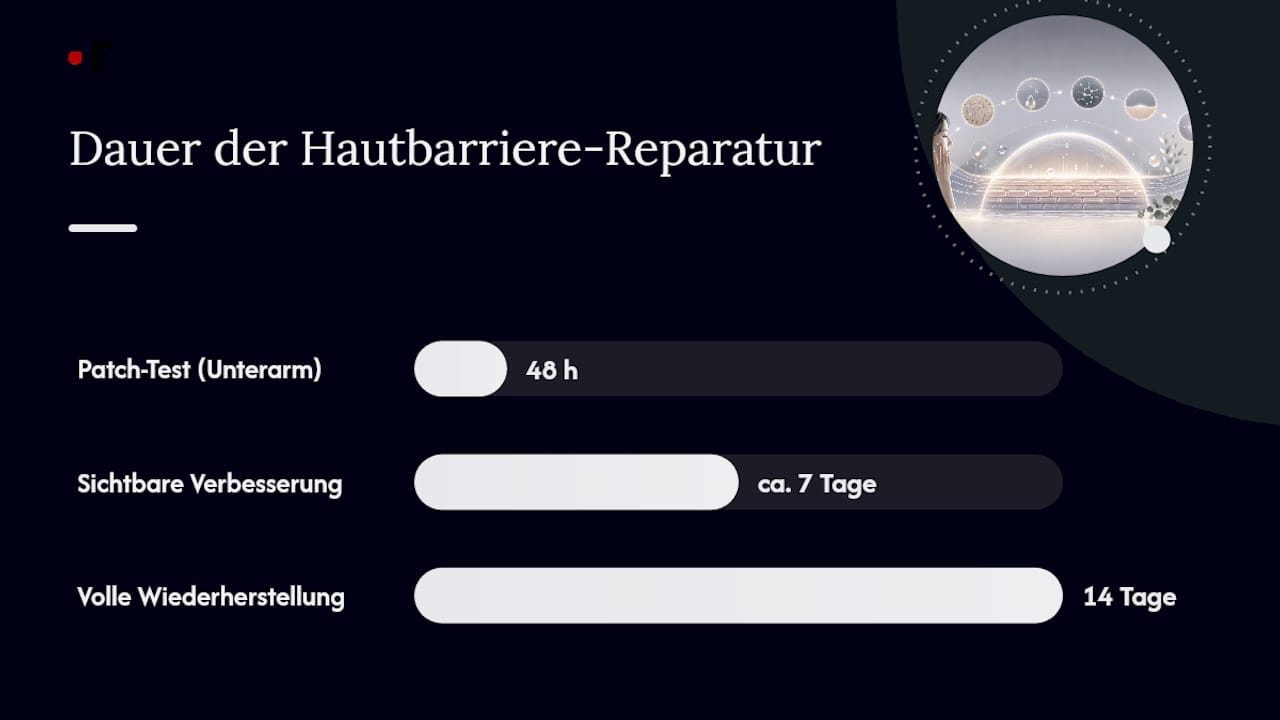
- New products should be tested on the inside of the forearm for 48 hours to detect intolerances early.
- Many counterfeits on the market require careful examination of the INCI list and traceability when purchasing to ensure effectiveness and quality.
Table of Contents
- What Does K-Beauty Philosophy Mean for the Skin Barrier?
- Which Ingredients Really Strengthen the Skin Barrier?
- What Does a Minimalist Repair Routine for 7 to 14 Days Look Like?
- When Do You Need Professional Help?
- What to Look for When Buying K-Beauty Products
- What I Consider Overrated About the K-Beauty Debate
- Where You Can Start Rebuilding the Skin Barrier
- Sources
- FAQ
What Does K-Beauty Philosophy Mean for the Skin Barrier?
Layering is not a marketing term but a functional sequence. You apply products from the thinnest to the thickest so that each layer can absorb before the next follows. If a watery toner is applied before an oily cream, it no longer unfolds its effect properly because the lipid layer blocks the way. Therefore, in Korean skincare, cleansing is always followed first by the watery, then the oily texture.
Biologically, this mainly concerns the stratum corneum, the outermost skin layer. You can imagine it like a wall: skin cells are the bricks, ceramides, cholesterol, and free fatty acids form the mortar in between. If this lipid mortar is missing, the wall becomes permeable. Moisture escapes faster, while irritants penetrate more easily. Doctors call this moisture loss transepidermal water loss (TEWL), and this is exactly where a well-thought-out K-Beauty routine comes in.
Hydration alone is not enough if the lipid layer is missing. Water evaporates as soon as there is no fat structure to hold it back. Therefore, functioning routines combine two principles:
- Humectants like hyaluronic acid draw water into the upper skin layer.
- Lipids like ceramides seal this moisture and restore the barrier function.
- Gentle, pH-adjusted cleansing removes dirt without further attacking the lipid layer.
This combination explains why many K-Beauty routines use several light layers instead of a single heavy cream. The skin receives moisture and sealing separately, in the dosage it currently needs.
Which Ingredients Really Strengthen the Skin Barrier?
Not every ingredient with a Korean name helps the barrier. Four groups of active ingredients have proven to be reliable in practice and in dermatological reviews.
Centella Asiatica (Cica) is not a single substance but a collective term for extracts from the Asian pennywort. Four triterpene saponins are crucial: asiaticoside, madecassoside, asiatic acid, and madecassic acid. These compounds have anti-inflammatory effects and, according to a review on Centella asiatica in dermatology, also stimulate the body's own ceramide production. Therefore, when buying a product with "Cica" in the name, you should look at the ingredient list, not the label.
Ceramides are considered the gold standard for lipid replacement. They directly fill the gaps in the skin's mortar structure instead of just alleviating symptoms. The K-Beauty Barrier Repair Guide describes targeted ceramide care as a central measure when transepidermal water loss is increased.
Panthenol is a humectant and provitamin that binds moisture and soothes mild irritations but does not replace lipids. Hyaluronic acid also attracts water but only works if a fat layer above it slows evaporation. Both active ingredients complement ceramides but do not replace them.
Soothing effects of Centella often appear within 24 to 48 hours, noticeable barrier improvements usually only after 7 to 14 days of regular use.
You should avoid products with denatured alcohol, synthetic fragrances, and highly concentrated acids on a damaged barrier. These substances further irritate an already weakened skin layer instead of soothing it.
Pro Tip: Check Cica products for "Centella Asiatica Extract" in the INCI list instead of relying on the word "Cica" on the packaging. Some formulations contain only traces that hardly have any effect.
What Does a Minimalist Repair Routine for 7 to 14 Days Look Like?
When the barrier feels tight, burns, or appears flaky, aggressive active ingredient layering doesn't help, but the opposite does. K-Beauty practice recommends consciously using less instead of more during such phases, a principle consistently found in several K-Beauty guides.
Morning:
- Mild cleansing with lukewarm water, possibly without a cleansing product if the skin hasn't sweated overnight.
- Hydrating toner without alcohol, gently patted in instead of rubbed.
- Serum with Centella or ceramides, applied thinly.
- Rich barrier cream with lipids.
- Sunscreen with at least SPF 30, daily, even on cloudy days.
Evening:
- Gentle cleansing, if needed with a mild cleansing oil that removes makeup without rubbing.
- The same hydrating toner as in the morning.
- Serum, possibly in a slightly more generous amount than in the morning.
- Rich barrier cream, supplemented with a thin layer of Vaseline or an occlusive balm as a seal for very dry skin.
This phase is called Skin Fasting: a conscious pause from active ingredients like retinoids, high-concentration vitamin C, and AHA or BHA acids. These substances may accelerate cell renewal or pore cleansing but additionally burden a weakened barrier during this phase. This gives the skin time to rebuild its lipid matrix without interference.
After 7 to 14 days, reintroduce active ingredients, one at a time instead of simultaneously. One active ingredient per week is enough to see what the skin tolerates and what it doesn't. Detailed instructions for reintroducing active care are also provided in the Guide to Skin Barrier Repair.
Pro Tip: Apply new products first on the inside of the forearm for 48 hours. This way, you can detect an intolerance before it breaks out on the face.
Visible improvements in redness and tightness are noticeable for most people within the first week. The complete restoration of the lipid barrier often takes the full 14 days, sometimes a little longer for chronically over-cared-for skin.
When Do You Need Professional Help?
Not every skin barrier disorder can be solved with care products alone. Certain signs should be taken seriously instead of being covered with even more cream.
- Persistent burning or stinging that does not subside even after discontinuing all active ingredients.
- Open, weeping, or cracked skin areas.
- Signs of infection: pus, increasing redness, warmth, or fever.
- Severe flaking that does not improve despite two weeks of Skin Fasting.
Stop using all products except a fragrance-free, very mild moisturizer if you experience these symptoms. Consult a dermatologist or allergist if the symptoms persist for more than a few days or worsen. A damaged barrier can be a sign of a contact allergy or an inflammatory skin condition that goes beyond pure care measures.
What to Look for When Buying K-Beauty Products
Ingredient knowledge is of little use if the product itself does not contain what is stated on the packaging. Rammilav sources its products directly from verified suppliers in Switzerland, which is not a given with imported Korean cosmetics, as counterfeits and relabeled goods circulate on the gray market. The Beauty Guide to Skin Barrier and the Article on the Effects of Centella Asiatica summarize the mechanisms of action for readers who want to understand what a product can actually achieve before purchasing.
Three points are worth considering before any purchase:
- Check the complete INCI list, not just marketing terms like "Cica" or "Barrier Repair".
- Look for a visible batch number, an indication of proper storage and traceability.
- Contact the retailer if you have doubts about the origin; a reputable provider will answer such questions without hesitation.
The Guide to Ceramides in Cosmetics also explains which types of ceramides are most commonly found in formulations and what the concentration indicates.
What I Consider Overrated About the K-Beauty Debate
The biggest misconception about K-Beauty is the assumption that more steps automatically mean more effectiveness. Layering ten products sounds thorough but is more likely to overwhelm a weakened barrier than to heal it. The real strength of Korean skincare lies not in the number of steps but in the logic behind it: light before heavy textures, hydration before sealing, and the willingness to radically reduce during crisis phases.
Conventional advice often overlooks that Skin Fasting is not a last resort but a K-Beauty method itself. Those who immediately reach for a new serum with reddened, tight skin confuse activity with progress. The skin needs fewer active ingredients, not more, in such moments.
My advice: Invest first in the basics, i.e., cleansing, ceramides, and sun protection, before venturing into trendy serum ingredients. A stable barrier supports any further care. A damaged barrier makes even the most expensive serum ineffective.
— Aleksejs
Where You Can Start Rebuilding the Skin Barrier
There are online shops that offer ingredients in verified original quality, often with delivery within Switzerland in a few days. For starting a barrier-friendly routine, it is worth looking at the product categories for cleansing, toner, serum, and moisturizing care, which reflect exactly the texture sequence described above.
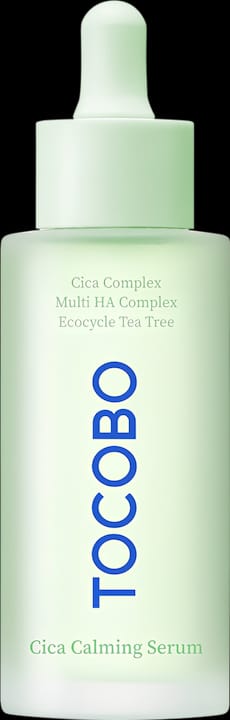
For the serum stage, the Tocobo Cica Calming Serum with concentrated Centella extract is suitable. As a moisturizing cream with a lipid focus, the Skin1004 Madagascar Centella Soothing Cream is recommended. For particularly mild cleansing, the Skin1004 Madagascar Centella Cleansing Oil is an option without drying surfactants. Many providers offer free shipping from a certain order value, which can facilitate the assembly of the skincare routine.
Sources
- Centella asiatica in dermatology — a review (PMC)
- K-Beauty Barrier Repair Guide: How to Fix a Damaged Skin Barrier
- Centella Asiatica (Cica): Effects, Application & Tips | MOOCI
FAQ
Which Cream Rebuilds the Skin Barrier?
Creams with ceramides are considered the most effective option as they directly replace the missing lipids. Additionally, a cream with Centella Asiatica helps because, according to a dermatological review, it also stimulates the body's own ceramide production.
Is Korean Skincare Really That Good?
Korean skincare is not a miracle cure, but its layering logic and focus on ceramides and Centella are scientifically well-founded. The benefit largely depends on whether the individual products actually contain effective concentrations of the mentioned ingredients, rather than just advertising them.
Which Product Strengthens the Skin Barrier the Fastest?
A serum with Centella Asiatica often soothes irritated skin within 24 to 48 hours, while noticeable barrier improvements usually occur only after 7 to 14 days. Combined with a ceramide-containing cream, this effect can be further stabilized.
Which Korean Skincare Brand is the Best?
There is no single best brand; the ingredient list of the individual product is crucial. Online shops offer products from various brands that contain formulations with ceramides or Centella for different skin needs.


