
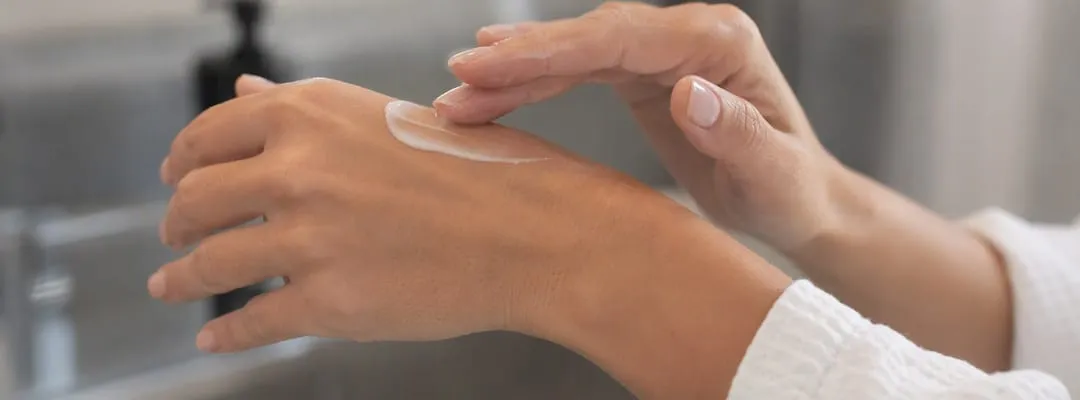
Ceramides are lipids of the outermost stratum corneum. When applied topically, they support the repair of the skin barrier and can noticeably reduce transepidermal water loss, or TEWL for short. We'll tell you right away what really matters: The effect strongly depends on how a product is formulated, not just whether "ceramides" is on the packaging.
Three key points you should know before you continue reading:
- Ceramides are central fat molecules of the stratum corneum and help to rebuild a damaged skin barrier.
- Topical ceramides measurably improve hydration, but the actual effect varies greatly depending on formulation and accompanying lipids.
- For dry or barrier-weakened skin, such as in atopic dermatitis, ceramide-containing products are particularly valuable.
The point many overlook: Studies show that topical ceramide preparations can reduce TEWL and improve hydration – but only if the formulation is correct. A ceramide that crystallizes in the cream is practically useless for the skin.
In short:
- Ceramides improve the skin barrier only with the right formulation; crystallization or poor solution significantly reduces effectiveness.
- The optimal effect arises in combination with cholesterol and fatty acids in a balanced ratio of approximately 1:1:1.
- These lipids benefit dry, mature, or atopic skin the most, requiring consistent application over weeks.
- Effective carrier systems like liposomal or nano-encapsulated lipids significantly improve penetration, with the ceramide formulation not being the only decisive factor.
- Products with lamellar lipid structures and complementary lipids offer the best long-term results for a stable skin barrier.
Table of Contents
- What are Ceramides? Chemistry, Classes, and Natural Occurrence in the Skin
- The Role of Ceramides in the Skin Protection Barrier
- How Do Ceramide-Containing Care Products Affect Moisture and Barrier?
- Who Benefits Most from Ceramides in Skincare?
- Which Active Ingredient Combinations Enhance the Effect of Ceramides?
- Why Do Ceramide Products Vary So Much in Effectiveness?
- How Often and How Long Should You Use Ceramides?
- Conclusion: When is it Worth Choosing Ceramide-Containing Care?
- What Rammilav Learned from Practice with Korean Cosmetics
- Discover Ceramide-Containing Care at Rammilav
- Key Insights
- Sources
What are Ceramides? Chemistry, Classes, and Natural Occurrence in the Skin
Ceramides belong to the family of sphingolipids. Chemically, they consist of a sphingosine backbone linked to a fatty acid via an amide bond. This structure makes them long, waxy molecules that aggregate into ordered layers in the skin, much like bricks in a wall.
In cosmetic research, several subclasses are distinguished, each taking on slightly different roles:
- CER[NP] (Non-hydroxy Fatty Acid, Phytosphingosine): one of the most common forms, often used in formulations for barrier repair.
- CER[EOS] (Esterified Omega-Hydroxy Fatty Acid, Sphingosine): particularly long and important for the structural stability of lamellar layers.
- CER[AP] (Alpha-Hydroxy Fatty Acid, Phytosphingosine): often used in combination with other ceramides to support barrier function.
It's important not only which ceramide is included, but also in what ratio it stands to other skin lipids. Scientific publications describe a ratio of ceramides, cholesterol, and free fatty acids of approximately 1:1:1 as a functional reference point for a healthy skin barrier. If one of these three elements is missing, the system becomes unbalanced.
The Role of Ceramides in the Skin Protection Barrier
Imagine the stratum corneum as a wall. The skin cells, the corneocytes, are the bricks. Ceramides, cholesterol, and free fatty acids together form the mortar in between, arranged in fine, lamellar layers. This structure determines how well your skin retains water and repels irritants from the outside.
Without enough ceramides, the stratum corneum loses its ordered lamellar structure. The result: water escapes faster, external irritants penetrate more easily, and the skin becomes drier and more sensitive.
In people with atopic dermatitis or chronically dry skin, the ceramide content of the stratum corneum is often demonstrably reduced. This increases TEWL and makes the skin more susceptible to irritation. The decisive factor is not only the sheer amount of ceramides but also which types are present in what ratio. A formulation that delivers only a single ceramide without accompanying lipids is generally weaker than a balanced mixture of several ceramide classes, cholesterol, and fatty acids.
How Do Ceramide-Containing Care Products Affect Moisture and Barrier?
Clinical studies often show two measurable effects: a decreasing TEWL value and an increasing hydration of the stratum corneum. This is usually measured with a corneometer for moisture content and special TEWL probes that capture the water vapor loss of the skin. Additionally, research labs use imaging techniques to directly examine the lamellar structure of the lipids.
Several model and human studies confirm that ceramide-containing formulations in combination with cholesterol can restore the ordered lipid structure after damage, such as tape-stripping or UV radiation. This is the core message of the research: Ceramides do not work best in isolation but in conjunction with their natural partner molecules.
The biggest hurdle lies in penetration. Ceramides are relatively large, fat-soluble molecules. This makes it difficult for them to penetrate through the dense stratum corneum into deeper areas. This is precisely why the carrier system so strongly determines the success of a product.
| Measurement | What it shows | Typical effect with good formulation |
|---|---|---|
| TEWL | Water vapor loss through the skin surface | Measurable reduction after regular application |
| Corneometer value | Moisture content of the stratum corneum | Increase in hydration over weeks |
| Lamellar structure (LPP) | Order of lipid layers | Restoration of ordered structures after damage |
Pro Tip: Do not expect immediate effects overnight. Building lamellar structures is a biological process that takes days to weeks, not hours.
Who Benefits Most from Ceramides in Skincare?
Not every skin benefits equally from ceramides. The initial condition determines how noticeable the effect will be.
- Dry and mature skin: With age, the body's own ceramide production measurably decreases. Here, the likelihood of a noticeable benefit is highest, especially because the natural barrier is already weakened.
- Atopic and severely barrier-damaged skin: Ceramides are a sensible basic care here but do not replace medically prescribed therapy for atopic dermatitis. Studies on ceramide subclasses in atopic skin report promising, albeit inconsistent, results as a complementary measure.
- Impure and combination skin: Ceramides can help cushion irritations from aggressive active ingredients. However, pay attention to the texture and ensure the formulation is not comedogenic, especially with highly occlusive creams.
Which Active Ingredient Combinations Enhance the Effect of Ceramides?
Ceramides rarely work best alone. Certain partners significantly enhance the effect, while others should be used with caution.
- Niacinamide supports the body's own ceramide synthesis and is therefore one of the most sensible additions to a barrier routine.
- Glycerin and Panthenol additionally bind moisture and often deliver a visible result faster, while ceramides stabilize the structure more long-term.
- Strong exfoliants like high-percentage acids or retinoids should not be applied simultaneously but at different times. After peeling, barrier strengthening is the priority, not another active ingredient stimulus.
Pro Tip: Apply ceramide-containing care after a peel or retinol application, never before. This supports regeneration instead of further stressing the skin.
Why Do Ceramide Products Vary So Much in Effectiveness?
This is the real crux that many consumers underestimate: Ceramides are chemically demanding to process. They often need to be dissolved in suitable oils at temperatures above 80 degrees, otherwise, they crystallize again when the emulsion cools. A ceramide that is present as a solid crystal structure in the finished cream can hardly fulfill its function in the skin.
Scientific publications even show that even a proportion of about 10% crystallized ceramides in a formula can significantly reduce the effectiveness of the entire product. Therefore, many manufacturers today rely on pre-mixed, already lamellar-structured lipid complexes instead of individual raw materials that must be combined during the manufacturing process.
There are also significant differences in the carrier system. Microemulsions and liposomal formulations often show better localization of ceramides in the stratum corneum in comparative studies than classic, simple emulsions. Newer approaches like nano-encapsulated ceramides or special dimeric ceramide structures go a step further and aim to further improve penetration.
For you as a buyer, this means specifically: Do not only look for ceramides on the ingredient list. More meaningful are indications of:
- clearly named ceramide types instead of vague collective terms,
- a formulation promise in terms of a lamellar, ordered lipid structure,
- complementary lipids like cholesterol and fatty acids in the composition,
- and where possible, a reference to underlying studies or formulation standards.
In the Beauty Guide from Rammilav, you will find further tips on how to recognize such formulation features in Korean skincare products.
How Often and How Long Should You Use Ceramides?
With ceramides, patience pays off. The skin does not rebuild its lipid structures overnight but over weeks.
- Regularity over quantity: Apply ceramide-containing creams or serums in the morning and evening, ideally as the last step in a moisturizing routine.
- Realistically assess the timeframe: First noticeable improvements in dryness often appear after two to four weeks, while a more stable barrier usually requires several months of consistent application.
- Safety during pregnancy: Ceramides themselves are generally considered safe, as they are endogenous lipid classes. If uncertain about a specific formulation, it is still worth consulting with your gynecologist.
Genuine side effects from ceramides themselves are rarely documented. More often, it is accompanying substances like fragrances, preservatives, or essential oils in the same formulation that cause irritation. For sensitive or pre-damaged skin, a patch test on an inconspicuous area is generally recommended before using a new product extensively.
Pro Tip: Note the purchase date of a new ceramide product. This way, after four weeks, you can objectively determine whether dryness or tightness has actually changed, instead of relying on gut feeling.
Conclusion: When is it Worth Choosing Ceramide-Containing Care?
Ceramides are a valuable component for barrier protection, especially for dry, mature, or atopic-prone skin. Their benefit depends less on the mere mention on the packaging than on the actual formulation quality behind it.
- Choose products with clearly lamellar formulation and complementary lipids like cholesterol.
- Expect results over weeks, not overnight.
- Combine ceramides sensibly with niacinamide or panthenol, instead of relying on a single miracle ingredient.
What Rammilav Learned from Practice with Korean Cosmetics
As a Swiss shop for authentic Korean cosmetics, we source our products directly from verified suppliers, no detours, no gray imports. When selecting ceramide-containing creams and serums, we consciously focus on formulation quality rather than pure marketing promises. This care with brands like Cosrx or Beauty Of Joseon is repeatedly reflected in the feedback from our customers regarding skin feel and moisture supply.
— Aleksejs
Discover Ceramide-Containing Care at Rammilav
Those looking for reliable barrier care will find a carefully curated selection of Korean cosmetics in the Rammilav range, focusing on moisture supply and skin soothing. The Beauty Of Joseon Dynasty Cream relies on a rich, moisturizing texture that fits well into a barrier-focused routine, while the Cosrx Advanced Snail 92 All In One Cream additionally targets regenerative care effects. Both products are sourced directly from verified suppliers by Rammilav, ensuring originality and consistent quality.
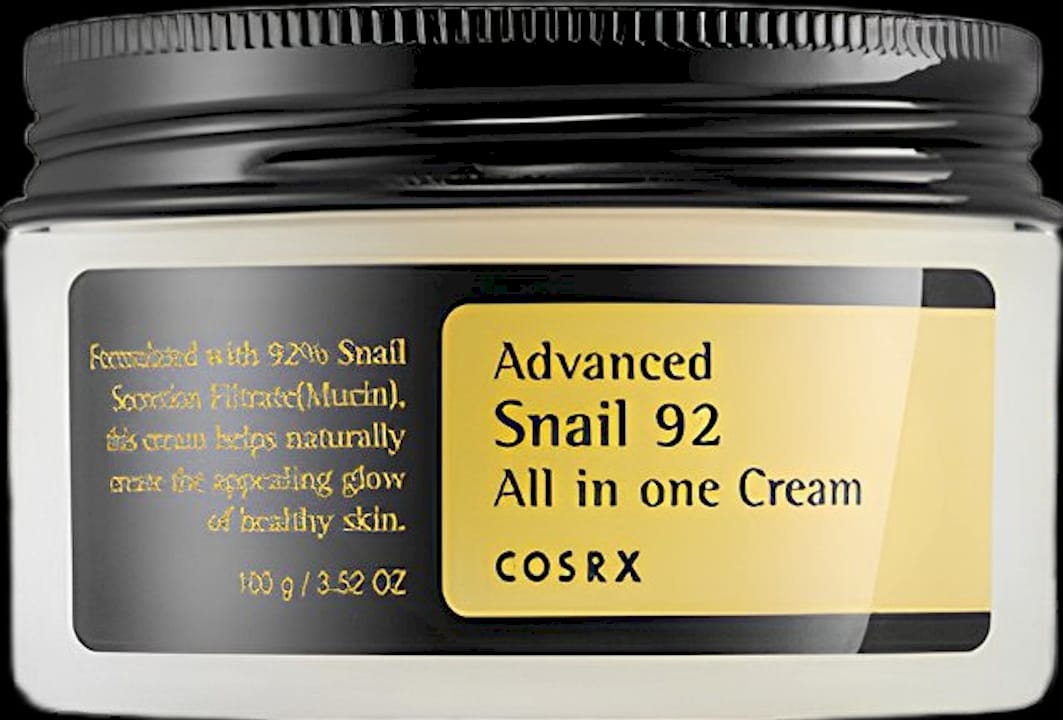
Instead of wading through endless INCI lists, you can read in the Beauty Guide what really matters in formulations. Orders over 80 CHF are shipped free within Switzerland, usually reaching you within two to three days. Browse the shop and find the moisture care that suits your skin condition.
Key Insights
Ceramides repair the skin barrier and reduce transepidermal water loss, but only if the formulation maintains their lamellar structure.
| Topic | Details |
|---|---|
| Barrier function | Ceramides, together with cholesterol and free fatty acids, form the lamellar structure of the stratum corneum. |
| Formulation decides | Crystallized or poorly dissolved ceramides lose much of their effectiveness. |
| Target groups | Dry, mature, and atopic-prone skin benefit the most from ceramide-containing care. |
| Active ingredient combination | Niacinamide, glycerin, and panthenol sensibly enhance the moisturizing effect. |
| Practical example Rammilav | Rammilav offers ceramide and moisture-focused creams like the Beauty Of Joseon Dynasty Cream directly from verified suppliers. |
Sources
For those who want to delve deeper into the subject, there is well-founded primary literature available at Wiley Online Library on the barrier function of ceramides, at MDPI Cosmetics on carrier systems, and in the overview on corneotherapy by Dermaviduals. These sources form the scientific basis for the mechanisms of action described in this article.
This article contains general information and does not replace consultation with a qualified doctor. Contact a qualified medical professional regarding your personal situation before acting based on this content.
- The role of ceramides in skin barrier function and importance of correct formulation - Wiley Online Library
- Recent Advances on Topical Application of Ceramides to Restore Barrier Function of Skin - Cosmetics (MDPI)
- Stratum corneum - From Corneobiochemistry to Corneotherapy - Dermaviduals


