
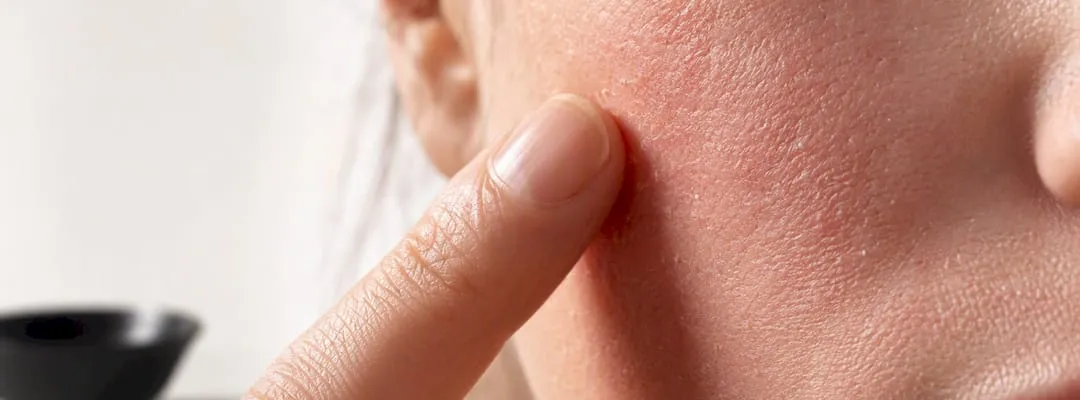
Ceramide creams strengthen the skin barrier and measurably reduce transepidermal water loss. A clinical study over 28 days showed significant improvements in hydration and barrier function, with formulation being crucial. To benefit, patience is required: the cream must be applied regularly, not just occasionally during acute dryness.
In short:
- A well-formulated ceramide cream improves the skin barrier and reduces transepidermal water loss, but visible effects only appear after several weeks.
- The active ingredient must be in lamellar-structured products, as only this structure has a real effect on the skin structure.
- People with sensitive or dry skin, especially those with a natural ceramide deficiency, benefit the most, while mature skin increases moisture levels with regular use.
- Product selection should be based on long-chain ceramides in combination with cholesterol and fatty acids to achieve the desired effect.
- Consistent daily application combined with other barrier-supporting measures is necessary to achieve long-term positive results.
Table of Contents
- Understanding Ceramide Cream Benefits: What Ceramides Are Chemically
- How Does Ceramide Cream Really Affect the Skin Barrier?
- Concrete Benefits: What a Good Ceramide Cream Does for the Skin
- When Should You Use Ceramides? Skin Types and Applications
- Finding the Best Ceramide Cream: What to Look for in the INCI
- Why Rammilav Focuses on Ceramide-rich K-Beauty Products
- Realistic Expectations for Ceramides
- Find Your Ceramide Care at Rammilav
- Sources
- FAQ
Understanding Ceramide Cream Benefits: What Ceramides Are Chemically
Ceramides belong to the group of sphingolipids. They are not only found in cream jars but are a natural component of your own skin, specifically the outermost skin layer, the stratum corneum.
In this layer, ceramides, together with cholesterol and free fatty acids, form a kind of mortar between the corneocytes. According to Wikipedia, this lipid mortar makes up about 50 to 60% of the skin lipid matrix, which is its largest component. Without this mortar, the corneocytes would fall apart like loose bricks, and this is exactly what happens on a small scale with damaged skin.

If the ceramide content in the skin decreases, the barrier loses its density. The result: more water evaporates through the skin, the so-called transepidermal water loss (TEWL) increases. Clinically, this manifests as dry, cracked, or irritated skin that reacts more quickly to external stimuli. People with atopic dermatitis or chronically dry skin often have altered ceramide profiles compared to healthy skin. This is also why dermatologists specifically look for ceramide content in skincare products for such skin conditions, rather than just recommending any moisturizer.
Important for understanding: Ceramides are not a single substance but a whole family of chemically different molecules. They are distinguished, among other things, by chain length and head group, and these details later determine how well a cream actually works.
How Does Ceramide Cream Really Affect the Skin Barrier?
The mechanism is basically simple: Topically applied ceramides integrate into the existing lipid matrix of the stratum corneum and help restore its lamellar, or layered, structure. This layered structure is what keeps water in and pollutants out. If it is missing or has holes, the skin's protective function noticeably decreases.
The body of research on this is now solid. A randomized clinical study with twice-daily application of a ceramide-containing moisturizer showed significantly better values in hydration, barrier function, and skin pH after 28 days compared to a control cream. Remarkably, the benefits partially persisted for seven days after discontinuing the cream, meaning the effect did not immediately disappear compared to the control group.
A noteworthy value: In a separate 28-day study on senile xerosis, a single application was enough to significantly increase skin moisture for 24 hours. After four weeks of regular use, hydration, TEWL, and skin structure were significantly improved, much more so than with a regular hydrophilic cream.
However, not every ceramide cream delivers these results. Laboratory studies show that the effect strongly depends on how the ceramide is embedded in the formula. Studies on the interaction of topically applied ceramides with the lipid matrix show: Crystalline, poorly dispersed ceramides can hardly penetrate the skin structure and remain practically ineffective on the surface. Only lamellar-structured formulations, where ceramide, cholesterol, and fatty acids are present in the right ratio, achieve the effect measured in studies. Chain length also plays a role, more on that in the product selection section.
Concrete Benefits: What a Good Ceramide Cream Does for the Skin
If the formulation is right, the effects of a ceramide cream are not just theoretical but noticeable in everyday life. The main benefits can be divided into four areas.
- Better moisture retention: The skin holds water longer instead of losing it through a porous barrier. This results in smoother, less tight skin throughout the day.
- Stronger barrier against external irritants: Cold, wind, detergents, and pollutants penetrate less easily when the lipid layer is intact. Many people report fewer redness and irritations after switching to ceramide care.
- Support for dry, mature, or inflammatory skin: Mature skin naturally produces fewer lipids, and ceramide creams partially compensate for this. Even with atopic dermatitis or psoriasis, targeted ceramide care can support the barrier, but as a supplement, not a replacement for medical treatment.
- Noticeably smoother skin feel: An intact lipid layer makes the skin feel softer and can visually reduce fine dryness lines, a cosmetic side effect that many users perceive as an independent benefit.
These effects all hinge on the same principle: A functioning barrier keeps moisture in and irritants out. Those with dry elbows, flaky cheeks in winter, or skin that reacts to every new product benefit most from this mechanism. Those with already robust, well-hydrated skin will naturally perceive the differences less dramatically.
When Should You Use Ceramides? Skin Types and Applications
Not every skin needs the same amount of ceramide care, but almost every skin benefits from it in some form. Suitability can be roughly sorted by skin type and life phase.
- Dry and sensitive skin benefits the most, as there is often already a natural ceramide deficiency. Daily, generous application in the morning and evening is advisable here.
- Mature skin loses lipid production over the years, which is why ceramide creams often become part of the night routine. In addition to retinoids or peptide serums, they counteract the drying effect of some active ingredients.
- Atopic dermatitis and psoriasis can benefit from ceramide care as a supportive measure, but do not replace dermatological treatment. In acute flares or severe itching, medical clarification is always necessary.
- Oily and acne-prone skin is often mistakenly kept away from moisturizers. However, a light, non-comedogenic ceramide formula can help regulate sebum production here, as a disturbed barrier prompts the skin to compensatory reactions.
For application: Ceramide cream is usually applied as the last step before sunscreen (in the morning) or as the final step of the evening routine, after serums and before any oils. A pea-sized amount for the entire face is usually sufficient; for very dry skin, a bit more may be needed. If redness, severe itching, or skin changes persist for more than two weeks, medical evaluation is recommended. No cream replaces a dermatological diagnosis.
Finding the Best Ceramide Cream: What to Look for in the INCI
Looking at the ingredient list reveals more about the quality of a cream than any advertising promise on the packaging. A few specific criteria help with selection.
- Ceramide types in the INCI: Look for names like Ceramide NP, Ceramide EOP, Ceramide NS, or Ceramide AP. These abbreviations stand for different ceramide subclasses that naturally occur in the skin.
- Combination with cholesterol and free fatty acids: A study on the importance of ceramide chain length shows: Only in combination with these three lipids does the lamellar structure form that actually retains water. A product that contains only ceramides without these partners works against the skin's own biology.
- Pay attention to chain length: Formulations with ultra-long-chain ceramides in the C24 to C30 range showed stronger barrier regeneration and higher skin cohesion in studies than products with shorter chains. This information is rarely openly stated on the packaging but can often be researched through manufacturer information or expert reviews.
- Fragrance-free: Especially for sensitive or already irritated skin, the cream should be free of perfume to avoid additional sources of irritation.
- Delivery system: Microemulsions or nanocarrier technologies improve how deeply the large ceramide molecules can penetrate the skin, rather than just remaining on the surface.
Pro tip: Check if ceramides are listed early in the ingredient list, not at the very end. If they are behind water, fragrances, and preservatives, the concentration is usually too low to make a measurable difference.
Those who want to delve deeper into the topic can find further explanations on formulations in the guide to ceramides in cosmetics. Textile-based measures like a silk pillowcase can also reduce friction on the skin at night and complement barrier care effectively.
Why Rammilav Focuses on Ceramide-rich K-Beauty Products
We select products based on whether the formulation is correct, not just whether "ceramides" is on the packaging. We look for INCI lists with multiple ceramide types combined with cholesterol and fatty acids, as this combination makes the difference according to current research.
The products are sourced directly from verified suppliers to ensure original products and not dubious imitations. Those who want to dive deeper after reading can find further practical explanations on barrier care and suitable routines in the beauty guide to repairing the skin barrier.
Realistic Expectations for Ceramides
Ceramide creams are not a miracle cure that works overnight. Initial noticeable effects often appear after a few days, with more stable results usually only after about four weeks of consistent use. They are a building block of a barrier strategy, not a replacement for dermatological treatment for persistent skin problems.
— Aleksejs
Find Your Ceramide Care at Rammilav
Those looking for the right ceramide cream with a coherent formulation will find a curated selection of authentic Korean skincare, sourced directly from verified suppliers. Product offerings include original formulations from brands like Cosrx, Beauty Of Joseon, and Purito, which focus on barrier lipids. For dry and mature skin, it is worth taking a look at the Enough Collagen Moisture Essential Cream, for additional moisture supply, the Lebelage Super Aqua Moisture Cream is suitable. For sensitive, irritated skin, a soothing formula like the Beauugreen Cica Well Cream can effectively complement barrier care. Delivery usually takes place within a few days, often free of charge from a certain order value. Browse Rammilav to find the right cream for your skin.
Sources
- PubMed: Clinical study on ceramide-containing moisturizer (2019)
- Impact of Ceramide Acyl Chain Length on Human Skin Barrier Recovery and Hydration (2026)
- The 24-hr, 28-day, and 7-day post-moisturizing efficacy of ceramide-containing moisturizer (Lueangarun, 2019)
FAQ
What is Ceramide Cream Good For?
Ceramide cream strengthens the natural skin barrier and reduces transepidermal water loss, leading to better moisture retention and less susceptibility to irritation. Clinical studies show measurable improvements in hydration and barrier function after just 28 days of regular use.
When Should You Use Ceramides?
Ceramides are particularly suitable for dry, sensitive, and mature skin, but also as a supplement for atopic dermatitis or psoriasis. The most sensible use is daily application in the morning and evening as the last step of the skincare routine.
Which is Better, Ceramides or Panthenol?
Both active ingredients complement each other rather than replace each other: Ceramides structurally rebuild the lipid barrier, while panthenol has a calming effect and supports wound healing. For long-term barrier building, ceramides are the more significant active ingredient, and many good formulations combine both.
How Does the Skin React to Ceramides?
With an intact formulation, the skin usually responds with noticeably more smoothness and less dryness within a few days. Intolerances are rare, as ceramides correspond to the body's own skin lipids, although a poorly formulated cream with crystalline ceramides may remain ineffective without harming the skin.


