

For dry or mature skin, AHA is usually the better choice because it works on the skin's surface and stimulates cell renewal. For oily or blemish-prone skin, BHA, or salicylic acid, scores points because it is fat-soluble and penetrates deep into the pores. If you want to combine both, you can do so, but you should proceed slowly and monitor your skin closely.
Three questions can help you decide: How does your skin feel (dry, oily, or combination)? What is your main concern (fine lines, pigmentation spots, or blackheads)? And how sensitive is your skin usually to new products?
- Skin type: Dry or mature skin suggests AHA, oily or blemished skin suggests BHA.
- Main concern: Fine lines and uneven complexion are for AHA, clogged pores and acne for BHA.
- Sensitivity: Very sensitive skin starts with low concentrations and fewer applications per week, regardless of which acid you choose.
After each AHA application, sunscreen is a must, as the skin becomes more sensitive to light. And if you are pregnant or breastfeeding, consult your doctor before using salicylic acid in higher concentrations.
Key Insights
The main difference between AHA and BHA lies in solubility: AHA works water-soluble on the skin's surface, BHA penetrates fat-soluble into the pores.
| Topic | Details |
|---|---|
| Main Difference | AHA works on the surface, BHA penetrates the pores thanks to fat solubility. |
| Recommendation by Skin Type | Dry and mature skin usually benefits from AHA, oily and blemished skin usually from BHA. |
| Sunscreen | After AHA application, consistent sunscreen is necessary to avoid pigmentation spots. |
| Safe Start | Patch test before the first application, then slowly increase to one to two applications per week. |
| Source | Rammilav offers original AHA and BHA products from verified suppliers with fast delivery in Switzerland. |
Table of Contents
- AHA and BHA: Definitions and Typical Representatives
- How AHA Works: Mechanism, Benefits, and Concentration
- How BHA Works: Mechanism, Benefits, and Concentration
- AHA vs BHA: Key Differences at a Glance
- Which Acid Suits Which Skin Type?
- Safe Application: Patch Test, Combinations, and Sunscreen
- Concrete Routines for Beginners and Advanced Users
- What Studies and Experts Say About AHA and BHA
- My Assessment of AHA and BHA
- Original AHA and BHA Products for Switzerland
- Frequently Asked Questions About AHA and BHA
- Sources
AHA and BHA: Definitions and Typical Representatives
AHA stands for Alpha Hydroxy Acids, a group of water-soluble fruit acids. BHA stands for Beta Hydroxy Acids, which in cosmetics almost always refers to salicylic acid. Both belong to the family of chemical peels and dissolve the bonds between dead skin cells, but they work in different areas of the skin, as an overview of chemical peels shows.
The most common AHA representatives include:
- Glycolic Acid: the smallest and most aggressive AHA molecule size, penetrates deepest into the stratum corneum.
- Lactic Acid: slightly milder than glycolic acid and additionally moisture-binding.
- Mandelic Acid: the largest AHA molecule, making it particularly well-tolerated for sensitive skin.
BHA appears in products almost exclusively as salicylic acid, occasionally supplemented by betaine salicylate as a gentler variant.
In the market, you can find both types of acids in a variety of forms: as a toner to apply with a cotton pad, as a serum to work in before the moisturizer, as pre-soaked pads, or as a wash-off mask that acts for only a few minutes. Leave-on products remain on the skin and work for hours, while wash-off variants are rinsed off after a short exposure time and are usually the gentler entry option.
How AHA Works: Mechanism, Benefits, and Concentration
AHA dissolves the bonds between the cells of the uppermost skin layer, the stratum corneum. This causes dead skin cells to shed more quickly and stimulates cell renewal. With regular use, this can also support collagen production in deeper skin layers, making lines and wrinkles less visible over time.
The practical benefits of AHA go beyond mere smoothing:
- Texture: The skin appears more even and less rough.
- Pigmentation Spots: Due to faster cell renewal, dark spots often fade more evenly.
- Moisture: Lactic acid additionally binds water in the skin because it is one of the skin's natural moisturizing factors.
For home use, concentrations between 5% and 10% are common, depending on the acid and product form, as a comparison article on AHA and BHA notes. The pH value of the product is important: The lower it is, the stronger the acid works, but the higher the risk of irritation, as a technical data sheet on hydroxy acids explains. A product with a high concentration but buffered, moderate pH value can be milder than a low-concentration product with a very acidic pH.
Efficacy and tolerability therefore do not depend solely on the percentage on the packaging, but on the entire formulation, including free acid content and buffering systems.
How BHA Works: Mechanism, Benefits, and Concentration
Salicylic acid is fat-soluble, and this is what fundamentally distinguishes it from AHA. Because it dissolves in sebum, it can penetrate the pores through the sebum and dissolve keratinized cells and excess fat there. AHA, on the other hand, remains on the surface because it is water-soluble and does not penetrate the oily pore contents.
This property makes BHA particularly valuable for certain skin problems:
- Clogged Pores: Blackheads and blemishes dissolve because BHA penetrates into the pore.
- Anti-Inflammatory: Salicylic acid also has a mild anti-inflammatory effect, which helps with inflamed acne.
- Oil Regulation: Regular use can visibly refine the skin's appearance in oily skin.
Common home-use concentrations for salicylic acid are generally low to ensure effectiveness and tolerability. This is because salicylic acid works deeply even in low doses, and higher concentrations are usually reserved for professional applications by dermatologists. The pH value also plays a role in tolerability, although most skin reacts more mildly to BHA than to low-pH AHA products, especially since the concentrations used are lower.
AHA vs BHA: Key Differences at a Glance
| Feature | AHA | BHA |
|---|---|---|
| Site of Action | Skin surface (stratum corneum) | Penetrates into the pores |
| Typical Skin Problems | Fine lines, pigmentation spots, rough texture | Blackheads, enlarged pores, acne |
| Examples | Glycolic acid, lactic acid, mandelic acid | Salicylic acid |
| Common Concentration | 5–10% | 2% |
| Side Effects | Dryness, photosensitivity | Mild dryness, less often redness |
| Application Frequency | 2 to 4 times a week, can be increased | 2 to 3 times a week, can be increased |
The difference between AHA and BHA is not only in the chemical structure but mainly in solubility. Water-soluble molecules like AHA remain on the surface, while oil-soluble BHA dissolves in sebum and travels deeper, as a guide to the differences describes. The pH value determines for both acid types how much free acid actually reacts with the skin and how strong the effect is.
A combination of both acids is basically possible, either in one product or in consecutive applications. Newcomers should not try this on the first day but should first test both acids separately and then carefully combine them.
Which Acid Suits Which Skin Type?
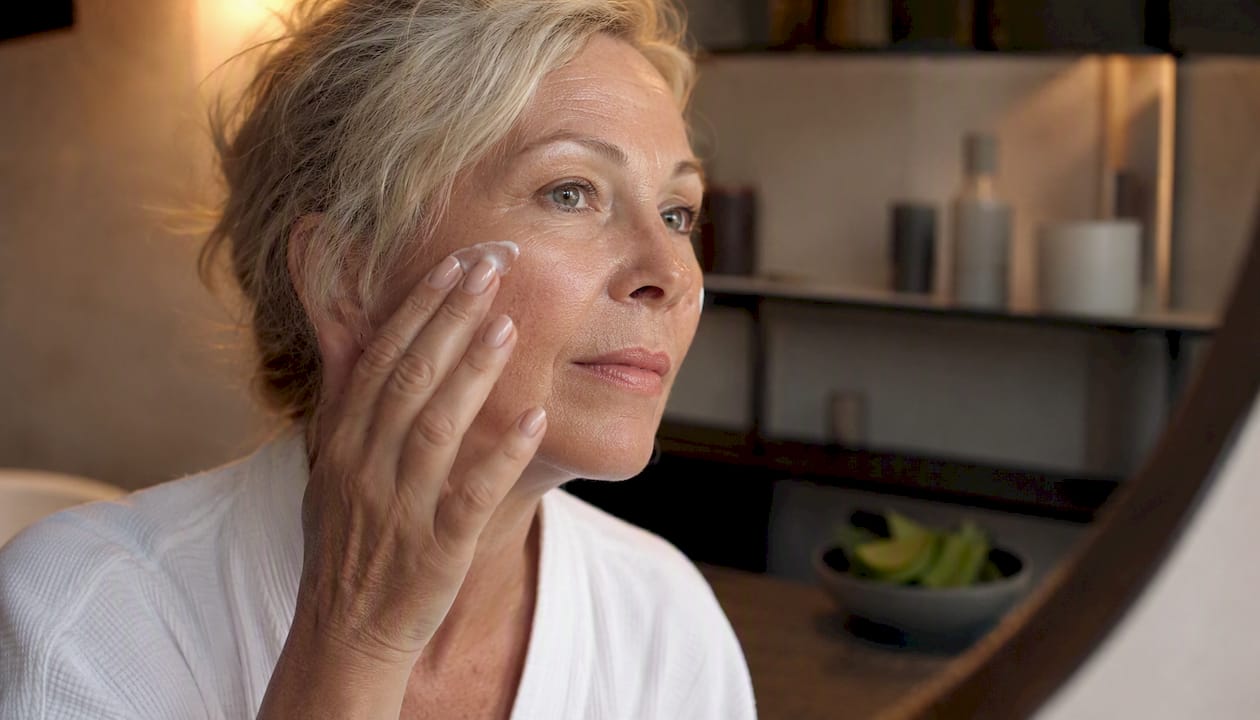
Dry and mature skin usually benefits most from AHA because the stimulation of cell renewal addresses exactly where the skin is already losing elasticity. Lactic acid is often the gentlest choice here because it also binds moisture.
Sensitive skin needs special caution, regardless of whether AHA or BHA is used. Mandelic acid is considered particularly mild due to its large molecular weight and is often suitable as the first contact with acids. A patch test before the first application is not an option but a requirement.
Oily and combination skin usually gets along better with salicylic acid because it directly addresses the sebum in the pores. Those who are also prone to blemishes can benefit from the anti-inflammatory effect that AHA does not offer in this form.
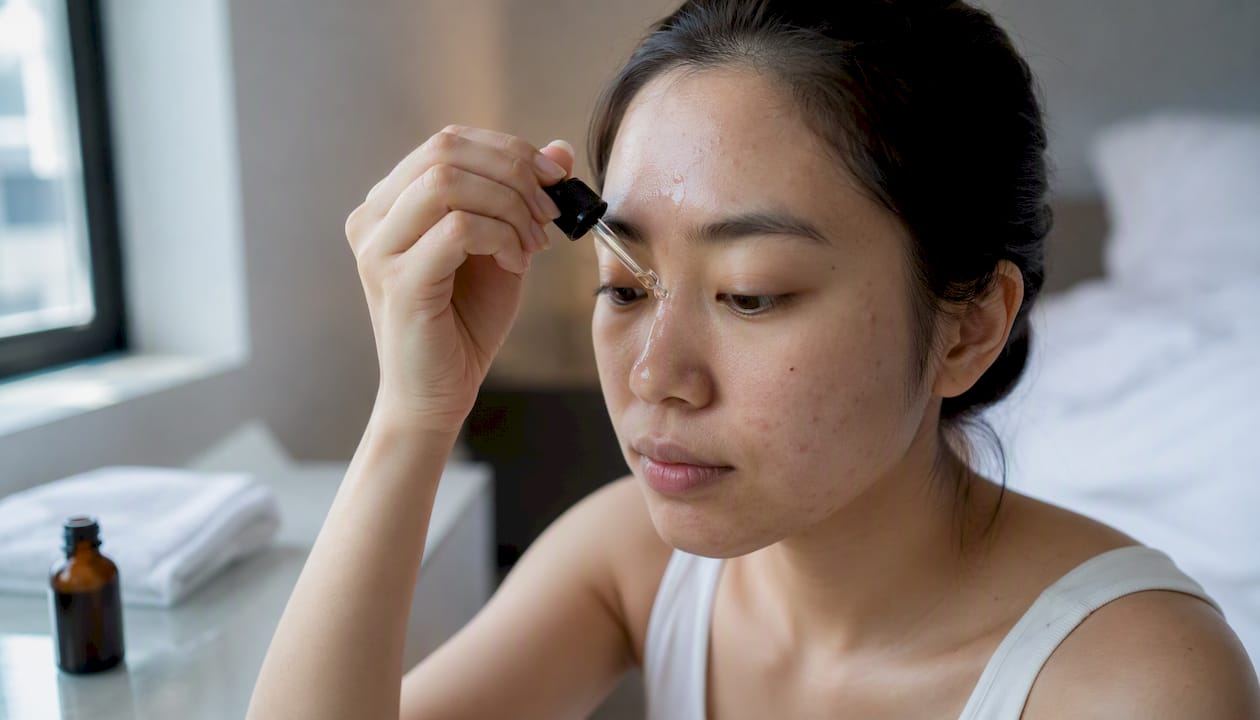
Pigmented skin with an uneven complexion often responds more strongly to AHA because the faster cell renewal continuously removes dark spots.
Pro Tip: For combination skin, a regional strategy is worthwhile: Apply BHA specifically in the T-zone, where the pores are larger and the skin is oil-prone, and AHA on the drier cheek areas. This way, you treat both skin zones according to their actual needs instead of spreading a single product over the entire face.
Safe Application: Patch Test, Combinations, and Sunscreen
Before a new acid product is applied to the entire face, a patch test belongs on the crook of the arm or behind the ear, 24 to 48 hours before the first widespread application. If no redness or burning occurs, you can start slowly, usually one to two times a week, and increase the frequency over several weeks once the skin has adjusted.
Leave-on products like serums or toners remain active on the skin longer than wash-off masks, which are rinsed off after a few minutes. For beginners, wash-off formats are often the gentler way because the exposure time is limited.
With combinations, caution is advised: Strong retinoids should not be used on the same evening as AHA or BHA, as the irritation effect would otherwise add up. Physical exfoliants with coarse particles also do not go well with chemical acids, as both additionally stress the skin barrier. Instead, alternate, for example, acid one evening, retinoid the next, with at least one day in between.
After each AHA application, the skin reacts more sensitively to UV radiation, which is why consistent sunscreen is mandatory the following day to prevent pigmentation spots. If redness or a feeling of tightness occurs despite the patch test, immediate washing with clear water and refraining from further active ingredients for a few days helps.
Pro Tip: Apply a rich, soothing cream immediately after the acid application to support the skin barrier. A moisturizing cream with soothing ingredients can noticeably reduce redness and tightness.
How high the irritation risk actually is with a low pH value depends heavily on the individual formulation. A technical data sheet on hydroxy acids names pH value and free acid concentration as the two decisive levers that manufacturers use to balance efficacy and tolerability.
Concrete Routines for Beginners and Advanced Users
Those who use acids for the first time should consider the first four to six weeks as a test phase and closely observe the skin's reaction.
- Week 1 to 2: Apply once a week in the evening, then apply a soothing moisturizer.
- Week 3 to 4: If well tolerated, increase to twice a week.
- Week 5 to 6: If the skin remains stable, increase to three applications per week and continue to observe the reaction.
Advanced users who are already accustomed to acids can use alternating evenings: BHA on Monday, AHA on Thursday, with a pure care evening without active ingredients in between. Spot application with a cotton swab directly on individual blemishes works well with salicylic acid, as high local concentrations work specifically there without burdening the rest of the skin.
For combination skin prone to acne, the already mentioned T-zone strategy is recommended, combined with gentle cleansing before the acid application, so that excess oil and makeup residues do not block the effect. A mild cleansing balm is a good first step before the actual acid care follows.
What you should avoid:
- Layering multiple acids at once: This unnecessarily increases the risk of irritation without noticeably improving the effect.
- Daily application from the start: The skin needs time to adjust to the new stress.
- Skipping sunscreen: Especially after AHA, this is the most common cause of later pigmentation problems.
What Studies and Experts Say About AHA and BHA
The available evidence on chemical peels is now quite solid, although highly dependent on concentration and duration of application. An overview on ncbi.nlm.nih.gov confirms that both AHA and BHA are considered effective chemical peels, with clearly different sites of action depending on solubility. This distinction is not a marketing simplification but chemically justified: Water-soluble molecules remain in the aqueous environment of the upper skin layer, oil-soluble ones migrate to where fat accumulates.
Formulation and pH value also determine whether a product acts more gently or more intensively. Two products with identical percentage indications on the packaging can differ significantly in their actual effect, depending on how strongly the acid is buffered.
From dermatological practice, two recommendations are repeated: First, the introduction of new acids should be gradual, never with full frequency from the first day. Second, for combination skin, the already described regional application is worthwhile, as a single full-face product rarely does justice to both skin zones, as a dermatologist guide emphasizes.
My Assessment of AHA and BHA
Most comparison articles treat AHA and BHA as a simple either-or, but the more interesting question is often how both acids can be used together without overwhelming the skin. In my view, many beginners underestimate how much the formulation of a product determines its effect, not just the percentage on the packaging. A product with a low concentration but inappropriate pH value can irritate more than a higher concentrated, well-buffered product.
What I often notice in customer inquiries: Many first reach for aggressive concentrations because they expect quick results and then give up frustrated after the first redness. The slower path with one to two applications per week over several weeks almost always brings more stable, longer-lasting results. At Rammilav, we therefore place importance on products coming from verified suppliers and carrying the original formulation, because especially with acids, the exact recipe makes the difference between tolerability and irritation. If you are unsure which concentration suits your skin, you should consult a dermatologist, especially if you have pre-existing skin conditions or during pregnancy and breastfeeding.
Original AHA and BHA Products for Switzerland
Rammilav offers you original Korean cosmetics directly from verified suppliers, with delivery within Switzerland usually within two to three days. This pays off especially with acid products, as the exact formulation, including free acid content and pH values, determines effectiveness and tolerability, and only original goods reliably deliver this balance.
If you are looking for a ready-made combination, the Beauty Of Joseon Green Plum Toner with AHA and BHA is a good entry for combination skin without having to buy two separate products. For those who also want to try PHA and LHA, it is worth taking a look at the Isntree Hyper Acid 4 Serum. After application, a soothing care like the I’m Sorry for My Skin Age Capture Cream helps support the skin barrier.
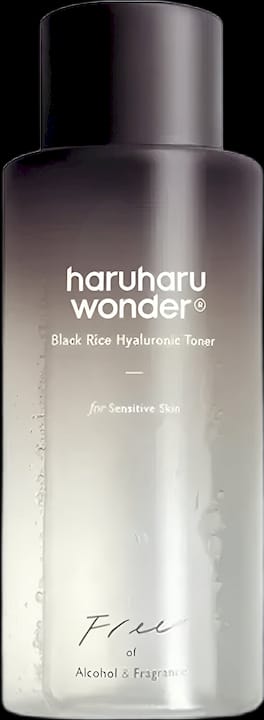
Further application tips and product recommendations can be found in the Beauty Guide from Rammilav, or you can browse directly in the entire range to find the right product for your skin type.
Frequently Asked Questions About AHA and BHA
Which is better, AHA or BHA? There is no general answer, as both acids solve different problems. AHA is better for dry or mature skin with fine lines and pigmentation spots, BHA is better for oily, blemish-prone skin with clogged pores.
How often should you use AHA or BHA? Beginners start with one to two applications per week and slowly increase over four to six weeks, depending on tolerability, to up to three to four times a week.
Can you use AHA and BHA together? Yes, a combination is possible, either in a ready-made product or on alternating evenings. For beginners, it is advisable to test both acids individually before combining them.
Are AHA and BHA safe during pregnancy or breastfeeding? AHAs are often considered relatively unproblematic in usual cosmetic concentrations. For salicylic acid, many sources recommend small-scale, low-dose leave-on applications, while large-scale or high-percentage applications should be avoided according to guides on salicylic acid during pregnancy. In any case, consult your doctor, as this recommendation is general information and does not replace individual medical advice.
What side effects can occur and how to deal with them? Common are dryness, slight redness, or a feeling of tightness, especially in the first weeks. A soothing moisturizer after application and reduced frequency usually help within a few days.
How do I adjust the application for very sensitive skin? Start with mandelic acid or low-concentration salicylic acid, be sure to perform a patch test, and start with only one application per week before cautiously increasing the frequency.
Sources
- Ncbi
- Gdch
- CeraVe — Understanding the Differences Between AHAs and BHAs


